SWOT Analysis

SWOT Analysis of Different Companies in India

SWOT Analysis of Fevicol [Explained in Detail]

SWOT Analysis of Fevicol – Fevicol SWOT Analysis focuses on Strengths, Weakness, Opportunities, and Threats. Internal Factors in the SWOT Analysis are Strengths and Weaknesses and External Factors in the SWOT Analysis are Opportunities and Threats.

SWOT Analysis is a proven management tool that helps Fevicol to assess its market and its success against rival companies. Fevicol is the market leader for Adhesives and glues.

Fevicol is an adhesive, glue, and sealant industry that was established during the year 1959 in India. It is owned by Pidilite Industries Limited, an Indian company. Fevicol is first marketed in India for easy-to-use glue for carpenters. It was used as a standby for collagen and fat adhesives that requires boiling before application. As Fevicol is used extensively in craftsmen, consumer, engineering, and industrial adhesives, it is marketed in about 54 countries that include about 50,000 locations in India.

The brand Fevicol glue is a white adhesive that looks like a white viscous paste. The company prepares many variants of the product that is designed for various features like bonding, impact resistance, sagging, time to set, versatility, shrinkage, shock and vibration resistance, fire resistance, etc.

Fevicol MR is used for cardboard, bonding paper, fabrics, plywood, and wood. Fevicol SH strongly binds wood, laminate, veneers, plywood, MDF, and all types of cork and boards. Fevicol is the strongest selling brand of adhesives in India.

swot analysis of fevicol

Strengths in the SWOT Analysis of Fevicol – Fevicol SWOT Analysis

  • Brand value – Fevicol being a popular brand, has been a household name for many generations and has become a replacement with anything that holds items together. This brand is the biggest bond for the Pidilite. This brand has introduced many innovative products that have helped to re-generate carpentry trade in India.
  • Marketing Strategy – The viral advertising campaign has been a development in the company’s marketing strategy that is a great fit to the company’s business.
  • Strong distribution network – Fevicol has a strong supply and distribution network throughout India. The company has about 65,000 dealers and retailers who help the company to sell its product. Because of this, Fevicol has become a popular brand and has excellent visibility among its customers.
  • Customer-friendly approach – Fevicol having many SKUs and packages, projects a very customer-friendly approach, and also ease of application.
  • Global presence – Fevicol has an excellent market reach by reaching out to countries like Singapore, Indonesia, South Africa, Thailand, Japan, and Chain. There is also an increase in sales for this brand in these regions.
  • Good market share – Being the market leader in India in the adhesive category, Fevicol has a majority market share.
  • Many brands – Fevicol has been into continuous innovation that leads to new and improved products, that help the company to keep pace with the evolving needs of the customer. Each and every innovation has been prepared to keep in the requirement for a strong adhesive.
  • Aggressive Advertising Strategy – TV Ads with good recall value and frequency of giving advertisement on Television is good.

Weaknesses in the SWOT Analysis of Fevicol – Fevicol SWOT Analysis

  • Fewer schemes for carpenters – Fevicol does not have many schemes or offers for carpenters that are a great weakness for the brand. Carpentry is an evergreen business in India and they are the largest customers of this brand.
  • Increasing the brand’s global presence – Fevicol has a limited market in the international presence, that is, in fact, a big weakness to it. It should expand its horizon towards European, Middle East, and American nations. This will increase their sales and market share.
  • Carpenter focused – Fevicol brand is more focused on carpentry. Since its area of application is limited to a particular sector, it is a great weakness to the brand.

Opportunities in the SWOT Analysis of Fevicol – Fevicol SWOT Analysis

  • Promotional activities – Various Below-the-line promotional activities Fevicol MR Buddy series, Champions Club for carpenters, etc. involves children for art and craft exhibition to exhibit their talent. This is a great show to broadcast their brand and also to increase their brand awareness.
  • Product variant – Many variations in product and extensions like Fevicol Speed, binding things fast, and Fevicol Marine, an underwater usage has been a great hit among the customers for their respective work.
  • Increasing demand for furniture – The customer’s purchase of wooden furniture is always increasing, which is a good sign of opportunity in the Fevicol brand.

Threats in the SWOT Analysis of Fevicol – Fevicol SWOT Analysis

  • Less adhesive industry – There seems to be less entry barrier for the adhesive industry and due to which new competitors can enter the market very easily. This is a huge threat to the business.
  • The decrease in the global economy – Global trade gets hit due to the global economic decline and due to which exports are affected. Hence, this is a threat to the business.
  • Crisis in advertising – There has been a dip in the advertising of Fevicol that results in reduced brand recall.
  • Raw material – The raw material of Fevicol is dependent on crude oil prices. So the company’s business operation cost gets fluctuated due to this. This is, in fact, a serious threat to the business.

If you like This Article Please Like our Facebook Page PROJECTS4MBA

Cite This Work

Referencing Style to cite this article:
[citationic]

SWOT Analysis of Fevicol [Explained in Detail] Read More »
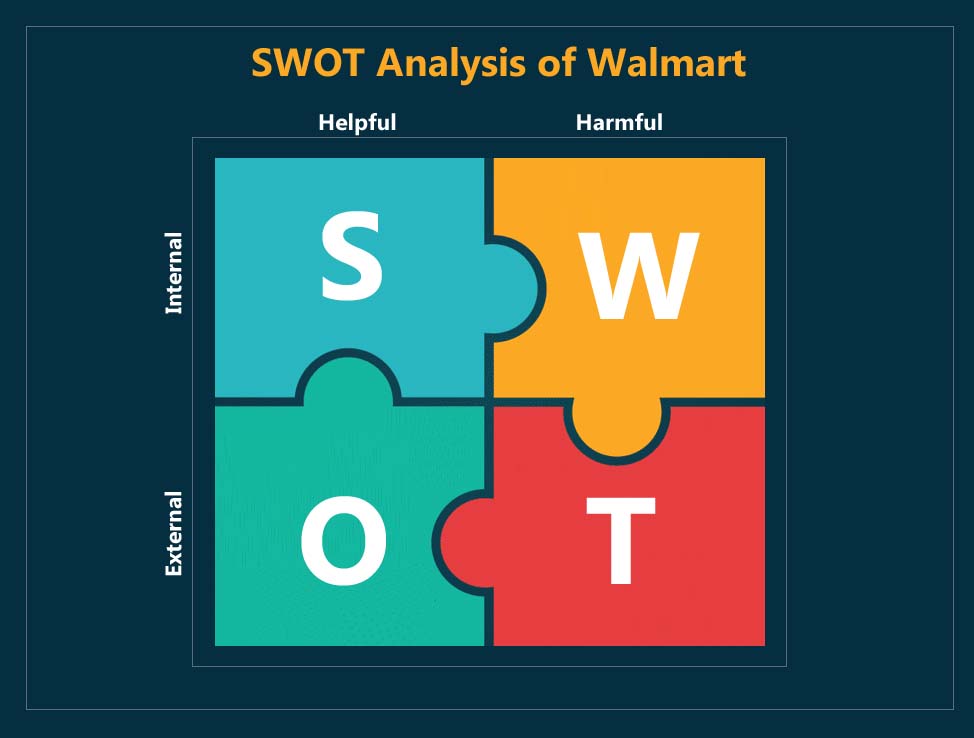
SWOT Analysis of Walmart – Walmart SWOT Analysis [Detailed]

SWOT Analysis of Walmart – Walmart SWOT Analysis focuses on (S) Strengths, (W) Weakness, (O) Opportunities, and (T) Threats. Internal Factors in the SWOT Analysis are Strengths and Weaknesses and External Factors in the SWOT Analysis are Opportunities and Threats.

SWOT Analysis is a proven management tool that helps Walmart to assess its market and its success against rival companies. Walmart is one of the largest retail store in the world.

Walmart is one of the favorite Retail Store of a large number of population in the world. Walmart is the largest retail company in the world that sells groceries, electronics, clothes, office supplies, home, and kitchen accessories. Walmart stores have a recorded footfall of 270 million customers for purchasing, while many make purchases online through the website of Walmart.

Walmart opened its first discounted store in Arkansas in the year 1962. With over 11,200 stores in 27 countries and websites (e-commerce) in 10 countries, it has now grown into the largest retailer for 50 years. Walmart ‘s new Executive Director is Doug McMillon.

swot analysis of walmart

Strengths in the SWOT Analysis of Walmart – Walmart SWOT Analysis

  • Product awareness – With millions of consumers visiting Walmart every day, it is the world’s best supermarket store. The online store of Walmart has more than 60 million items available.
  • Global Expansion – Walmart has a stake in ASDA, UK. ASDA is a UK based retailer. Walmart has recently increased its stake in Indian e-commerce giant Flipkart. In addition, it has established a joint venture with Bharti, India’s largest retail store. Such global acquisitions have proven to be a major success for the company.
  • Global presence – Walmart opened 47 new stores in Central America in 2017, 15 in Chile, 11 in Great Britain, and 4 in China. Its foreign activities expanded its global footprint and revenues.
  • Strategy for ‘Every Day Low Prices’-Walmart is focused on policy economies of scale, which is why it can deliver low prices. This has thousands of goods at fixed costs. Therefore it is one of the world’s cheapest shopping destinations.
  • International logistics and supply chain network-Walmart ‘s main competencies are the distribution and logistics networks. This uses information technology to track the output of each commodity in each store in each nation in an efficient manner.
  • Human Resource Planning-Walmart ‘s main assets are its employees. It spends large sums of its time and resources in creating and maintaining a good working environment for its employees and workers. According to Business Insider, nearly about 1 percent of America’s population is working at Walmart.
  • Good resource management – Walmart handles its resources effectively through information systems, distribution centers, good supply chain networks, expertise, and other competencies. Walmart’s operating procedure and management of the store are excellent.
  • Clear market control over suppliers and competitors – Walmart has been capable of exerting market influence over suppliers and competitors due to its wide organizational scale and global scope.
swot analysis of walmart - 1

Weaknesses in the SWOT Analysis of Walmart – Walmart SWOT Analysis

  • Wide control System – Walmart may be vulnerable in some places because of its organization size and its control system.
  • Thin profit margins-Walmart is focused on a plan for cost leadership. This results in the company having thin profit margins.
  • Gender discrimination – In 2007, a lawsuit was filed against Walmart allegedly claiming gender discrimination in Walmart employment opportunities. As regards pay scale and appraisal of female employees are discriminated against according to this complaint.
  • The imitation – The business model of Walmart can easily be copied. The company has no particular competitive advantage over its competitors except for its big and widespread stores in various countries.

Opportunities in the SWOT Analysis of Walmart – Walmart SWOT Analysis

  • Expansion to other countries – Walmart should take advantage of the ability to extend its business to countries that have not yet explored. These might include China, countries in Latin America, and the Middle East.
  • Strategic Alliances – Walmart has the opportunity to establish strategic partnerships or merge with other global retailers with major companies. Small business acquisitions can also reflect a lucrative opportunity for Walmart.
  • Improving human resource practices – Introducing advanced changes to human resource practices will provide Walmart with a beneficial opportunity. Given that it depends heavily on its workforce, adding creativity to the management of human capital is a critical opportunity.
  • Improving quality standards – Low-cost products sometimes render low quality. Walmart has the opportunity to improve quality standards for its products to address consumer health concerns.

Threats in the SWOT Analysis of Walmart – Walmart SWOT Analysis

  • Controversies related to employees, products can be a major threat.
  • Controversy over fake craft beer – Walmart was sued in 2017 for selling fake craft beer. Though produced by WX Brands, the beer was labeled and marketed as ‘Trouble Brewery,’ a non-existent manufacturing firm.
  • Competitors policy regarding discounts and offers – Walmart is on the target of most of the retail giants in the world and hence established players can give tough competition to Walmart.
  • Political and legal problems – It, too, is a challenge to political and legal matters that can also prevent the organization from working in other countries.
  • Small-scale online e-commerce firms – Some small-scale and individual online retailers have entered the market selling identical items on their websites at competitive rates. It may pose a challenge to the future status of the company.
  • Technical issues on the website – Consumers have frequently complained that Walmart ‘s website has some technical problems. The products are not listed on the website in an organized way and are running slowly. However, Amazon is known for its fast, efficient, and organized website making customers excellent online shopping experience.
  • Government Policies can also be a major threat to Walmart. Changes in FDI Policies can affect the profits of Walmart.

Recommendations for Walmart

Following suggestions Walmart will strengthen its weak points and enhance its potential market position:

  • Improving HR performance quality and addressing the issues of the employees. The successful HR program would discourage Walmart from making any potential assumptions regarding its employees.
  • Expansion of business to new markets – Walmart needs to pursue prospects for improving its role and growing market share in emerging markets.
  • Advancing the global supply chain and distribution network – It will strengthen its vast retail empire.
  • Addressing contentious topics at the earliest opportunity. Walmart needs to improve the website for online sales and offer only legitimate items to prevent more public scrutiny.
  • Upgrading of its e-commerce pages online. Walmart needs to solve technical problems that hinder the progress of the websites and offer the customers satisfying shopping experience.
  • Strengthening marketing and promotional efforts – it will help the organization boost its brand identity and attract new clients.
  • Walmart should also play an active role in environmentally friendly activities to give the company a positive picture.

If you like This Article Please Like our Facebook Page PROJECTS4MBA

Cite This Work

Referencing Style to cite this article:
[citationic]

SWOT Analysis of Walmart – Walmart SWOT Analysis [Detailed] Read More »

SWOT Analysis of Amul Chocolates [Step by Step SWOT]

SWOT Analysis of Amul Chocolates – Amul Chocolates SWOT Analysis focuses on (S) Strengths, (W) Weakness, (O) Opportunities, and (T) Threats. Internal Factors in the SWOT Analysis are Strengths and Weaknesses and External Factors in the SWOT Analysis are Opportunities and Threats.

SWOT Analysis is a proven management tool that helps brands such as Amul to assess the market of Amul Chocolates and its success against rival companies. Amul has been one of the Chocolates Manufacturer of the country.

Amul Chocolates is a product of the Chocolate Company Amul, which is the brand name of the Gujarat Cooperative Chocolate Marketing Federation. Since the green movement launched by Shri Verghese Kurien, the cooperative organization manufactures Chocolates and various Chocolate goods such as curd, milk, chocolate powder, milk spread and cocoa, among others.

Amul Chocolates also includes Amul Chocozoo and Chocolate Syrup. The firm reported a turnover of USD 6 billion in 2016 and is a licensed cooperative firm with very strong faith and recall in India. After being incorporated as a cooperative corporation in 1946, GCCF has assisted the growth and production of a number of dairy farmers by coordinating the acquisition, manufacturing, and selling of the chocolates they have supplied. Chocolates are one of Amul’s most popular items.

swot analysis of amul chocolates - 1

Strengths in the SWOT Analysis of Amul Chocolates – Amul Chocolates SWOT Analysis

  • Strengths are described as what each company does best in its field of activities, which can give it the upper hand over its competitors. The attributes of Amul Chocolates are as follows:
  • Advertisement: Amul Chocolates has benefited immensely from the marketing strategies of the brand, including the corporate symbol, the Amul Girl, and its tagline Taste of India, thanks to its affiliation with Amul.
  • Continuous spirit of innovation: Amul takes influence from leading confectionery firms around the world and innovates in their chocolates. This has resulted in a new range of dark chocolate and chocolate syrup. The spirit of novelty is also expressed in their ad strategies and packaging.
  • Focus on the Amul brand: One approach that has benefited the business as a whole is that, instead of selling individual products, the emphasis has also been on the Amul brand. This has contributed to the creation of credibility and confidence expressed in many of its products, including its chocolates.
  • Distribution channel: Amul follows a three-tier distribution system for all its products, where their goods are manufactured on three levels from village to district to state and then sold on three tiers, including business, wholesaler, and retailer. It means optimum coverage for Amul Chocolates.
  • Focus on quality: Amul Chocolates has never sacrificed consistency. The company takes every practicable measure to ensure that all requirements imposed by the different environmental, protection and consistency regulatory bodies are completely complied with.
swot analysis of amul chocolates

Weaknesses in the SWOT Analysis of Amul Chocolates – Amul Chocolates SWOT Analysis

Weaknesses are used to refer to situations that the company or the brand wants to change. Many of the main drawbacks of Amul Chocolates are as follows:

  • Lack of significance: Amul has never given adequate attention to its chocolates, and the vertical segment has always been considered to be of low value, with the company preferring to concentrate on butter or cheese.
  • Lower number of variants: relative to rivals such as Cadbury, the number of variations of chip chip chocolate is small. It contributes to dissatisfaction among consumers who, given the fact that chocolate is better in quantity and consistency, do not choose it brand.
  • High marginal selling cost: the demand for confectionery is intensely competitive and the transaction is targeted towards an opportunity to buy behaviour. It ensures that only advertising can cause sales. However, the marginal expense of marketing is small and so the number of chocolate ads is limited.
  • Poor differentiation: the consumer is unable to differentiate between different chocolate products as the segment does not have anything to give in terms of a clear distinction in flavor or texture.
  • Focus on a regional market: most of Amul ‘s goods are linked to Chocolates and the source is only a single city, Gujarat. Procurement and management of chocolates and the production of chocolates is a supply chain challenge.

Opportunities in the SWOT Analysis of Amul Chocolates – Amul Chocolates SWOT Analysis

  • Opportunities apply to all environmental ways that affect the company on which it can leverage to maximize its profits. Some of the possibilities include:
  • Healthy chocolates: People are becoming more mindful of their health, generating a growing demand for low-calorie and sugar-free chocolate. Dark chocolate is also a favorite choice for customers. These are aspects that Amul Chocolates can look into.
  • Steep growth opportunities in developing economies: the global demand for confectionery had a sales value of $184,056 million in 2015, and growth of CAGR 3.4% is projected to hit $232,085 million by 2022. Industries should capitalize on that.
  • Chocolate flavored products: Amul should look at chocolate flavored products such as chocolate paste, cream biscuits, chocolate cookies, etc. as chocolate is a popular favorite among children.

Threats in the SWOT Analysis of Amul Chocolates – Amul Chocolates SWOT Analysis

Threats are those environmental factors that can be harmful to business development. Several of the risks are as follows:

  • Competition: Amul’s major rivals are Perfetti Van Melle, Mars, Cadburys,  Lindt, etc.
  • Low barriers to entry: the demand for confectionery has small barriers to entry, with the result that many new entrants are joining the demand. There is still a large market for handmade chocolates today, which is proving to be a challenge to packaged chocolates.
  • Government policies for chocolate manufacturing companies can be  major threat.

If you like This Article Please Like our Facebook Page PROJECTS4MBA

Cite This Work

Referencing Style to cite this article:
[citationic]

SWOT Analysis of Amul Chocolates [Step by Step SWOT] Read More »

SWOT Analysis of Amul Milk [Detailed Step by Step SWOT]

SWOT Analysis of Amul Milk – Amul Milk SWOT Analysis focuses on (S) Strengths, (W) Weakness, (O) Opportunities, and (T) Threats. Internal Factors in the SWOT Analysis are Strengths and Weaknesses and External Factors in the SWOT Analysis are Opportunities and Threats.

SWOT Analysis is a proven management tool that helps brands such as Amul to assess the market of Amul Milk and its success against rival companies. Amul has been one of the Milk and Milk product Manufacturer of the country.

Amul was a game-changing brand in India. The company is headquartered in Anand, Gujarat, and was founded in 1948. Amul milk is used in almost all urban households in India and is a well-known product. Amul products are also available in 60 countries around the world.

Amul milk has been the pioneer of India’s white movement and has established itself as India’s largest food company. Amul milk comes in various varieties, making it unique and useful to its consumers. It also provides lactose-free milk to people who are lactose-intolerant.

Other than milk Amul also manufactures products such as cheese , butter, paneer, etc. Amul milk is produced by the various industries that they have throughout India, and the milk is sourced from India.

swot analysis of amul milk

Strengths in the SWOT Analysis of Amul Milk – Amul Milk SWOT Analysis

  • Strengths are the building blocks of a company, and they have helped the company to find a place in the country. Strength is the point of difference between them and other companies. Here are the strengths of Amul Milk:
  • Variety in their products: the Company has made it easy to offer a wide variety in forms of milk. Amul milk is found in variants such as Amul Gold, Amul Tazza and Amul Slim n’ Trim, Amul spray for infants and much more based on the region. We also manufacture UHT-treated milk wrapped in a Tetra bag to improve the shelf life of milk.
  • Clear commercials: Amul milk has one of India’s best commercials. About every urban resident is conscious of the Amul girl they use for promotional purposes. We make her important to the issues that are going on in the world.
  • Good quality of the product: Amul milk has a distinct taste and a very high consistency. Milk is hygienically pasteurized and comes from local cows with a healthy diet. The packaging with which it is packaged is fine, and the milk is handled in the best of the factories.
  • A source initiative: Amul milk comes from farmers offering the highest quality milk. It makes farmers get the money they earn, and Amul makes them grow their milk products.
  • Strong distribution and supply chain: Amul milk, particularly Amul Tazza, can be found throughout India. Both milk shops have them because of the need that the industry has generated on the market.
  • Keeping up with the trend: Amul milk has been following trends for a long time. They developed a lean n ‘fit version for health-conscious people. Just as lactose-free milk is also very beneficial to those who are allergic to it.
swot analysis of amul milk - 1

Weaknesses in the SWOT Analysis of Amul Milk – Amul Milk SWOT Analysis

  • Weaknesses are the characteristics that a organization actually lacks. Understanding that helps the company grow more. Here are some of the drawbacks of Amul milk.
  • Rising rivalry market: Amul milk competitors are on the rise. Companies like Britannia, Go, Nestle and Mother Dairy are still getting ahead of the curve.
  • Cost price: Amul-milk varieties tend to be priced higher than other firms. The explanation Amul argues is because of their consistency, but buyers also prefer a lower priced version merely because of their affordability.
  • Tackling the rural market: people living in the rural belt prefer to have cow’s raw milk rather than the pasteurized variety. Better awareness of them would boost the demand.

Opportunities in the SWOT Analysis of Amul Milk – Amul Milk SWOT Analysis

  • Opportunities are the stage that a business can do well on the market. It allows a organization to grow faster, and here are some of the places where Amul can work:
  • Increase in distribution: Amul can add more types of milk variants that people would like. They ought to deliver it to places that have not yet been affected. They will also try the export of milk to numerous other nations.
  • Rural Belt Initiatives: Amul-milk should reach rural areas to teach them about the need to drink pasteurized milk. This would help them to expand the market a lot more.
  • Adding new variants: Indians are changing in taste, and they want different varieties. Amul will certainly look into the production of Almond and Coconut milk, which is gaining popularity day by day.
  • Price reduction: As discussed above, there are several price disparities. Amul milk can be repackaged in small variants to catch people’s attention.

Threats in the SWOT Analysis of Amul Milk – Amul Milk SWOT Analysis

  • Competitors: competitors may pose a threat to the company if they are able to produce more variants. People may take advantage of the offers that other companies are offering them.
  • Myth-busting of milk intake: some studies argue that the use of milk is excessive. And, if the idea spreads, it might hurt Amul Milk.
  • Diet and the health of the cows: this has not been a problem before, but with the emergence of organic and grass-fed foods people are wondering. Amul milk is expected to claim the diet of cows for a competitive price.

If you like This Article Please Like our Facebook Page PROJECTS4MBA

Cite This Work

Referencing Style to cite this article:
[citationic]

SWOT Analysis of Amul Milk [Detailed Step by Step SWOT] Read More »

SWOT Analysis of Amul Butter [Step by Step SWOT]

SWOT Analysis of Amul Butter – Amul Butter SWOT Analysis focuses on (S) Strengths, (W) Weakness, (O) Opportunities, and (T) Threats. Internal Factors in the SWOT Analysis are Strengths and Weaknesses and External Factors in the SWOT Analysis are Opportunities and Threats.

SWOT Analysis is a proven management tool that helps brands such as Amul to assess the market of butter and its success against rival companies. Amul Butter has been one of the leading butter manufacturers of the country.

Amul is an Indian dairy cooperative located in Anand, Gujarat. Amul is administered by the Gujarat Co-operative Milk Marketing Federation Ltd. (GCMMF). Amul Butter is one of the most popular goods in the Amul portfolio. The iconic Amul girl was first created in 1967 for Amul Butter in response to the rival brand of Polson Butter Girl. Throughout the years, the Amul Butter Girl has achieved immense fame and created a name for itself.

swot analysis of amul butter - 2

Strengths in the SWOT Analysis of Amul Butter – Amul Butter SWOT Analysis

  • Good Advertisements: Amul as a brand is known for its innovative advertisement of Amul Girl’s print, online, and social media ads. This generates a powerful Amul brand identity.
  • One of the best brand mascots: the Amul girl is one of the biggest brand mascots in India, and she’s famous for her funny hoardings that people are looking forward to seeing.
  • Strong market share: Amul has a leading market share in most products in its portfolio, particularly in the Butter category, where it has a market share of over 85 percent.
  • Excellent distribution channel: Amul has a very large distribution network, with a footprint throughout the world. It is sold through both new and conventional distribution networks.
  • Good product quality: Amul butter has been rated high on product quality and has been able to gain market confidence. It stands by its slogan, which reads “Amul – The Flavor of India.”
  • Affordable pricing: In order to maintain its high market share, Amul is committed to maintaining a low pricing strategy. It has a market-oriented pricing approach that is sustainable for the typical Indian household.
  • Consumer portfolio backup: because of Amul ‘s large product range, such as ice cream, milk, and other similar dairy goods, Amul will dominate the retailer by selling Amul butter.
swot analysis of amul butter

Weakness in the SWOT Analysis of Amul Butter – Amul Butter SWOT Analysis

  • People prefer local butter – Some people prefer to use homemade and local butter. This reduces the size of the market for Amul.
  • Rare limited advertising: Amul butter has a share of the drawbacks of being part of the Amul branded family. Although Amul is very popular as a brand, its products usually remain in the background and depend on Amul ‘s popularity.
  • Limited Shelf-life: Butter has a low shelf life and requires refrigeration to be able to preserve its form. Amul has a wide supply chain network that needs extra precautions considering the shelf life of its dairy products.

Opportunity in the SWOT Analysis of Amul Butter – Amul Butter SWOT Analysis

  • Developing the rural market: Amul should be available in small packets of special butter items for the rural market in order to tap into a high potential rural demand as well.
  • Tie-ups with hotels and restaurants: Amul will look forward to tie-ups with restaurants and hotel chains. It’s already got huge ties, but this is an ever-growing segment. This will help to increase revenue and profitability.
  • Launch new variants: Amul will plan to introduce new models to reach a larger consumer base. It has also been used in versions such as garlic butter and low-fat milk.

Threat in the SWOT Analysis of Amul Butter – Amul Butter SWOT Analysis

  • Local Players: Local Players who are manufacturing Butter can have an adverse effect on the market share of Amul and will hence also have an effect on profitability.
  • Growing health consciousness: increasing health awareness decreases the intake of dairy products, in particular butter. It is impacting the bottom line of the organization.
  • Rising Constituent Prices: Due to the excess demand for dairy goods and the growing cost of production, the cost of butter-like milk constituents is continuously increasing, which puts pressure on Amul to raise the prices of Amul butter.
  • Low-Fat Variants are Less Popular: Low Amul Butter variants like Amul Lite are less popular and therefore create an opportunity for competitors like Nutralite to create a market for themselves.

If you like This Article Please Like our Facebook Page PROJECTS4MBA

Cite This Work

Referencing Style to cite this article:
[citationic]

SWOT Analysis of Amul Butter [Step by Step SWOT] Read More »

SWOT Analysis of State Bank of India – SWOT Analysis of SBI

SWOT Analysis of SBI – SWOT Analysis of State Bank of India focuses on (S) Strengths, (W) Weakness, (O) Opportunities, and (T) Threats. Internal Factors in the SWOT Analysis are Strengths and Weaknesses and External Factors in the SWOT Analysis are Opportunities and Threats.

SWOT Analysis is a proven management tool that helps organizations such as State Bank of India (SBI) to assess the market of SBI and its success against rival companies. State Bank of India (SBI) has been one of the leading Stationery companies.

SBI does have its origins in 1806, but was later converted under different names, and finally SBI was created in Parliament on May 1955. Around the year 1959, SBI took over 8 state-owned banks and, since then, has started to develop in the service of citizens at various economic rates.

swot analysis of sbi

Strengths in the SWOT Analysis of SBI – SWOT Analysis of State Bank of India

swot analysis of sbi - 1
  • SBI is India’s biggest bank in terms of market share, sales, and reserves.
  • SBI has been ranked in the Fortune Global 500 list.
  • According to recent reports, the bank has more than 22141 branches and 58555 ATM’s.
  • The bank is active in 36 countries involved in currency traders around the world.
  • SBI has the first-mover edge of commercial banking facilities.
  • SBI recently updated its vision and mission statements indicating an indication of inclination towards new-age banking services.
  • State Bank of India has a huge employee base of 257252 employees.
  • SBI has revenue of 143306 Crore rupees (20 billion US Dollars).
  • The owner of the State Bank of India is the Government of India.
  • SBI has many subisidaries:
    • SBI Cards
    • SBI Life Insurance
    • Jio Payment Bank
    • Yes Bank
    • Andhra Pradesh Grameena Bank
    • Kavenri Grameena Bank
    • Vikas Bank.

Weaknesses in the SWOT Analysis of SBI – SWOT Analysis of State Bank of India

  • The lack of adequate technology-driven infrastructure relative to private banks
  • Employees are hesitant to fix issues efficiently due to better job stability, and the turnaround period for clients is lengthy relative to private banks.
  • The banks pay a large sum on their leased houses.
  • SBI has the largest number of employees in the banking sector, which is why the bank spends a considerable amount of its income on employees ‘ salaries.
  • Despite the modernization, the bank still conveys the perception of the traditional bank to new-age clients.
  • SBI does not draw corporate payroll accounts, and any government employee’s payroll accounts are now transferred to private banks for ease of service, unlike before.

Opportunities in the SWOT Analysis of SBI – SWOT Analysis of State Bank of India

  • The merger of SBI with five other banks, namely the State Bank of Hyderabad, the State Bank of Patiala, the State Bank of Bikaner and Jaipur, the State Bank of Travancore and the State Bank of Mysore, is at the approval stage.
  • Mergers would result in a rise in market share to protect its number one spot.
  • SBI aims to expand and invest in foreign activities due to a strong inflow of capital from the Asian economy.
  • As some of the banking activities are yet to be modernized, there is a greater opportunity for leveraging new technology and applications to enhance customer ties.
  • Young and talented graduate and B school pools are on the rise to open new horizons for the so-called “old government bank”.

Threats in the SWOT Analysis of SBI – SWOT Analysis of State Bank of India

  • Net profit of the year decreased from 9166.05 in the year 2010 to 7.370.35 in the year 2011.
  • This indicates that the market share of its close rival ICICI is that.
  • Other private banks, such as HDFC, AXIS bank, etc.
  • FDIs permitted in the banking sector was increased to 49%, which is a major challenge to SBI as citizens continue to turn to international banks for better banking services facilities and technology.
  • Other government banks, such as GNP, Andhra, Allahabad Bank, and Indian Bank, are coming up.
  • Customers prefer to switch to private banks and financial service providers for loans and mortgages, as SBI involves strict verification procedures and takes a long time to process.

If you like This Article Please Like our Facebook Page PROJECTS4MBA

Cite This Work

Referencing Style to cite this article:
[citationic]

SWOT Analysis of State Bank of India – SWOT Analysis of SBI Read More »

SWOT Analysis of Faber Castell [Step by Step SWOT]

SWOT Analysis of Faber Castell focuses on (S) Strengths, (W) Weakness, (O) Opportunities, and (T) Threats. Internal Factors in the SWOT Analysis are Strengths and Weaknesses and External Factors in the SWOT Analysis are Opportunities and Threats.

SWOT Analysis is a proven management tool that helps organizations such as Faber Castell to assess the market of Stationery and its success against rival companies. Faber Castell has been one of the leading Stationery companies.

Faber Castell is a famous stationery manufacturer which was founded in 1761 and is located in Stein, Germany. This is the largest maker of pencils, markers, art materials, and office equipment, such as slide rules, scissors, rulers, and erasers.

swot analysis of faber castell

SWOT Analysis of Faber Castell

(Logo is a Registered Trademark of their Respective Owners)

It also offers high-end publishing instruments and quality leather products. It operates in around 14 plants and 20 distribution centers across the globe. It has about 7000 employees and operates in about 100 countries.

The corporation sells its goods through 25 sales and distribution organizations. It has a wide variety of goods available at varying prices. It is a major maker of wooden pencils and has a wide variety of items for drawing , painting, graphic illustration and decorative cosmetics.

The company stands out for its creative products, its high quality, its dedication to tradition, and its environmental consciousness. In 1999, the organization purchased Creativity for Children, a major producer of goods for all age ranges of children. The organization has already launched Quality Children’s Art Goods for children or the Playing and Learning Series in the United States.

Let us explore Faber Castell ‘s SWOT analysis via this article.

Strengths in the SWOT Analysis of Faber Castell – Faber Castell’s SWOT analysis

  • Product range – Faber Castell offers a wide variety of products, from pencils,  compasses, markers, play & learning, painting & design, artistic workshop, general writing and tagging, fine printing, and gift finder.
  • Feasible price – Faber Castell products are offered at a reasonable price and are available at all price ranges. The company also has luxury products that target the upper-middle class as well.
  • A Strong Legacy – The organization has a good heritage of about 200 years and is a trusted brand in the stationery sector.
  • High quality – Faber Castell ‘s goods are of the best standards that other consumers want.
  • Global Reach – The brand is available in almost 100 countries and has a strong international distribution and advertising network that is specific to children’s channels.
  • Innovation and Creativity – The Faber Castell brand is renowned for its innovation and creativity as a pioneer. It offers quality development to deliver solutions with substantial benefits to end-customers. It stimulates its own creativity through an open working atmosphere, commitment and international commitment, dedication, and interdisciplinary work teams.
  • Social and Environmental Responsibility – Faber Castell has a consistent obligation and commitment to people and the environment. Products have social responsibility within the client, the society, and business partners. It continuously seeks environmentally friendly processes and materials that contribute to the preservation of the planet.
  • Customer Service – Faber Castell delivers excellent customer service philosophy and consistently delivers a high-quality experience.
swot analysis of faber castell - 1

Weaknesses in the SWOT Analysis of Faber Castell – Faber Castell’s SWOT analysis

  • Intense Rivalry – Faber Castell sees a number of competitors from other famous brands. It also faces strong competition from local brands and therefore has limited market share.
  • Product Identity – Since Faber Castell products are sold at all prices, it is difficult for customers to choose among premium and non-premium brands.
  • Less Loyalty among Suppliers – Loyalty among Suppliers appears to be low. It has a low level of allegiance between members of supply chain partners.

Opportunities in the SWOT Analysis of Faber Castell – Faber Castell’s SWOT analysis

  • Creative Goods – Faber Castell makes more innovative products in terms of style, color, and packaging. Each and every product is packed in a unique way that attracts the eyes of the customers.
  • Maintains Unique Brand Names – Faber Castell has a number of brand names for both premium and non-premium products. This helps them to maintain the uniqueness of their brands.
  • New Categories – The brand sees a lot of opportunities by expanding its range of products. It will boost the appeal of its brand by creating more new items.
  • Rapid economic expansion – As the US economy is growing faster than other developed countries, it gives Faber Castell an opportunity to expand to the US market. The company is always aware of the ways in which it operates on a market share basis.
  • Trends in the acceptance of high-end products – this is a perfect chance for Faber Castell to gain good name exposure in the luxury market.
  • Changing Customer Preferences – Customers are interested in trying out new products that offer a huge market opportunity.

Threats in the SWOT Analysis of Faber Castell – Faber Castell’s SWOT analysis

  • Duplicate Goods – Owing to the extensive use of technologies in the entire industry, the goods can quickly be duplicated and may have a negative impact on the company.
  • Threat from local brands – Due to the availability of many local brands, there is a serious threat to these brands as they are available at lower prices.
  • Brand Awareness – It is, in general, very difficult to increase brand recognition among the consumers since they do not have any differentiated goods.
  • Product Segment Commoditization – The biggest threat to the company is the increasing commoditization of the stationery industry.

If you like This Article Please Like our Facebook Page PROJECTS4MBA

Cite This Work

Referencing Style to cite this article:
[citationic]

SWOT Analysis of Faber Castell [Step by Step SWOT] Read More »

SWOT Analysis of Coca Cola [Step by Step SWOT]

SWOT Analysis of Coca Cola focuses on Strength, Weakness, Opportunity, and Threats. Strength and Weakness are internal factors and Opportunities and Threats are external factors.

SWOT Analysis is a proven management tool that helps organizations such as Coca Cola to assess the market of Softdrinks and its success against rival companies. Coca Cola has been one of the leading beverage companies.

Coca Cola was originated from Atlanta, Georgia and it is a world-famous beverage manufacturing company. The company has a huge employee base of 62600 employees.

Coca cola is a brand used in homes, restaurants, hotels, shops, offices, etc. You name it and Coca cola would have been heard from the place. Coca cola has a wide arsenal of products. Below is a SWOT Analysis of Coca cola.

Coca cola has a large assortment of merchandise. Let’s discuss the SWOT Analysis of Coca Cola.

swot analysis of coca cola

Coca Cola SWOT Analysis

Industry: Beverage
Founded: 29th January 1892; 128 years ago in Atlanta, Georgia, U.S.
Founders : John Stith Pemberton

Strengths in the SWOT Analysis of Coca Cola – Coca Cola SWOT Analysis

  • Company’s Aim: Company is giving special emphasis on manufacturing, marketing, retailing of soft drinks, fruit juices, and Water.
  • Promotions: Aggressive Promotional strategies have made Coca Cola as No.1 Softdrink manufacturers.
  • Net Income: Company’s Net Income is 8.70 Billion US Dollars.
  • Company valuation – Coca cola, one of the world’s most valuable companies, is valued at around $79.2 billion. This valuation includes the brand value, the numerous factories and assets spread all over the world, and the entire cost and profit of Coca cola ‘s operations. Brand Equity – Interbrand gave the highest brand value award to Coca cola in the year 2011. With its vast global presence and unique brand identity, Coca cola is definitely one of the most preferred brands with the highest mark equity.
  • Vast global presence – Coca cola is present in around 200 countries worldwide. Chances are, any country you ‘re heading to will find coca cola in that market. This vast global presence of coca cola also helped build the mammoth brand name.
  • Largest market share – The soda category has only 2 Major rivals – Pepsi and Coca cola. Coca cola is the clear winner and hence has the highest market share. Coca Cola ‘s growth drivers include coke, thumbs up, sprite, diet coke , limca, fanta,and maaza amongst all drinks.
  • Fantastic marketing tactics-unlike Pepsi , Coca cola still seeks to capture the heart of the people. Coca cola targets people of all ages where Pepsi ‘s goal is constantly changing and targeting young people. The targeting is also done by well-liked celebrities – such as Amitabh Bacchan, Aishwarya Rai, Sachin tendulkar, and Aamir Khan etc.
  • Customer Loyalty-Coca cola has a lot of customer loyalty with such strong products. The aforementioned products like Coca cola and Fanta have a huge following of fans. People are going to choose some soft drinks over others. Because of Coca cola’s fine taste it is difficult for the consumer to find alternatives.
  • Distribution network – Coca cola has the largest distribution network due to the demand for its goods in the country. At the other hand Coca cola has been able to maintain such a strong market share because of this efficient distribution network.

Weaknesses in the SWOT Analysis of Coca Cola – Coca Cola SWOT Analysis

  • Competition with Pepsi – Pepsi for Coca cola is a pain in the flesh. Had it not been for Pepsi, Coca cola would have been the strong market leader. The rivalry is intense in these two brands and we don’t think Pepsi can give up too easily.
  • Product diversification is low – Coca cola is missing from that segment, where Pepsi has made a smart move and diversified into the snacks segment with products such as Lays and Kurkure. The segment is also a strong revenue generator for Pepsi and would have been an extra revenue driver for the company if Coca cola had been present in this segment.
  • Absence of health drinks – When you watch the television, you ‘d know that today, obesity is a huge issue impacting people. The business environment is changing and people are taking action to make sure they don’t get obese. Carbonated drinks are one of the key causes of fat consumption and Coca cola is the biggest Carbonated Beverage producer. The inference is that beverage consumption in developed countries could fall as people prefer a healthy alternative.
  • Water management – Coca cola has been getting flak in the past because of its water control problems. Several groups raised lawsuits in the name of Coca cola due to their vast water consumption even in water-scarce regions. At the same time, people also blamed Coca cola for mixing pesticides to clear contaminants in the water. And for Coca cola water quality needs to be stronger.

Opportunities in the SWOT Analysis of Coca Cola – Coca Cola SWOT Analysis

  • Diversification – Diversification is the health and food industry would improve Coca cola ‘s offerings to its customers. This would also ensure that current customers get better profits by cross-selling their goods. The supply chain that distributes its drinks can also sell such snacks, sharing the expense of the supply chain.
  • Developing nations – Although developed nations have a high Coca Cola presence, these countries are moving slowly towards healthy beverages. The joy of carbonated beverages and soft drinks is still being brought to developing countries, however. Countries like India, which are developing and having a hot summer, find cold drink consumption nearly doubled during summers. The higher consumption in developing environment can thus be a good opportunity for Coca cola to capitalize on.
  • Packaged drinking water-With hygiene being a major factor in water use, Packaged drinking water has made its way into the minds of the people. Coca cola has a presence though Kinley in the packed drinking water segment. Though Kinley ‘s expansion is slow as of now, Kinley has enormous expansion potential. Thus Coca cola as a business will concentrate on Kinley ‘s growth as a brand and take it to the level of confidence that Bisleri has.
  • Improvement of the supply chain – Supply chain can be a major cost sinkhole with ever-increasing transport costs. The whole business of Coca Cola is focused on transport and distribution. Improvements in that field will always be necessary. Coca cola will also keep strict control of its supply chain and continue to change to reduce costs.
  • Market the Lesser Selling Products – There are many items in Coca Cola’s product range that have not gained recognition on the market. Coca Cola also needs to focus on marketing those products. Coca cola is understood to have made several expenses to launch those products. The promotion and subsequent increase in the selling of such goods would thus boost Coca cola ‘s revenues.

Threats in the SWOT Analysis of Coca Cola – Coca Cola SWOT Analysis

  • Sourcing of raw materials – The only danger to coca cola is water. Coca cola ‘s vulnerability was the alleged use of pesticides or massive water use. The challenge here, though, is that water scarcity is on the increase. With the changing climate, and regions of different countries facing water scarcity, somebody might sooner or later raise their fingers at drink companies. Thus, water sourcing is a feature that can crash on Coca cola ‘s head anytime. If water is limited or rationed, Coca cola may suffer a major decline in its revenue and distribution capacity. The same may also have an influence on its arch competitor Pepsi.
  • Indirect rivals – coffee chains are on the rise including Starbucks, Costa Coffee, Café Coffee Day, … These chains offer the Coca colas carbonated drinks a healthy competition. They may not be a major coke rivalry but they’re giving their soda business a dent. Similarly, wellness drinks like Real and Tropicana and energy drinks like Red Bull and Gatorade implicitly rob off-market share.
  • Local Competitors: Local Softdrink Manufacturer can be a major threat to the company.
  • Government Policies: Change in government policies regarding preservatives, Pet Bottles, etc can be a major threat to the company.
  • Declining Share Prices can be a major threat.
  • People are shifting towards local beverages like Fresh Lime Water and Natural Juices for increasing immunity can also be a big threat.

If you like This Article Please Like our Facebook Page PROJECTS4MBA

Cite This Work

Referencing Style to cite this article:
[citationic]

SWOT Analysis of Coca Cola [Step by Step SWOT] Read More »

SWOT Analysis of Patanjali Ayurved [Explained]

SWOT Analysis of Patanjali Ayurved focuses on strengths, limitations, opportunities, and Threats. Patanjali Ayurved is one of the largest medicine and vaccine producing companies. The strengths and weaknesses of Patanjali Ayurved Swot are internal factors, while opportunities and risks are external factors.

SWOT Analysis is a validated management tool that enables a company like Patanjali Ayurved to measure its business and performance with competitors and the industry. Patanjali is one of the leading Ayurvedic products and Food products brands for many years.

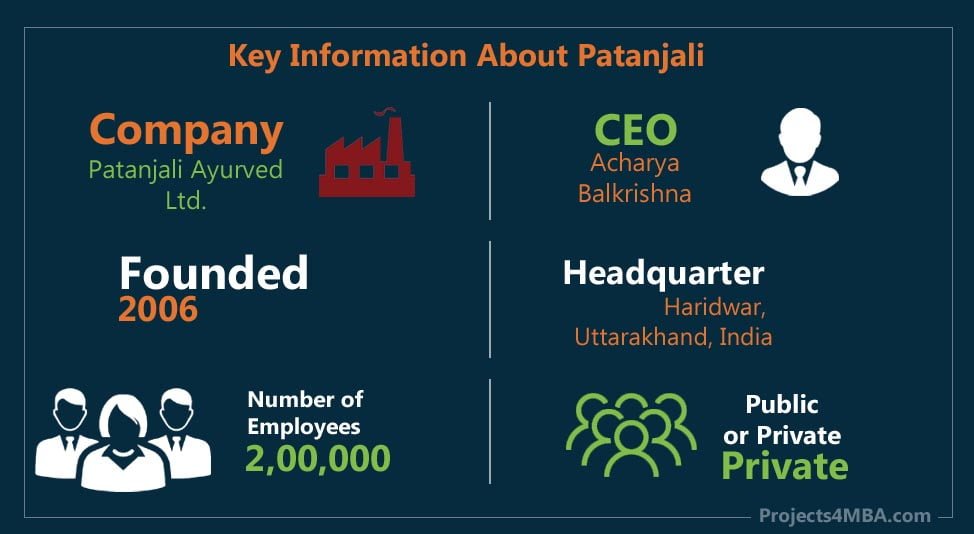
Patanjali Ayurved was founded by Baba Ramdev and Acharya Balkrishna. Acharya Balkrishna. Unbelievably, Patanjali become popular in a few years, because of Baba Ramdev’s large-scale followers. Patanjali has captured a massive share in the Indian Ayurveda and Food market. Patanjali has total revenue of Rs.9500 Crores. Net Income of Patanjali is Rs. 590 Crores and Total Assets are Rs. 4345 Crores. Patanjali manufactures products in Food and Personal Care categories. The company produces over 2,500 products comprising 45 types of cosmetics and 30 kinds of food products.

swot analysis of patanjali

Strengths in the SWOT Analysis of Patanjali Ayurved – Patanjali Ayurved SWOT Analysis

  • The fame of Baba Ramdev: Baba Ramdev and his fame can be credited with Patanjali’s exponential growth. It would have been unlikely for a newly established FMCG in India to demonstrate the kind of growth Patanjali has seen in such a short span of time. Yet Baba Ramdev’s fan base and goodwill ensured that Patanjali would rise steadily and become a regular name in the households of the Indians.
  • Clear patriotism: Patanjali took advantage of India’s card and has also promoted it as a brand designed for Indians in India. Many of India’s labels are foreign signs. Patanjali deliberately tells the Indians to purchase goods produced in India to support the country’s economy. Besides this, Patanjali’s excellent growth has improved the consistency of the goods.
  • Ayurveda and herbal: The products sold by Patanjali are made from natural ingredients of Ayurveda and Herbal. The Swadeshi goods have also played a major role in Patanjali’s growth. India has never been poor in plants or trees and in our thick forests, we get a lot of naturally produced medicines. As a result, India is one of Ayurveda’s founders.
  • Penetration Pricing: Patanjali goods are typically sold at 20-30% cheaper than competing brands, making it difficult for rival brands to compete on-demand with Patanjali. The organization explicitly buys the goods from the producers and thus falls on middlemen. Thus, they can manufacture at lower prices.
  • Wide channels of distribution: Patanjali goods are distributed by medical centers like Patanjali Chikitsalayas and Patanjali Arogya Kendras, non-medical centers like Swadeshi Kendras, etc. Patanjali now has 15,000 branch offices throughout India. Patanjali was traditionally criticized for its marketing approach, but it has now been strengthened by selling it through general retail outlets and has recently joined up for delivery through Modern retail with the Future company. Now, they have turned their weaknesses into a weapon.
  • E-commerce advantage: Patanjali markets really well across the e-commerce companies and has a number of food bundles that it offers online.
  • Word-of-Mouth Promotion: A large proportion of the spending goes into advertising and promotions for a new product in the consumer goods sector. Patanjali originally adopted a word-of-mouth marketing approach, yet invested little in publicity yet advertisement. Patanjali relied on its consumer’s brand loyalty.
  • Continuing with the trends: owned by Babas and Swamis, Patanjali was meant to be a traditional Indian firm, but it shocked everybody by bringing in numerous changes required to suit their contemporary products. If it is an advertisement that employs celebrities as Brand ambassadors, joining new retail, or using e-commerce as a forum. Patanjali has also realized the promise of and is also investing in, new technology and social media channels.
  • A marketing strategy is good if a company is generating a good profit and has a good brand image.
  • The company is taking advantage of online marketing and marketing its products through Google Ads, Instagram, Facebook, and other social media and online platforms. Thus we can say that the advertising & marketing plan of the company is good.
  • Analysis marketing strategy depends on the market situation. The company is always using market analytics to formulate a marketing strategy. The marketing and strategic management practices of the company are good.
  • The company’s branding strategy is good and using an aggressive promotional strategy to promote its products and services on Television and Radio Ads.
swot analysis of patanjali 1

Weaknesses in the SWOT Analysis of Patanjali Ayurved – Patanjali Ayurved SWOT Analysis

  • Over-dependence on Ramdev: Patanjali remains synonymous with Baba Ramdev for many of its customers and hence any Baba Ramdev acts would have consequences for the company itself.
  • The failure of the political affiliations of Baba Ramdev can be a major risk to Baba Ramdev’s Patanjali Ayurveda.
  • A limited number of production units: for the fiscal year 2020-21 Patanjali set itself an ambitious target of INR 15,000 crores. To do that, Patanjali will need to build manufacturing units in different parts of the world that would entail heavy investment. It will also need to switch from word-of-mouth to national advertising efforts.
  • Penetration pricing isn’t long-term: if Patanjali decides to extend and then it’s a huge obstacle for Patanjali, it would have to compromise on its pricing strategy. It can not sell on a very long-term basis at such low prices. Any corporation wants profits to generate more revenue, and therefore gain more money. This is a cycle. So if Patanjali doesn’t earn a lot then he can’t invest a lot and can’t grow.
  • Dependence on the product: Patanjali has many products but the portion of its major sales is because of toothpaste and shampoo. To achieve its optimistic target, they need to move the other goods further.
  • The low margin for distributors: Patanjali offers distributors and retailers much lower margins compared to other consumer goods companies, as it plays a game of volume and not margins. That is why it is a demand run business.
  • Lack of experienced management graduates: Patanjali doesn’t have a wide pool of management graduates and thinks tanks that can be a concern if they are aiming for growth around the country or internationally.

Opportunity in the SWOT Analysis of Patanjali Ayurved – Patanjali Ayurved SWOT Analysis

  • Growing organic sector: Patanjali succeeded in raising awareness of the benefits of using herbal and natural goods that built a demand for themselves. The knowledge has grown, and demand is continuously rising. • Extend Rural: With Patanjali’s range of goods, it has tremendous potential in the rural sector, and will try to expand its operations in India’s large rural market.
  • Going Global: Patanjali has a great opportunity to expand globally and can initially look to the Middle East and African nation. Numerous other businesses like Dabur have also expanded internationally and flourished. • Tie ups: Patanjali has been effectively connected to the Future community and will continue to communicate with new retail chains and boost its sales in e-commerce.
  • Diversify Product Range: Patanjali can diversify its product range based on the need of customers.

Threats in the SWOT Analysis of Patanjali Ayurved – Patanjali Ayurved SWOT Analysis

  • Increasing Competition: FMCG giants like Marico, HUL, etc., and new entrants like Sri Ayurveda are now joining the organic market despite Patanjali’s recognition that raises competition in the sector.
  • Negative Word-of-Mouth: Any negative word-of-mouth that is generated on social media platforms can influence its market place.
  • Poor reaping can affect business: Patanjali depends heavily on natural ingredients and products and therefore poor agricultural reaping can affect sales.
  • Price war: A price war is good for customers but bad for companies. The longer the price battle, the more impact it would have on the company. Companies such as HUL, Colgate, and others have long been at the peak. They have deep pockets and will react to Patanjali naturally. Such a price war would have a dramatic impact on the competitiveness of Patanjali, especially because the company already sells at very low margins.

Conclusion

Conclusion Patanjali’s SWOT analysis reveals the business is well on its way to further growth. Simply, the organization must control its correspondence and abstain from something that impacts Baba Ramdev directly. This wants to place more faith in itself in targeting the worldwide markets and engaging with more customers who will be involved in its name and products.

If you Like this Article Please Follow Us on our Facebook Page: PROJECTS4MBA

Cite This Work

Referencing Style to cite this article:
[citationic]

SWOT Analysis of Patanjali Ayurved [Explained] Read More »

SWOT Analysis of Lupin Limited [Step by Step Guide of SWOT]

SWOT Analysis of Lupin Limited focuses on (S) Strengths, (W) Weakness, (O) Opportunities, and (T) Threats. Internal Factors Strengths and Weaknesses and External Factors Opportunities and Threats are discussed in this article.

SWOT Analysis is a proven management tool that helps organizations such as Lupin Limited to assess the market of Lupin and its success against rival companies. Lupin Limited has been one of the leading pharmaceutical companies in India.

Lupin Limited is a multi-national Mumbai based pharmaceutical firm. Desh Bandhu Gupta ‘s firm, founded in 1968, was a family-owned business during the days of its inception. The organization that gets its name from the Lupin flower was founded with the aim to tackle infectious and deadly diseases.

Today, by market capitalization, Lupin has risen to become the seventh-largest company and is ranked number 10 in terms of prescription drug sales. The company has a steadily rising footprint in the USA and is ranked fourth in the country’s list of generic pharmaceutical products.

Since finding tuberculosis medicines, Lupin Limited started to gain prominence in the pharmaceutical industry and gradually became the global pioneer in tuberculosis medicines. The firm now has products in hypertension, coronary disorders, arthritis, geriatrics, pediatrics, NSAID, and anti-infection medications.

swot analysis of lupin

Strengths in the SWOT Analysis of Lupin Limited – Lupin Limited SWOT Analysis

  • Strengths are described as what each company does best in its field of operations and can give its competitors an upper hand. Those are Lupin Limited ‘s strengths:
  • Market success in various types of medicines: The organization is a world leader in anti-tuberculosis and cephalosporin products. In Central Nervous System ( CNS), Oncology, Cardiovascular, Diabetes, Asthma, Pediatrics, Geriatrics, NSAID, and Anti-Infectives, the organization also has a major presence.
  • Market supremacy in different markets: The company ranks number 2 in India’s pharmaceutical industry. With a market share of 5.3 percent and the 6th largest pharmacy company distributing generic products in Japan, it is the 4th largest company in the USA in terms of prescriptions.
  • Strategy focus: Lupin Limited was set up with the goal of making medicines available to all and that the world will be safe from diseases. The organization remains focused on its mission and will pump out a supply of safe medicines that is open to all.
  • Series of successful acquisitions: Lupin acquired a series of long-listed drugs in the Central Nervous System ( CNS), Cardiovascular, Oncology, and Anti-Infective System (CNS), the most significant of which was the Shionogi branded product portfolio in Japan. Some recent acquisitions are Medquimica, Gavis, and Temmler, which have all helped the company broaden its drug pipeline.
  • World leader in drugs such as Cephalosporin and Anti-TB.
  • Sales are boosting by a considerable market presence for drugs against asthma, diabetes, pediatrics, and CNS.
  • It is the biggest generic player in the US and Japanese markets.
  • I’rom pharma acquisition has helped to increase its drug portfolio and, in addition, its revenue.
  • Wide global footprint, as present in more than 70 countries.

swot analysis of lupin - 1

Weaknesses in the SWOT Analysis of Lupin Limited – Lupin Limited SWOT Analysis

  • Higher reliance on international markets: Lupin Limited looks up to the US for nearly 84 percent of its sales and there is a sharp drop in generic medicines that is the main component in Lupins’ portfolio in the country itself.
  • Regulatory adherence: The Company is in a sector that is subject to a very strict regulatory framework, resulting in adherence to this being a costly and challenging business. There is also an added chance of tackling banned compositions.
  • Labor overheads: The pharmaceutical industry is a research-oriented environment, and therefore labor-consuming. The central team includes a group of highly trained practitioners which is not an easy job to handle.
  • Excessive importance to low growth segments: Lupin’s most drugs are found in low-growth areas such as Central Nervous System ( CNS), Cardiovascular, and Anti-Infective. The company was also involved in TB research where the market slowed down due to the fact that many countries almost eradicated the disease through mass vaccination drives.

Opportunities in the SWOT Analysis of Lupin Limited – Lupin Limited SWOT Analysis

  • Opportunities apply to all environmental opportunities that accompany the company on which it can focus to raise its returns. Some possibilities include:
  • Policy reform: Donald Trump has reviewed the Patient Protection and Affordable Care Act (ACA Act) and experts believe the new package of reforms will favor pharmaceutical companies dealing with generic drugs. If this hypothesis is accurate, it might open up an entirely new set of avenues for Lupin whose primary market is the United States.
  • Growing demand for biosimilars: Biosimilars will have a growth spurt that will catapult the focus from smaller molecules to biosimilars. This is an opportunity that can be used for the benefit of the company if adequate research is carried out.
  • Patient-driven healthcare: developments in technologies suggest that medical treatment will continue to be more patient-centered as demand for smart biometric devices and telemedicine grows. That will provide the patients with the right knowledge and increase their commitment level as well as their position in the treatment process recommended by the doctor.

Threats in the SWOT Analysis of Lupin Limited – Lupin Limited SWOT Analysis

  • Threats are those environmental factors that can be detrimental to business growth. Certain threats include:
  • Pressure: The pharmaceutical industry is rising by leaps and bounds with decreased entry barriers and the firm is facing strong competition on the Indian market from Ranbaxy and Cipla.
  • Changing in federal policy: The legal system and regulations shift with a new administration, resulting in pharmaceutical firms needing to re-adjust their testing practices as well as product formulations. That creates numerous monetary challenges.

If you like This Article Please Like our Facebook Page PROJECTS4MBA

Cite This Work

Referencing Style to cite this article:
[citationic]

SWOT Analysis of Lupin Limited [Step by Step Guide of SWOT] Read More »