SWOT Analysis

SWOT Analysis of Different Companies in India

SWOT Analysis of Nike – Nike SWOT Analysis [Explained]

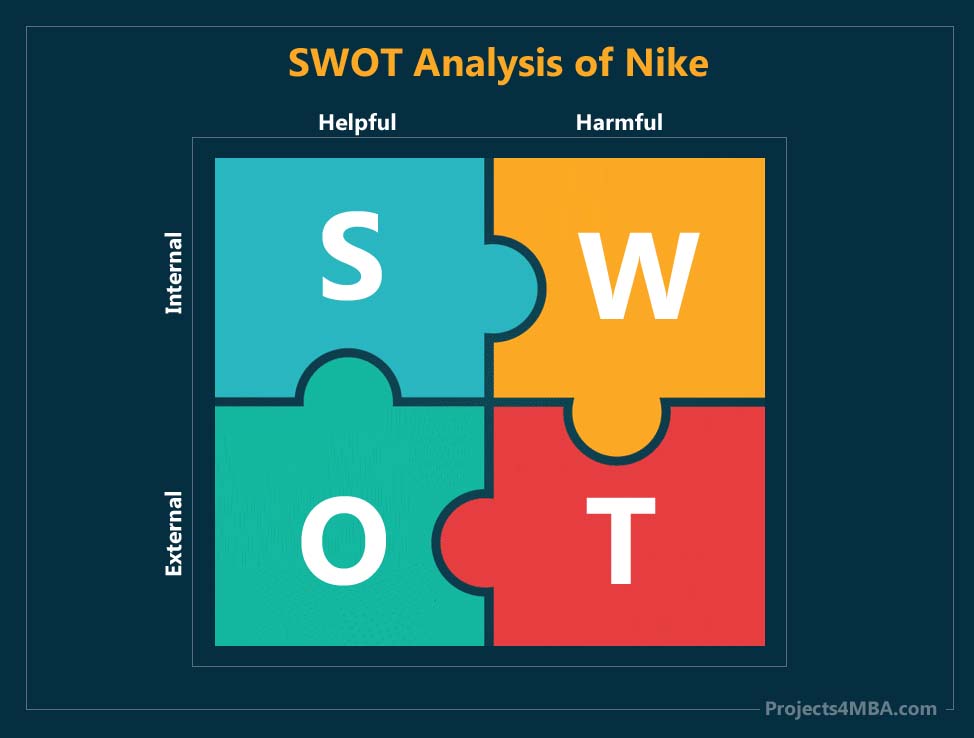
SWOT Analysis of Nike focuses on strengths, weakness, opportunities and threats. Strength and Weakness are internal factors. Opportunities and threats are external factors. This SWOT Analysis will give us a holistic view into the potential prospects of Nike and will allow us to understand both their current and future business decisions.

Nike is a market leader in the footwear and athletic apparel industry, Nike’s iconic phrase “Just Do It” and influential celebrity endorsements have made the sportswear giant a household name across the world.
swot analysis of nike

Strengths in the SWOT Analysis of Nike – Nike SWOT Analysis

Nike has a range of strengths, as do most major corporations. Some of the major strengths of Nike are :

  • Powerful Core Brand: One of the strongest — if not the strongest — names in the entire sportswear industry is the Nike brand itself. Nike is one of the first brands around much of the world to come into the minds of the public as they think of trendy, sporty apparel. Overall, this incredibly strong core brand is one of the main assets of Nike and every year you can bet that it helps them pull in billions in additional sales.
  • Diverse Brand Portfolio: The Nike brand itself is extremely strong, but the organization has a diverse range of products beyond that. This brand range includes most notably Converse as well as hundreds of other Nike-centric sub-brands including Nike Shox, Nike Blazers, and Nike Tiempo. This indicates that Nike has well spread its roots around the footwear industry , enabling it to give priority to painless weather shifts.
  • Low Production and labor Cost: Nike has relatively low labor costs as many of Nike ‘s products are produced in developing South East Asian countries such as Indonesia and Thailand. Moreover, for many of its shoes, Nike uses relatively cheap materials too. Together, these two factors — the labor cost and the cost of materials — allow Nike to produce its footwear at extremely low prices.
  • Nike is no. 1 shoemaker worldwide. For a range of sports, it manufactures and sells shoes like baseball, golf, cheer leading, volleyball , basketball, and football.
  • Nike operates shoe and sportswear stores in Nike City, factory outlets in Nike, and shops in Nike Women. Nike sells its goods in more than 180 countries and throughout the World.
  • As shown by its growing and creative product collection, Nike is good at research and development. They then manufacture at the lowest possible price, anywhere they can produce high quality goods.

Weakness in the SWOT Analysis of Nike – Nike SWOT Analysis

  • As you would imagine, there are also some flaws in Nike. It depends on the US economy, its producers and the footwear industry.
  • Dependence on the US market: More than 40 per cent of Nike’s sales came from the US market in 2018. As you can imagine, this as part of Nike’s business strategy shows an immense reliance on the US market. If American tax or legal laws were to shift it would dramatically harm the income of the sportswear giant, in some way impacting Nike’s ability to sell on the US market.
  • Outsourced Production: Despite the low cost of producing goods overseas, there are in reality downsides to that. For one thing, manufacturing abroad involves either setting up dedicated manufacturing operating in your country of choice or outsourcing the work to existing manufacturers. Nike prefers to do the latter, meaning their goods aren’t necessarily of high quality.
  • Footwear Focus: While Nike within the footwear industry itself is relatively diverse, Nike has not diversified much into other industries. Although the footwear industry is probably here to stay, Nike may consider expanding its horizons.
  • The enterprise ‘s revenue is also highly dependent on its footwear market share. This could leave it vulnerable if its market share erodes for some reason.
  • Retail is a very price-sensitive market. Yet much of its revenue comes from marketing to retailers. Retailers tend to give customers a somewhat similar experience. Thus margins begin to get squeezed as retailers attempt to move some of the pressure on Nike from the low price rivalry.

Opportunities in the SWOT Analysis of Nike – Nike SWOT Analysis

Thanks to healthy customers and affluent countries Nike has a growing demand in all countries. Some of the opportunities in the SWOT Analysis are :

  • Demand Rising : There are only growing numbers of people in this world and many of them (especially in developing countries) are gradually becoming more involved. These two factors combine together to establish a continuously rising market for footwear. If played correctly, Nike should be able to catch more of this growing market ‘s revenue, enabling the company to expand its profits even further.
  • Markets in the making : When nations around the world become wealthier and wealthier, developing-country people have more disposable income. Rising disposable incomes in areas such as South East Asia provide an opportunity for new markets to sell goods in. If Nike can market itself in these emerging markets, it will expand its presence and reduce reliance on the US market.
  • Responsible Suppliers: There is a growing interest in many Western countries to know where goods came from, and how the environment and staff were handled. This provides Nike with yet another chance. If they can identify themselves as a responsible supplier of sportswear products, they will be able to increase their market share among customers who are more ethically and environmentally aware.

Threats in the SWOT Analysis of Nike – Nike SWOT Analysis

  • Nike needs to look at all directions for threats: tax, market volatility, and counterfeiting of goods.
  • Tax tightening: Like many other major corporations, Nike has streamlined its fiscal plans down to the dollar. That has helped Nike to avoid paying large amounts of tax for many years, even on its profits in the billion dollars. However, there is growing debate about the amount of leeway large corporations are given when it comes to tax matters, which could one day come to an end their right to pay low amounts of tax. That would afford considerably lower net profits for Nike.
  • Competitors: In the highly competitive sports apparel industry, Nike is competing with other major names like Adidas , PUMA and Reebok ready to pounce on any new opportunities. As such, Nike needs to tread exceedingly carefully to ensure it is not replaced by one of these, or — somewhat less drastically — is not missing out on future sales.
  • Falsification: Nike clothing is subject to massive quantities of counterfeiting, as are many popular branded products. There are counterfeit Nike products everywhere — even on the internet. Nike needs to develop a plan to ensure that the counterfeiting of its products does not influence its core business model, either by taking legal action against counterfeiters or through a creative marketing campaign that allows customers to purchase the real thing.
  • Nike is exposed to commercial foreign character. It buys and sells in various currencies and so costs and profits over long periods of time are not constant. Such an exposure may result in the Nike being forced to manufacture and/or sell at a loss. This is a challenge facing all of the global brands.

Conclusion:

Nike is a massive company that competes in a challenging industry, but it is doing extremely well. Nike has been able to net several trillions of dollars annually, with its highly strong brand and low cost. Unfortunately, Nike is highly focused on the US market, and is little diversified outside the markets for footwear and sports apparel. Nike needs to be concerned about risks associated with these vulnerabilities, among others such as tax clampdowns or counterfeiting. Fortunately, Nike has many opportunities to develop its business, including capitalizing on the rapidly growing sportswear market.

If you like This Article Please Like our Facebook Page PROJECTS4MBA

Cite This Work

Referencing Style to cite this article:
[citationic]

SWOT Analysis of Nike – Nike SWOT Analysis [Explained] Read More »
SWOT Analysis of Pidilite Industries Limited [Explained in Detail]

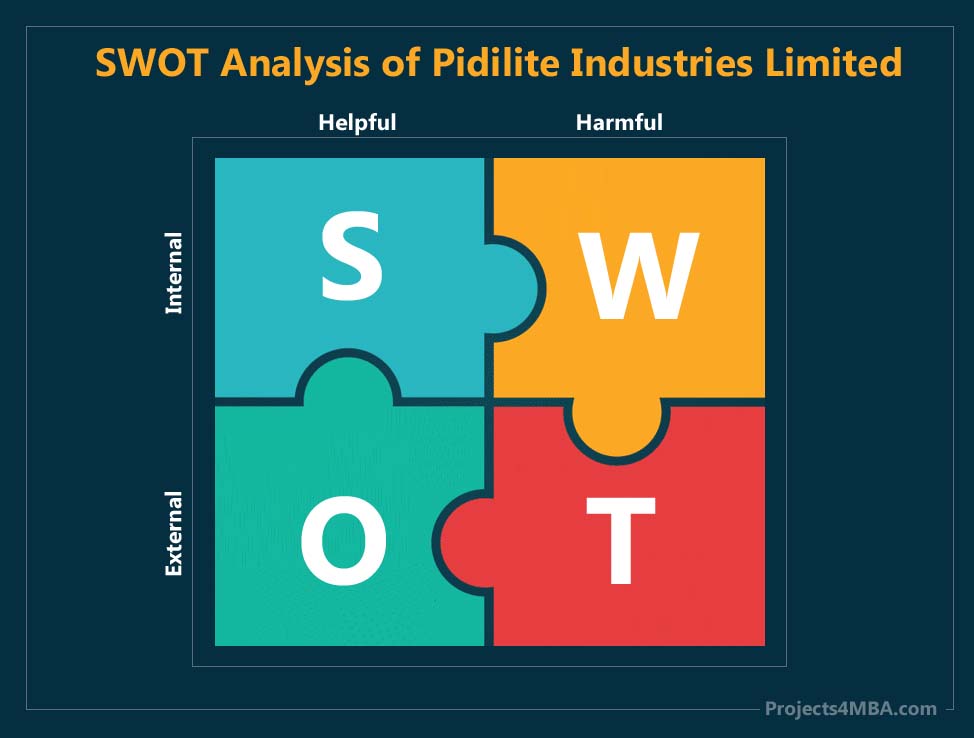
SWOT Analysis of Pidilite Industries Limited – Pidilite SWOT Analysis focuses on Strengths, Weakness, Opportunities, and Threats. Internal Factors in the SWOT Analysis are Strengths and Weaknesses and External Factors in the SWOT Analysis are Opportunities and Threats.

SWOT Analysis is a proven management tool that helps Pidilite Industries Limited to assess its market and its success against rival companies. Pidilite Industries Limited is the market leader for Adhesives and glues.

swot analysis of pidilite industries limited - 0

Pidilite Industries is a company based in India that operates in the Adhesive, Sealant and Water proofing solutions. Some of Pidilite’s flagship products, a market leader in the adhesive products segment, include Fevicol, Dr. Fixit, Motomax, M-Seal, FeviKwik, and Fevistick. Fevicol adhesive is a popular brand in India. Fevicol is having the maximum market share in Adhesive Market and available in many variants.

swot analysis of pidilite industries limited - 1

Pidilite products include adhesives, waterproofing solutions, sealants, polymers, industrial resins, arts & crafts building materials, and more. The business has been operating since 1959 and company is growing year by year. Company has a monopoly market.

H.Q. of Pidilite Industries is in Mumbai and has manufacturing facilities at seven locations across India. The company markets its adhesive brands in different regions of South East Asia as well as in other parts of the world apart from its home country. Let’s do SWOT Analysis of Pidilite Industries Limited.

Strengths in the SWOT Analysis of Pidilite Industries Limited – Pidilite SWOT Analysis

Strengths are the internal factors company posses for the growth. Strengths define the upper hand  of the company over its competitors. Pidilite Industries Limited strengths are as follows.

  • Market leader in adhesives: Pidilite’s greatest strength is its market supremacy in the adhesive field in India thanks to its flagship brand Fevicol. The adhesive market in India is growing at a rapid pace and India has a market of 5 Billion US Dollars. 68% Market Share is captured by Pidilite Industries Limited.
  • Strong Branding Strategy: The Fevicol brand has been able to place itself as a trustworthy brand in the customer’s mind through various promotional methods. Via consistent messages sent across a wide range of channels the brand was able to gain Indian customer’s trust and developed gradually into a household name.
  • Wide variety of products in the chemical sector: The Company has something to sell in most sub-categories of consumer chemicals such as adhesives , sealants, waterproofing solutions, building materials, industrial resins and even arts and craft materials.
  • Heavy emphasis on research: The product range is still continuously changing, with new products being frequently launched.
  • Deep Network of Suppliers and Distributors: The Company is well networked and has a broad distribution chain across the country that lets it reach out aggressively to clients. Even this works as a power.
swot analysis of pidilite industries limited

Weaknesses in the SWOT Analysis of Pidilite Industries Limited – Pidilite SWOT Analysis

Weaknesses are used to refer to places where change is required in the company or brand. Some of the Weakness of Pidilite industries are:

  • Excessive emphasis on consumer chemicals: The Organization is mainly engaged in the consumer chemicals market, which can be viewed as a specialized field with a great need for research in order to promote innovation.
  • Over-dependence on Fevicol, M Seal & Dr. Fixit: The Company is disproportionately dependent on the Dr. Fixit, M-Seal and Fevicol for more than 75 per cent of its sales. But placing all the eggs in the same basket can, in the long run, be harmful to the company’s financial health.
  • Work outsourcing to partners: The Company has a large research and development team in the field of construction materials, adhesives and sealants only. The remainder are turned over for businesses to purchase.
  • Increasing Reliance on Acquired Brands & Partners: In most other domains Pidilte looks for research support acquisition. This is a weakness in terms of creativity, as it greatly restricts the business and increases its reliance on acquired products.

Opportunities in the SWOT Analysis of Pidilite Industries Limited – Pidilite SWOT Analysis

Opportunities apply to those environmental avenues that surround the company on which it can focus to raise its returns. Opportunities for Pidilite Industries are:

  • Project Parivartan: The Organization has initiated a new Project Parivartan initiative that will update the supply chain system and aim to streamline costs from warehousing to transport.
  • New Branding Strategies: The Company has taken Amitabh Bachchan as its brand ambassador and this move is expected to boost its brand value, as this campaign will also be backed by strong digital and social media promotion.
  • Global Brands acquisitions: Pidilite has signed a contractual agreement with WD-40 Corporation, a multinational marketing agency, to oversee the selling and distribution of its WD-40 Multi-Use drug. This product has a variety of maintenance and repair applications and the company may also use WD-40’s popularity to market their goods in the home building and adhesive verticals.

Threats in the SWOT Analysis of Pidilite Industries Limited – Pidilite SWOT Analysis

Threats are those environmental factors which can be detrimental to business development. Some of the Threats are :

  • Low growth in the adhesive sector: Pidilite is over-dependent on the adhesive and sealant market, which posted an annual growth of 4% and is expected to slow down as it has been affected by macroeconomic fluctuations.
  • Weak growth in the chemical industry segment: revenue growth has also decreased in other markets, such as paint chemicals and art & craft supplies, suggesting that the business will need to look at the current survival product categories.
  • Real Esate Slump: Revenue growth in the waterproofing solutions of domestic subsidiaries suggested a rapid decline due to the downturn in real estate.
  • Reliance on other low-growth sectors: Many of Pidilite’s product segments are dependent on industries such as manufacturing and construction which have recently faced periods of low demand. This may ultimately become threats to the enterprise.
  • Government Policies are regulations: Change in Government Policies regarding use of chemicals can directly effect the manufacturing of the company.
  • Entry of Competitors: Company has a monopolistic market for its products but new entrants can be a major threat for the company.

If you like This Article Please Like our Facebook Page PROJECTS4MBA

Cite This Work

Referencing Style to cite this article:
[citationic]

SWOT Analysis of Pidilite Industries Limited [Explained in Detail] Read More »

SWOT Analysis of AMD (Advanced Micro Devices)

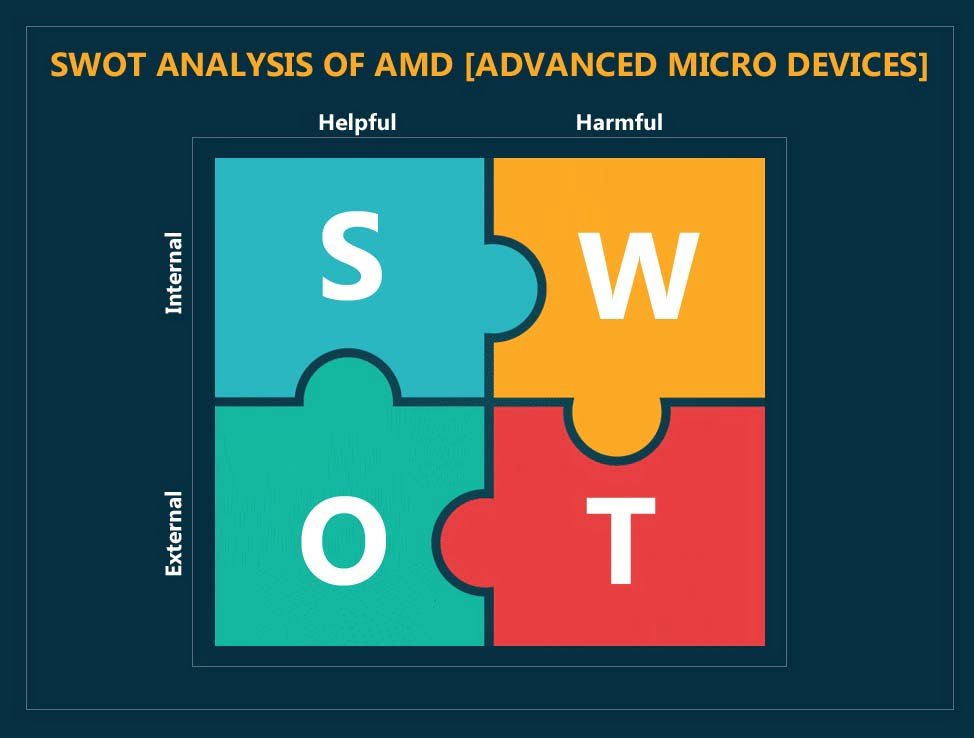
SWOT Analysis of AMD (Advanced Micro Devices) focuses on Strengths, weaknesses, opportunities, and threats. Strength and Weakness are the internal factors and Opportunities and Threats are the external factors which influence the SWOT Analysis of AMD (Advanced Micro Devices).

AMD (Advanced Micro Devices) has become a famous American global semiconductor company based in Santa Clara, California, and Austin, Texas. AMD had manufactured its own processors during the early stages, where it later outsourced its production. AMD’s main products are microprocessors, graphics processing units, embedded processors, workstations, and personal computers, as well as embedded systems.

AMD is the industry’s second-largest supplier of x86 based microprocessors. Through the years, AMD has developed into a multi-employee global enterprise and enters in to many significant businesses. Today, AMD is designing high performance computing and simulation technologies to address the hardest and most exciting challenges in the world.

With its high-performance computing and graphics tools AMD focuses on improving user life. AMD is known for its high-performance graphics and computing technologies. Whether it’s for any technology such as Gaming, AR, VR, Cloud, and Artificial Intelligence where high-performance applications are required, AMD puts these together into solutions.

The Quality Policy integrates the AMD devices. The company has a Quality Policy which helps them to maintain the highest standards of the products. The main aim is to provide the consumers with excellent goods which are supported by integrated and receptive partnerships.

swot analysis of amd (advanced micro devices)

Strengths in the SWOT Analysis of AMD (Advanced Micro Devices)

  • High-performance engineering – AMD focuses its high-performance computing and graphics technologies on improving user life. AMD is regarded as the world’s only organization with high-performance graphics as well as computing technologies.
  • AMD Quality Policy-The products of AMD are incorporated in the quality policy. The company has a Quality Policy which helps them to maintain the highest standards of the products. The main aim is to provide the consumers with excellent goods which are supported by integrated and receptive partnerships.
  • Brand Awareness-AMD has good brand awareness on the market for microprocessors and PC. This is a great strength for the enterprise.
  • Innovative Products– AMD drives innovation in high-performance computing, visualization technology and graphics.
  • International Operations – AMD has operations worldwide that include foreign sales offices, R&D centers, and joint ventures with assembly / test production facilities in malaysia and china.
  • Strategic Sourcing – AMD follows a recorded strategic sourcing procedure, which helps ensure a good match between the requirement of a project and the capabilities of the supplier.
  • Good R&D – AMD has outstanding research and development capabilities leading to numerous creative products.
  • Less Competitors – AMD ‘s main areas are Graphical Processing Unit and Microprocessor, with only one competitor. In reality, this is a huge strength for its company.
  • Technologies – AMD has produced products that work with CPU, Graphics, and various software technologies.
  • Good Track Record-AMD has built a strong track record of new product growth.
  • Guinness Book of World Record – AMD has been awarded by Guinness Book of World Record for its ‘Highest Frequency of a Computer Processor’ output in the year 2011.
swot analysis of amd (advanced micro devices) -1

Weaknesses in the SWOT Analysis of AMD (Advanced Micro Devices)

  • Less Computing Segment efficiency – Due to the arrival of various mobile devices and tablets, AMD sees a poor performance of computing segment.
  • Less seen in Mobile Industry – AMD seems to neglect the smartphone market, where a lot of business is taking place these days using the device.
  • Lower market share – AMD has heavy rivalry, and because of this it has a narrower room for winning large market share.
  • Quality Problems-Over the years, AMD has seen quality issues. p  In reality, this is a major weakness for the company. Less Preferred :  AMD Processors are less preferred by customers as compared to Intel Processors due to its performance and Heating. Heating in the Processors cause PC to hang this is not good for the company.    
  • Weak Promotional Strategy: AMD has a weak Promotional Strategy. Company has to follow aggressive promotional strategy to compete with its competitors.

Opportunities in the SWOT Analysis of AMD (Advanced Micro Devices)

  • Mobile market penetration – AMD will extend its business to include internet channels and tablets. There is an growing number of companies using handheld devices and it is also a must that they enter the smartphone market too.
  • New Product and Services – Edge will extend its line of products and services to create more opportunities for business.
  • Virtualization Space – In order to gain more exposure, the organization will grow in the Virtualization Space, which will help get more opportunities.
  • Low Cost CPU – AMD is expected to manufacture low-cost CPU for the developing markets to provide them with greater value.
  • New consumer behavior trends-New consumer behavior trends will open up a new AMD market. It will also provide the company with a tremendous opportunity to develop new revenue sources, as well as diversify into new product categories.
swot analysis of amd (advanced micro devices) -2

Threats in the SWOT Analysis of AMD (Advanced Micro Devices)

  • Rivals-AMD has two competitors, Nvidia and Intel, which are a big player on the market.
  • Environmental Regulations – Numerous environmental legislation pose a major challenge to current categories of goods where they could affect the production.
  • Rising raw material – Rising raw material can be an enormous threat to AMD ‘s profit.
  • Change in FDI Policies and Semiconductor Pricing can directly effect the company.

If you like This Article Please Like our Facebook Page PROJECTS4MBA

Cite This Work

Referencing Style to cite this article:
[citationic]

SWOT Analysis of AMD (Advanced Micro Devices) Read More »

SWOT Analysis of Dell – Dell SWOT Analysis

SWOT Analysis of Dell focuses on Strengths, weaknesses, opportunities, and threats. Strength and Weakness are the internal factors and Opportunities and Threats are the external factors which influence the SWOT Analysis of Dell.

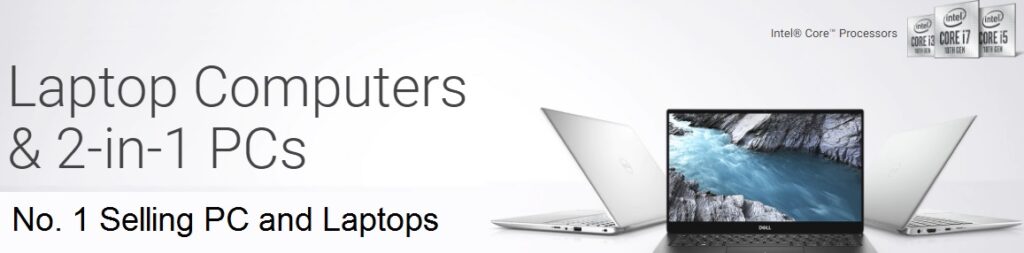
Dell is a US company that sells notebooks, data storage, servers, printers, and peripherals to customers. If we talk about Dell we can say that it is one of the top laptop brands in the world. Dell laptops are configured to meet the demands of every company and take care of any task with all the latest technology. Its well-known laptops models are Inspiron, Vostro, XPS, G Series, and Alienware laptops.

swot analysis of dell

Strength in the SWOT Analysis of Dell – Dell SWOT Analysis

  • Brand name: Brand name. Dell has a very good reputation for quality goods for the company. Its brand is worth $7.5bn.
  • Customization of the Product. Dell lets its customers customize their laptops. Originally, these services were not available within any other major computer retailer (and currently only Sony and Toshiba allow that), but add tremendous value to customers and provide a competitive advantage for Dell.
  • Record Environmental. Dell is involved in many green initiatives and has received numerous rewards for being an environmentally friendly business. This is advantageous when working with agencies of the public and government.
  • Competency in acquisitions and mergers. Dell is spending a lot of money to acquire new ventures and doing successful mergers and acquisitions, bringing patents, assets, new capabilities, and skills into the business.
  • Company model on direct sale. Rather than selling its products through big-box retail stores, Dell markets directly to customers and businesses, maintaining their less profit margin.
  • Biggest PC & Laptop manufacturer in the world.
  • One of the world’s most recognized brands.
  • First PC maker to offer next day on-site services for products.
  • Business model direct to consumer. Requires cutting edge technology.
  • Dell has relatively low running costs compared to sales, as it leaves out the retailer and supplies the consumers directly.
  • Dell’s Direct Model approach helps the organization to provide direct customer partnerships, such as corporate and institutional customers.
  • Direct consumer from Dell allows it to have top-notch customer support before and after the transaction.
  • Every Dell device is designed to fit the needs of each customer. Reliability, Support, and Operation.
  • Dell boasts a highly efficient production, manufacturing, and distribution cycle that enables it to deliver powerful solutions to consumers at reasonable prices.
  • Compared with companies using indirect distribution networks, Dell is able to implement the new related technologies.
  • Dell is not a manufacturer; the manufacturers produce parts, and Dell uses fairly inexpensive labor to assemble the computers. Then the finished goods are dropped in by courier with the customer. Dell holds absolute supply chain order.
  • Dell switches inventory over every six days on average, keeping the inventory costs low.
  • By increasingly applying the efficiencies of the Internet to its entire sector, Dell is strengthening and expanding the fundamental competitive advantages of the direct model.
swot analysis of dell -1

Weaknesses in the SWOT Analysis of Dell – Dell SWOT Analysis

  • Items in material:  The large stream of Dell’s revenue comes from sales of computers, especially laptops, which is a commoditized product. Computer hardware goods (commodity) are marketed with a very low-profit margin.
  • Bad service to the customer:  Although celebrated, Dell’s customer relations declined as its call centers were outsourced overseas. Dell has spent a huge amount of money in fixing this but has not yet recovered its former customer service image.
  • Less Investment in R&D: The company spends a much lower percentage of its income on R&D than its main competitors and thus missed an opportunity to develop strong products for the smartphone and tablet markets and to learn new skills and capabilities.
  • Low Portfolio of Patents: Due to low R&D spending, Dell has not acquired a strong patent portfolio, and is now finding it difficult to compete in the lucrative smartphone and tablet market.
  • Far too few shopping stores:  Selling products online saves money and allows for product customization but gives the products less visibility. The customer finds it difficult to trust the goods unless he can keep them in his hands first.
  • Low Unterscheidung: When Dell’s competitive advantage was the low price but the company can no longer afford competitive pricing. In addition to the quality, Dell ‘s products are little differentiated from the products of the rivals and are at a competitive disadvantage if the price offered by the rival is lower.
  • A wide range of goods and parts from many manufacturers from various countries.
  • Computer maker and not the manufacturer of computers, leaving DELL unable to move supply.
  • Dell lacked strong partnerships with dealers/distributors.
  • No proprietary equipment
  • Not attracting the market segment of college students. Dell’s sales revenues from educational institutions such as universities constitute just 5 percent of the total.
  • Dell ‘s focus on institutional corporate and government customers somehow affected his ability to form relationships with educational institutions.
  • Dell ‘s direct method and approach to customization posed problems for home users. For one thing, customers can not go to the retailers because Dell does not use channels for distribution.
  • Customers simply can not purchase Dell as easily as other products, since each product is custom-built to their needs and this can take days to complete.

Opportunities in the SWOT Analysis of Dell – Dell SWOT Analysis

  • Expand divisions of logistics and business solutions:  Dell provides numerous services (cloud, security, and infrastructure) and enterprise solutions (servers, networking, and storage), which are currently Dell’s most profitable business. Dell’s business must focus on growing those divisions as they promise better opportunities for growth and higher margins for profit.
  • Further patents are acquired by acquisitions:  When Dell wants to diversify; it needs patents and innovative innovations in emerging technology. Dell has not properly set up its R&D facilities to discover new technologies and patents so acquiring other companies are the only feasible way to obtain patents and technologies.
  • The company can strengthen its presence in emerging markets:  The fastest-growing markets for laptops, pc, tablets, and other electronic devices are the emerging economies. Dell has a good market presence but the company experiences decreasing market share, hence company should strengthen its position.
  • The growing market for tablets:  Over the next few years the tablet market is projected to rise in double digits and the business has a great opportunity to introduce new tablet models and benefit from the growth of the market.
  • Strategy for diversification by adding a lot of new products into its portfolio.
  • Now more than ever personal computers are becoming a requirement. More and more consumers are being informed about computers. Second-time buyers will most likely take advantage of Dell’s custom-built machines, because as their experience grows, so does their need to explore or use some new device features.
  • The internet also offers Dell greater opportunities, as all they have to do now is visit Dell ‘s website to place their order or get information.
  • Because Dell has no retail outlets, online sales will definitely make up for her absence. Also, shopping online is more convenient for customers than actually driving and buying at a physical store.

Threats in the SWOT Analysis of Dell – Dell SWOT Analysis

  • Demand for smartphones and tablets is growing. Consumers also prefer tablets and smartphones over notebooks, with a lower price and greatly improved capabilities. The rising demand for the previous products is taking a share of Dell ‘s key revenue source, the laptops.
  • Lowering the profit margin on hardware goods. Dell ‘s key income comes from the selling of hardware goods, which will raise costs in the future due to the increasing prices of raw materials. It will add to Dell’s expenses and further increased the profit margin.
  • Slowing demand growth for the laptops. Computer industry growth is slowing down, and the markets will become exhausted in the near future. This will prove difficult for Dell to survive in such a market, or at least to claw back the market share lost.
  • Heavy rivalry. The company is facing intense competition in all segments of its market. It competes with Acer, Apple, HP , IBM, Lenovo, and Toshiba, in terms of price, quality, brand, technology, reputation, distribution, and product selection.
  • A competitive rivalry that exists globally in the PC market.
  • New business entrants face potential risks.
  • The possibility of being outmoded in a computer company is a pulsating fact.
  • The difference in price between the brands is getting smaller.
  • Direct Model by Dell attracts consumers as it saves costs. It could challenge Dell’s price-conscious rising consumer base because many companies can sell computers at a low cost.
  • Price distinction is no longer a problem for a consumer with nearly equal costs. Instead of waiting for Dell’s personalized computers, they could prefer other brands.
  • The computer industry’s growth rate is declining, too. Today, Dell holds the largest market share. When demand slows down, the process will make competition stiffer. To be able to continue holding a significant market share, Dell has to work doubly hard to differentiate itself from its replacements.

If you like This Article Please Like our Facebook Page PROJECTS4MBA

Cite This Work

Referencing Style to cite this article:
[citationic]

SWOT Analysis of Dell – Dell SWOT Analysis Read More »

SWOT Analysis of Goodyear Tyres [step by step SWOT]

SWOT Analysis of Goodyear Tyres focuses on Strengths, weaknesses, opportunities, and threats. Strength and Weakness are the internal factors and Opportunities and Threats are the external factors which influence the SWOT Analysis of Goodyear Tyres.

Goodyear Tyres is a major US-based tyre-manufacturer. Goodyear produces, distributes, and markets tyres for trucks, buses, two-wheelers, cars, farm equipment, and aircraft. The organization has operations in 48 facilities across 22 countries with close to 64,000 workers. The firm also produces rubber-based chemicals for a variety of commercial and industrial applications.  Good Year has a presence in India from the past 90 years.

The company reported an annual turnover expects a growth rate of more than 12 per cent in the coming years. The business envisages concentrating on the demand for premium tyres, which is expected to expand in the coming years. The company sells its tyres to almost every country in the world and its main focus is on the United States and Europe, from which it receives much of its sales. Goodyear also has the distinction of being the top suppliers of tyres for the famous Formula 1 motor racing event.

Competitors of Goodyear Tyres are :

swot analysis of goodyear tyres

Strength in the SWOT Analysis of Goodyear Tyres

  • Goodyear is the oldest player in the Tyre Industry.
  • Strengths are defined as what each business does best in its range of operations that can give its competitors an upper hand. These are Goodyear ‘s strengths:
  • Focus on high growth segments: Goodyear has aligned their product portfolio to high growth segments that are profitable for them, such as Wrangler SRA, Eagle F1 All-Season, and the Assurance Fuel Max. This accounts for a good return on investment.
  • Alignment with a strong vision: Goodyear aligns its goods and service with a vision that includes building a strong and sustainable brand, innovating in all of its goods, targeting the specific markets and providing complete commitment to all of its stakeholders, including consumers, distributors or OEMs.
  • Seamless product integration: Each of their categories from the NASCAR category to the commercial tyres run in full synergy. Both consumer and commercial companies are in good harmony with each of both divisions having a separate tyre- and service network.
  • Clear knowledge of consumer needs: Goodyear’s positioning is backed by deep research on consumers. Goodyear has also been focused on listening to the voice of the consumer and most of their items are tailor-made to suit customer needs. They also recognized the demand from each market and produced tyres, to match the needs of the individual customer.
  • Focus on new products: Goodyear aims to invest in new products and concentrate on the 17 “and above premium market. The company is preparing to introduce the Goodyear Assurance Climate Ready Tyres which is high grip and high traction tires ideal for all roads and all weather conditions.
  • Association with sporting activities: The tyre brand has always been affiliated with top racing events like Formula 1 and Nascar and the tyres are favoured on the racing circuit which is one of their main businesses.

Weaknesses in the SWOT Analysis of Goodyear Tyres

Weaknesses are used to refer to places where change is required on the company or brand. Any of Goodyear ‘s primary failings:

  • Inventory control: With demand volatility, Goodyear has sought to reduce prices and monitor inventory. All these policies work on Goodyear product pricing and quality and can potentially adversely impact the branding strategy.
  • Big size: Goodyear is actually the world’s largest company with about 64,000 staff and 52 production facilities. With the growing financial uncertainty across the globe maintaining the momentum for such a high empire would prove to be a costly business for the company.
  • Pricing: The bulk of the raw material used in the manufacture of tyres are oil-based derivatives and their value is influenced by volatility in oil prices. But handling tyres’ prices considering that consumers already find Goodyear to be a luxury tire brand is going to be a big problem in the future.

Opportunities in the SWOT Analysis of Goodyear Tyres

Opportunities apply to those environmental avenues that surround the company on which it can focus to raise its returns. Among the possibilities are:

  • The high market opportunity for premium tires: demand for luxury tyres in the 17 inch and above range is on the rise in Europe and the USA. The customer survey reveals they prefer high-value-added tyres from both a performance and style perspective. This could be a potential area for prospecting luxury tyre makers.
  • Increase in demand in emerging markets: in emerging economies, there is a demand for tyres, as the car and two-wheeler market is on the rise. Research also suggests that in these countries there will be a surge in the demand for replacement tires which is something Good Year will capitalize on.

Threats in the SWOT Analysis of Goodyear Tyres

Threats are those environmental factors which can be detrimental to business growth. Those risks include:

  • Competition: The organization faces strong competition from Bridgestone, Michelin and Cooper as well as from local players in each regional market in which they work.
  • Price fluctuations: The cost of raw materials for tyres, including prices of synthetic rubber, carbon black, chemical solvents, etc., are all extremely unpredictable, posing immense challenges for tyre firms.
  • Government Policies: Change in Government policies can adverse effect on the company.
  • Competitors Pricing and Discount offers can be a major threat to the company.
  • Cheaper Tyres in China: Imported Chinese tyre goods are cheaper and thus pose a tough market competition. Imports by the Chinese will adversely affect the profitability of Goodyear Tyres.
  • Volatility in rubber production: Indian rubber production is volatile and generally lower than the demand produced, and therefore the price of rubber fluctuates in light of demand. It has an impact on the firm’s pricing policy.

If you like This Article Please Like our Facebook Page PROJECTS4MBA

Cite This Work

Referencing Style to cite this article:
[citationic]

SWOT Analysis of Goodyear Tyres [step by step SWOT] Read More »

SWOT Analysis of Apollo Tyres – Apollo Tyres SWOT [Detailed]

SWOT Analysis of Apollo Tyres focuses on Strengths, weaknesses, opportunities, and threats. Strength and Weakness are the internal factors and Opportunities and Threats are the external factors which influence the SWOT Analysis of Apollo Tyres.

Apollo Tyres AG is the manufacturer and marketer of tyres and tubes. Apollo Tyres operates in Asia, Europe and Africa. Apollo Tyres are located at Gurgaon & Haryana. Operating income for the business has risen over the last few years. Apollo Tyres is a leading player in the Tyre Industry.

Competitors of Apollo Tyres are :

swot analysis of apollo tyres

Strength in the SWOT Analysis of Apollo Tyres – Apollo Tyres SWOT Analysis

  • Strong Brand image: One of its strengths is the versatility of Apollo ‘s Brand. The company’s manufacturing units are based in India, the Netherlands, and South Africa, and its tyres are distributed in Asia , Africa, and Europe under different brand names. The presence in the portfolio of various strong brands gives the company a reputation which gives the company a competitive advantage.
  • Good financial performance: Apollo’s net revenues increased in the last 5 years at a CAGR of 2 percent and its income increased in the same period at a CAGR of 34 percent. Good financial performance boosts the interest of shareholders and also provides space for future expansion plans and thus also increases market share.
  • Research and Development emphasis: Apollo invests extensively in programs related to research and development ( R&D). Improvement of main performance parameters including endurance, grip, and mileage is Apollo’s primary objective. It helps the company to invest in new and creative goods. Good research and development provide superior technological capabilities.
  • Market share: Apollo has a strong market share in India, as can be seen from the graph. This is the second largest holder of market share in LCV’s and the largest holder of market share in medium and large commercial vessels.
  • Marketing and Promotions: Apollo Tyres is marketing its products very aggressively. Apollo Tyres is using Modern Methods of Promotion like Google Ads, Facebook ads,  Instagram Ads, and Online Viral Marketing.

Weakness in the SWOT Analysis of Apollo Tyres – Apollo Tyres SWOT Analysis

  • Labour Strikes and Lockouts: The company has faced numerous labour Strikes and lockout issues at its plants in Durban, Vadodara, etc. in the recent past. It affects the manufacturing capacity of the company, and therefore also affects the company’s financials.
  • Strong reliance on the Indian market: while the company has grown internationally but the majority of the company’s revenue is based on the Indian market (about 65.2 percent of its revenue was from India in the 2015 fiscal year). This leaves the company vulnerable to changes in India’s economic and political climate. To reduce the risks of relying heavily on one market, the company needs to increase its sales in other markets.

Opportunities in Apollo Tyres Ltd ‘s SWOT Analytics:

  • Growing Four Wheeler Industry in India: Four Wheeler Industry in India is consistently growing and has shown 4 percent CAGR growth from the 2015-18 period. Over the same period, Indian truck manufacturing also saw a 7 per cent CAGR rise. Growth means rising prospects on both the 4-wheeler and commercial vehicle segments.
  • Expansion in the Two Wheeler segment: In view of its existing product range, Apollo aims to occupy 85 per cent of the industry. With the growth of the 2-wheeler industry, Apollo is able to increase its position in this industry.
  • International Expansion: The organization has been in an expansion phase in countries such as Lebanon, Qatar and Jordan for the last 3 years. The company will aim to do the same and venture into new markets.

Threats in the SWOT Analysis of Apollo Tyres – Apollo Tyres SWOT Analysis

  • Heavy competition: Competition in the tire industry is very strong with competitors such as MRF Tyres, JK Tire and Goodyear in particular in India. Fierce competition can have an effect on sales and expansion plans for the company.
  • Cheaper Tyres in China: Imported Chinese tire goods are cheaper and thus pose a tough market competition. Imports by the Chinese will adversely affect the profitability of Apollo.
  • Volatility in rubber production: Indian rubber production is volatile and generally lower than the demand produced, and therefore the price of rubber fluctuates in light of demand. It has an impact on the firm’s pricing policy.
  • Government Policies: Change in Government policies can adverse effect on the company.
  • Competitors Pricing and Discount offers can be a major threat to the company.

If you like This Article Please Like our Facebook Page PROJECTS4MBA

Cite This Work

Referencing Style to cite this article:
[citationic]

SWOT Analysis of Apollo Tyres – Apollo Tyres SWOT [Detailed] Read More »

SWOT Analysis of MRF Tyres [step by step Detailed SWOT]

SWOT Analysis of MRF Tyres focuses on Strengths, weaknesses, opportunities, and threats. Strength and Weakness are the internal factors and Opportunities and Threats are the external factors which influence the SWOT Analysis of MRF Tyres.

MRF or Madras Rubber Factory is a well-known Indian tyre manufacturing firm. It soon became a multinational company and produces India’s largest number of tyres. It is based in Chennai, India and was established in 1946.

MRF also manufactures things like treads, tubes, conveyor belts, toys, and paints, along with tyres. The company also successfully established a motorsport challenge in India in the form of the MRF. Many of the company’s factories are based in South India including Puducherry, Kerala, Trichy, and several other places.

Competitors of MRF Tyres are :

swot analysis of mrf tyres

Strength in the SWOT Analysis of MRF Tyres – MRF Tyres SWOT Analysis

Any brand ‘s strengths account for positive aspects which make the brand what it is today. Being a large organization, MRF has taken advantage of its success to achieve the role they are in today. And let’s see what qualities MRF carries:

  • Reaching Rs 5,000 crores milestone: MRF became India’s first company to reach a point where the company’s turnover exceeded Rs 5,000 crores, being listed as the number one firm in the tyre industry.
  • Building a strong network: MRF has a very large and established distribution network.
  • A significant number of production units: MRF has a total number of 6 manufacturing units, which are located in southern India.
  • Having a strong export market: MRF has a large and very successful position when it comes to exporting goods, which is done roughly across 65 countries.
  • Having a broad portfolio: There is a full range available with MRF when it comes to the manufacture and use of various tyres, designed for different vehicles.
  • Brand value: MRF is not only a very high value for the company but also has consumers’ confidence and faith.
  • Variety of tyres: MRF has also taken various steps to match the tyres, which can withstand different terrain conditions
  • Financial condition: MRF is in an extremely strong financial position
  • The company’s diversity: MRF is widely divided into three main components, Funskool, MRF Racing and the MRF Pace Foundation
  • Strong advertising reaching out: a company that advertises itself as a tyre-making company in India that is environmentally friendly in nature.

Weakness in the SWOT Analysis of MRF Tyres – MRF Tyres SWOT Analysis

  • A company counter flaws for the downsides and the challenges a company faces along the way. Below are some of the shortcomings that MRF possesses, given their rather strong strengths.
  • Lack of volatility: MRF still lacks a lot of volatility, for example when it comes to considering industry-based relationships, the unrest of MRF ‘s labor.
  • Being in a very strong competition: MRF has a lot of market competition, which is very intense and affects MRF’s good performance somewhere, particularly after the arrival of some of the world-renowned global tyre brands
  • These listed above were the shortcomings MRF possesses, despite having such strong strengths.

Opportunities in the SWOT Analysis of MRF Tyres – MRF Tyres SWOT Analysis

  • Opportunities are the places where the company will have scope for improvement that will work further in the future for their image.
  • Going through a rapid growth: with the growth in the automotive industry, markets are growing at a fast pace.
  • Maintain good relationships: have a relatively good amount of ties with some businesses and maintain a good B2B market.
  • Having a lot of diversity: possessing a vertical and horizontal form diversification.
  • Growing Car Market and Demand of the car tyres can be a great opportunity for the company.
  • Company can tie-up with car manufacturers to promote and use tyres of MRF.

Threats in the SWOT Analysis of MRF Tyres – MRF Tyres SWOT Analysis

Threats are something that can damage the credibility or market value of the company. Unfortunately there are some risks concerning MRF even after being one of the best in tyre companies. Those risks include:

  • Strike: The company has been largely traumatized by an internal strike at MRF along with the entire automotive industry in Chennai. This severely disrupted manufacturing and production in Chennai is nearly dead.
  • Raw Materials prices are constantly increasing: the prices of important raw materials for the manufacture of products such as natural rubber and crude oil are constantly rising, both nationally and globally. This can build a lot of trouble having rubber supply in the next two years as ANRPC has said.
  • Cheaper product availability: Cheaper goods are available on the market imported from China as compared with MRF. While MRF has no quality at all, it has been observed that it has made 5 percent of business in the industry as a whole.
  • Competition: Competition from leading tyre companies and from local market companies can be a major threat.
  • Costs: The rising technology and raw material costs will also pose a potential threat.
  • Changing Government laws for Rubber and Tyre companies is a major threat.
  • New Entrants can be a major threat.
  • Discount and attractive offers

If you like This Article Please Like our Facebook Page PROJECTS4MBA

Cite This Work

Referencing Style to cite this article:
[citationic]

SWOT Analysis of MRF Tyres [step by step Detailed SWOT] Read More »

SWOT Analysis of Bridgestone Tyres [Explained]

SWOT Analysis of Bridgestone Tyres focuses on Strengths, weaknesses, opportunities, and threats. Strength and Weakness are the internal factors and Opportunities and Threats are the external factors which influence the SWOT Analysis of Bridgestone Tyres.

For nearly two decades now, Bridgestone tyres have been present in India and have reported consistent production. A preferred manufacturer for Original Equipment Manufacturing (OEM) companies in India, Bridgestone also has strong customer satisfaction, though more costly than rivals. The reason for this is the responsibility of the tyre-makers to quality and their compliance with global standards.

The organization has undergone several quality certifications and received them from several of the best certification companies in the world. Bridgestone currently dominates India’s passenger car market, and is preferred to most other rival brands. Bridgestone is the most suggested and top-selling cars tyre.

Competitors of Bridgestone Tyres are :

Let’s discuss SWOT Analysis of Bridgestone Tyres.

swot analysis of bridgestone tyres

Strengths in the SWOT Analysis of Bridgestone Tyres – SWOT Analysis of Bridgestone Tyres

Strengths are defined as what each business does best in its range of operations that can give its competitors an upper hand. Those are Bridgestone ‘s strengths:

  • Most Suggested Tyres: Bridgestone Tyres are the most suggested and recommended tyres by automobile manufacturers and professionals.
  • Brand presence: Bridgestone is a tyre company that is global, with many consumers worldwide not only recognizing but also loving the company and enjoying high brand loyalty, good memory and mindshare. The businesses operate through a large network of dealers and distributors, with offices in about 24 countries around the world.
  • Largest tyre-maker: Bridgestone is actually the world’s largest tyre-maker and its focus field is radial tyres.
  • Focus on OEM’s: Bridgestone’s main target market is the OEM’s and the company has also made genuine attempts to establish close relations with OEM’s The company has a new plan to now collaborate with various car companies to make them their favourite brand.
  • Special design: Bridgestone has many firsts and is home to many developments in tyre technology. One of the newest to join this list is the Drive Guard that can be fitted to any type or category of vehicles with a tire pressure monitoring device.
  • Run event association: Bridgestone has also been a strong presence in most important racing events like Formula 1 where it has been affiliated with many winning teams. It has increased the prestige and popularity of the brands as a choice for high performance and lasting tyres.
  • Good Distribution: Bridgestone tyres have a very good distribution network in the country.
  • Using Modern ways of Promoting Products like Social Media, Youtube Videos, Facebook, Instagram, etc.
  • Quality: Quality of Bridgestone tyres is trusted by a large population of customers.

Weakness in the SWOT Analysis of Bridgestone Tyres – SWOT Analysis of Bridgestone Tyres

Weaknesses are used to refer to places where change is required on the company or brand. Bridgestone’s main weaknesses include:

  • Increased focus on India: Bridgestone has increased their dependence on the Indian automobile market with much impetus given to OEMs here. In the long run, this may affect its focus in other, more lucrative, markets.
  • Expensive: Bridgestone perceived to be an expensive tyre, and it may not be preferable for customers looking for value for money tyres. That can mean lower margins for the tyre business in a price-conscious market.
  • Variety of terrains: Bridgestone makes tyres for countries all over the world which means that these tyres must be suitable for a wide variety of terrains. This dramatically increases the need for a diverse product portfolio as well as mandates a lot of research which may be very expensive to fund.
  • Complex customer behaviour: Each customer may have a different set of needs from the tyres, therefore listening to the customer’s voice is extremely important. Work therefore has to start right from the customer level and this has to be made a continuous operation. It provides the company with a great many problems.

Opportunities in the SWOT Analysis of Bridgestone Tyres – SWOT Analysis of Bridgestone Tyres

Opportunities apply to those environmental avenues that surround the company on which it can focus to raise its returns. Among the possibilities are:

  • High demand for replacement tyres: Over the next few years, the market for replacement tyres is expected to increase. This is a phenomenon that has been prevalent for several years now, and increasing production costs and increasing rubber and fuel prices will keep this alive for some longer.
  • Rising vehicle sales in emerging economies: Countries such as India, China, and Brazil will be automakers’ top destinations in the coming several years. Growing population income statistics and increased driving safety awareness will make people prefer more cars than double-wheelers. This will cause the demand for tyres to increase proportionally.
  • Improved market orientation: Tyre companies look favourably on vertical integration and even offer value-added services at an extra price. It includes GPS monitoring, digital infrastructure, wireless application protocol and, among others, mobile device monitoring infrastructure. Each of these may be future targets for tyre-makers.

Threats in the SWOT Analysis of Bridgestone Tyres

Threats are those external factors which can be detrimental to business growth. Some of the Threats are :

  • Competition: Competition from leading tyre companies and from local market companies can be a major threat.
  • Costs: The rising technology and raw material costs will also pose a potential threat.
  • Changing Government laws for Rubber and Tyre companies is a major threat.
  • New Entrants can be a major threat.
  • Discount and attractive offers

If you like This Article Please Like our Facebook Page PROJECTS4MBA

Cite This Work

Referencing Style to cite this article:
[citationic]

SWOT Analysis of Bridgestone Tyres [Explained] Read More »
SWOT Analysis of Ceat Tyres – Ceat Tyres SWOT Analysis

SWOT Analysis of Ceat Tyres focuses on Strengths, weaknesses, opportunities, and threats of the company. Strength and Weakness are the internal factors and Opportunities and Threats are the external factors which influence the SWOT Analysis of Ceat Tyres.

Ceat Tyres Limited is a company founded in Turin, and currently based in Mumbai. Ceat Tyres manufacturing and selling automotive tyres, tubes, and flaps. Ceat Tyres is one of the top radial producers for multiple types of vehicles. The company manufactures, among others, tyres for light commercial vehicles (LCVs), two-wheelers such as motorcycles and scooters, passenger cars, farm vehicles, and trailers, off the road (OTR)/specialty vehicles and trucks.

The company has reported an annual turnover of close to USD 1 billion, with a production capacity of about 95,000 tyres per day.

Competitors of Ceat Tyres are :

swot analysis of ceat tyres - 1

Strengths in the SWOT Analysis of Ceat Tyres – Ceat Tyres SWOT Analysis

  • Strengths are defined as what each business does best in its range of operations that can give its competitors an upper hand. Ceat’s strengths are as follows:
  • Large product portfolio: CEAT is popular for its motorcycle tyres that are sold under the CEAT Zoom, F85, F67, CEAT Zoom Tubeless, Secura Sport, Milaze, and Secura Zoom labels, etc. The company has also manufactured tyres for scooters under the labels Zoom D and Gripp and passenger car tyres under the names Czar HT, Czar AT, Rhino and Rhino TQ. Their range of tyres for commercial vehicles is Buland and Buland Mile XL RIB, while for three-wheelers it is Anmol SL and Buland Mile XL.
  • High visibility of the brand: Ceat Tyres is a popular Indian brand with high recall and recognition of marks. The company has been consistent in its advertisements and has always communicated both value-driven proposition as well as technical know-how.
  • Focus on consumer needs: Ceat has always focused its products on customer reviews and has always adjusted its products to the customer’s preferences. The company’s new focus is on goods that are technically superior and on driving safety.
  • Model FMCG distribution channel: The company has based its distribution chain on FMCG companies quite unlike other tyre manufacturers. Rather of selling tyres directly to the customer, they have added an intermediary layer of dealers who market it to sub-dealers.
  • Advertisements: Lately, the business has conducted a lot of promotions and some of the new ads such as the Nimbu Mirchi one have been able to grab the customer’s attention.
  • Ceat Tyres is providing an exchange for any wear and tear of tyres for 3 Years which makes it the first choice of the customers.
  • Best CRM Practices: CRM practices of Ceat Tyres is very Good. Ceat uses every possible way to connect with customers.
  • Very Good Distribution and Dealer Network in the country.
  • Good focus on after-sales operation: Ceat Tyres has many customer service channels, service quality is high. Ceat has improved a lot and gives customers the best services in the industry.
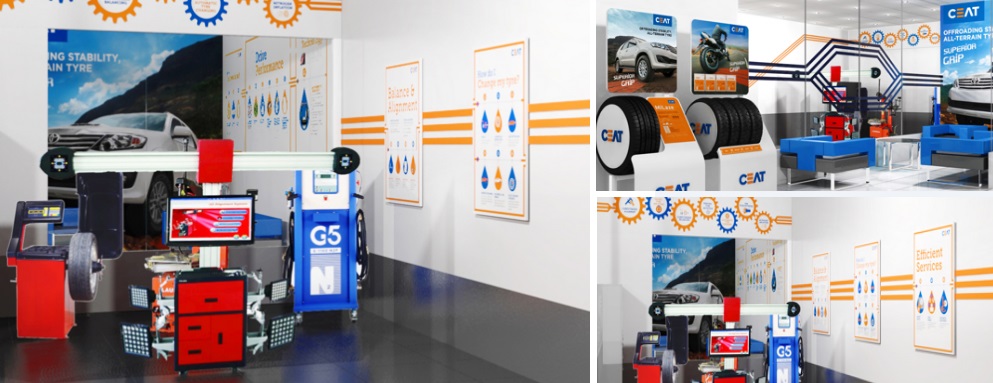
  • Equipment: State of Art Equipments for CEAT Shoppe makes it no 1.
swot analysis of ceat tyres

Weaknesses in the SWOT Analysis of Ceat Tyres – Ceat Tyres SWOT

  • Analysis Weaknesses are used to refer to places where change is required on the company or brand. Some of Ceat’s primary shortcomings are:
  • No market leadership: although Ceat is present in multiple categories such as two equipment and specialty tyres, it is not a market leader in any of these categories although it has a strong presence in the brand.
  • High margins: Ceat’s primary focus field is on radial tyres, and the rivalry is strong in this sector because of selling rates and high margins.
  • Focus on too many segments at a time: The organization is focused on too many segments at a time, which has resulted in diluting its position in all segments and rendering them unable to fight the competition, diluting the scarce resources already available.

Opportunities in the SWOT Analysis of Ceat Tyres – Ceat Tyres SWOT

Opportunities apply to those environmental avenues that surround the company on which it can focus to raise its returns. Among the possibilities are:

  • High growth potential: The country has around 60 big and small tyre producers, some of which are regional players. The tyres market’s growth trend between 2015 and 2021 is about 9 per cent per year. The highest growth for the two-wheeler tyres is expected.
  • Changing consumer needs: the needs of the customer are constantly changing and the demand is currently for safety and comfort driving. This creates a massive demand for high grip tyres.
  • Rising passenger car market: In India, the passenger car industry is growing and many multinationals are setting up shop in India. This will lead to increased demand for the OEMs.

Threats in the SWOT Analysis of Ceat Tyres – Ceat Tyres SWOT

Threats are those environmental factors which can be detrimental to business growth. Those risks include:

  • Competition: The firm faces tough competition from brands such as JK Tyres, Apollo Tyres, Dunlop, Bridgestone, Michelin, Strong Year and Cooper Tyres in India.
  • High material costs: materials used in tyres such as synthetic rubber, carbon black, steel reinforcement, chemicals and so on are highly fluctuating and this will invariably affect the final product pricing;

If you like This Article Please Like our Facebook Page PROJECTS4MBA

Cite This Work

Referencing Style to cite this article:
[citationic]

SWOT Analysis of Ceat Tyres – Ceat Tyres SWOT Analysis Read More »

SWOT Analysis of Berger Paints [step by step SWOT]

SWOT Analysis of Berger Paints focuses on Strengths, weaknesses, opportunities, and threats of the company. Strength and Weakness are the internal factors and Opportunities and Threats are the external factors which influence the SWOT of Berger Paints.

Berger paints is a large business engaged in the manufacturing and distribution of Paints in India. The company has headquarters in Kolkata and originates from India. It is considered to be an outstanding producer and dealer, but it is not as powerful as Berger Paints in ads. Berger paints have a big presence in 5 countries, including India, Nepal, Russia, Poland, and Bangladesh. In addition, it is still attempting to make inroads in Africa.

Let’s discuss SWOT Analysis of Berger Paints.

swot analysis of berger paints

Strengths in the SWOT Analysis of Berger Paints – Berger Paints SWOT Analysis

  • Company basket: Berger Paints provides a wide range of products like home painting, primers, coatings, etc. They also offer the option of decorative paints which is the latest on the market and in demand. It bought the unit of decorative paints from the US-based Sherwin Williams Paints.
  • Brand Recognition: Being the second-largest manufacturer of Paint gives them a healthy equity brand. The company is known by almost all, and is acquainted with its products and deals. Their exacting promotions made them a household name.
  • Foreign Market: It has international operations in a few countries including Nepal, Bangladesh, Russia, Poland, Cyprus, and cooperation with Sweden’s Becker and Japan’s Nippon paints.
  • Competent Leadership: Kuldip Singh Dhingra is the chairman and Gurbachan Singh Dhingra is the vice-chairman who holds a combined 75 percent stake in the company and has brought it to new heights making it the second-largest paint maker trailing behind Berger paints. The company’s future leadership is set, too. The reigns will be passed on to Gurbachan and Kuldip’s children Kanwardeep and Simran.
  • Loyalty: When it comes to re-painting their homes consumers are faithful to Berger Paints.
  • Secure supply chain: Berger Paints has a countrywide secure supply chain network. This includes seven production units, Eighty-Five depots, and many regional outlets. Berger Paints has an employee strength of 2500 and a huge distribution network of 15000 distributors across the country.
  • Growth: Their retail prices (RSP) have shown steady growth.
  • Diverse Client Base: Berger represents a diverse customer base ranging from businesses, service sectors to cars, and nuclear power plants.
  • Market entry barriers: They have grown so big they have created a barrier to market entry for new competition. We dominate much of the business alongside Berger Paints.
  • Diversification: They expanded into the Construction Chemicals segment and thereby expanded its revenue and profit scope.
  • CSR: We have initiated a Green Horizon program aimed at an eco-friendly painting by reducing waste and protecting natural resources.

Weaknesses in the SWOT Analysis of Berger Paints – Berger Paints SWOT Analysis

  • High reliance on one segment: Berger Paints for its highest sales relies heavily on one segment and this is the decorative segment. It is not a long-term plan, and can not support long-term high growth rates.
  • Bad picture of the brand: Berger faced a lot of negative ads because of lead found in her paints. This kind of advertisement taints the company’s brand image.
  • Small purchasing power: They do not have the pricing power in their pockets because of a duopoly in the industry. They have to keep their costs in line with the paint costs going on the market.
  • Smaller distribution – Berger paints are considered to have a smaller distribution network compared to Nerolac or Berger paints, which for the business is a big issue. It needs to extend its distribution network far and wide, and increase its production capacity to meet demand if needed.
  • No premium alternative – Berger paints have conveniently targeted a specific segment that gives high margin through its Royale initiative in Berger paints. To get in touch with their customers and have better sales and brand equity, Berger paints need such initiative.

Opportunities in the SWOT Analysis of Berger Paints – Berger Paints SWOT Analysis

  • Strategic – Berger portrays the need to be up to his game when it comes to marketing communications. Where Nerolac and Berger paints advertise to both left and right, Berger paints are left far behind and the advertising frequency is lower. With marketing, it will reinforce its mark values and create consumer demand.
  • Untapped market potential: Indian household use of paints is very low. It has a high growth range in this segment. There is also an increase in demand for paint due to urbanization.
  • New Launches: They can innovate and invest in their research and development to produce superior technology for the paint industry. They can also introduce more environmentally friendly paints, and make them safe.
  • Developing markets – Berger paints actually only operate in 4 countries but it can also extend to other emerging markets because of its manufacturing base.
  • Diversification: Berger Paints has wide potential for company and commodity diversification.
  • Government policies: The government focuses on urbanization, industrialization, house growth, and the creation of more cities of Tier 2 and Tier 3. In the near future, that means there will be a massive market for paints.

Threats in the SWOT Analysis of Berger Paints – Berger Paints SWOT Analysis

  • Raw material Prices: The prices of the raw materials of paint highly fluctuate.
  • Changing government laws: Changing government laws could lead to new businesses in the sector. That means heightened competition.
  • Rivalry eroding the margins – Stiff competition among the top three, paints from Asia, Nerolac, and Berger. Of these, Berger paints tend to be lagging behind, leading to penetrative pricing and lower margins. It is a challenge to paintings by Berger.
  • The Slowdown Threat: Any economic slowdown will have a direct negative impact on the construction industry and consequently also affect the paint industry.
  • Unorganized sector: The unorganized sector still accounts for about 35 percent of the market share and this may prove to be dissuasive to industry growth.
  • Raw materials scarcity: the raw materials available in the paint industry influence the cost of paint and scarcity can cause a price change, which can be a challenge to the paint industry.

If you like This Article Please Like our Facebook Page PROJECTS4MBA

Cite This Work

Referencing Style to cite this article:
[citationic]

SWOT Analysis of Berger Paints [step by step SWOT] Read More »