List of Chinese Apps Banned in India – TikTok, ShareIt and Kwai

This is the complete list of Chinese Apps Banned in India. The government of India is taking action to Ban the download of these Apps. Indian Government is taking strict actions to stop these Apps to operate in India.

Some of the apps are very popular in India, mainly TikTok, which has more than 100 million active users in the country, mainly in the heartland. New social media platforms like Helo and Likee, as well as the Bigo Live video chat app, are hugely popular among Indians who are uncomfortable with English. Some consumers would need to search for alternatives.

Most of these sites also have Indian developers, many of whom consider this the only source of income. Most of these applications have offices and staff in India and there could be a few thousand jobs at stake.

  1. APUS Browser
  2. Baidu
  3. Baidu map
  4. Beutry Plus
  5. Bigo Live
  6. Cache Cleaner DU App studio
  7. Cam Scanner
  8. Clash of Kings
  9. Clean Master – Cheetah Mobile
  10. Club Factory
  11. CM Browers
  12. DU battery saver
  13. DU Browser
  14. DU Cleaner
  15. DU Privacy
  16. DU Recorder
  17. ES File Explorer
  18. Hago Play With New Friends
  19. Helo
  20. Kwai
  21. Likee
  22. Mail Mast ..
  23. Meitu
  24. Mi Community
  25. Mi Video Call – Xiaomi
  26. Mobile Legends
  27. New Video Status
  28. Newsdog
  29. Parallel Space
  30. Photo Wonder
  31. QQ International
  32. QQ Launcher
  33. QQ Mail
  34. QQ Music
  35. QQ Newsfeed
  36. QQ Player
  37. QQ Security Center
  38. ROMWE
  39. SelfieCity
  40. Shareit
  41. Shein
  42. Sweet Selfie
  43. TikTok
  44. U Video
  45. UC Browser
  46. UC News
  47. V fly Status Video
  48. Vault- Hide
  49. Vigo Video
  50. Virus Cleaner
  51. Viva Video – QU Video Inc
  52. Vmate
  53. We Meet
  54. WeChat
  55. Weibo
  56. WeSync
  57. Wonder Camera
  58. Xender
  59. YouCam makeup


List of Chinese Apps Banned in India – TikTok, ShareIt and Kwai Read More »

SWOT Analysis of Tata Motors – Tata Motors SWOT Analysis

SWOT Analysis of Tata Motors focuses on strengths, weaknesses, opportunities & threats. Tata Motors is India’s leading automotive manufacturer. TATA Motors was founded in 1945. It is one of India’s oldest multinational companies. Previously was known as TELCO. TATA Motors is the fifth-largest automotive manufacturing company in the world. TATA Motors’ the founder is Ratan Tata, and now Natarajan Chandrasekaran is the Chairman. Tata Motors has its headquarters in Mumbai, India. It has several types of products within its diversified portfolio. construction equipment, military vehicles, passenger cars, trucks, buses, coaches, and vans.

swot analysis of tata motors

Let’s discuss SWOT Analysis of Tata Motors:

Strength in the SWOT Analysis of Tata Motors – Tata Motors SWOT Analysis

  • Large and diversified product portfolio: Tata’s product portfolio is broad and well-diversified. The well-diversified automobile portfolio helps them bring revenue and income stabilization. This stability develops confidence for the investors in Tata Motors.
  • Brand recognition: TATA is a well-known brand in the country of origin and in neighboring countries such as Bangladesh, Pakistan, etc.
  • Stable Earning: Stabilized profit has been earned. Tata has a strong method of governing. Tata Motors acquire those companies which are similar in the management structure. They only follow this policy, as they have confidence in their policy objectives of management.
  • Large employee base: it employs a large number of people. More than 82,797 workers work under Tata Motors.
  • Local Manager Recruitment Policy: The internationalization policy to date consisted of keeping local managers in new acquisitions and transplanting only some few senior managers from India into the new industry. Thus in this way, Tata is able to exchange technical expertise
  • Good strategy: Good Strategy is the key to success and required for the expansion of the company. Tata Motors not only focuses on Acquisitions and new products but also has an efficient management development system in a place to create leaders and loyal employees.
  • Alliances: Since 2006 Tata Motors is in alliance with Fiat for mass production. This has improved Tata and Fiat’s product portfolio in terms of development and exchange of information.

 Weakness in the SWOT Analysis of Tata Motors – Tata Motors SWOT Analysis

  • Global presence: The global car market is growing at a rapid pace. If it’s limited to a particular area, then it’s a strong barrier to growth as other international companies can enter the very same sector. In achieving global market shares Tata remained silent. Until now it has not penetrated into other foreign markets.
  • Ineffective Marketing strategy: a firm’s power lies in a solid marketing strategy. It’s the way a firm can know their customer’s demands and produce the products accordingly. This also helps to connect with customers and educate them about the value they expect to offer.  The TATA lacks a clear marketing strategy for promoting its company worldwide.
  • Limited its domestic market presence: Tata has not marked its presence in too many countries. Tata Motors must try to tap international markets.
  • Old Technology Use: The passenger car products of the company are based on old platforms which are the major disadvantage for Tata Motors for competing with its rivals in the automobile manufacturers.
  • Indifferent to Changes: Automotive is a highly competitive market. Every company remains competitive in this industry as most of the automotive companies are very old and experienced in this business. They sell a modern model, and cars that are tech-savvy. But in this case, the Tata Motors are indifferent. Its large base model is old.
  • Unable to establish Foothold: Tata has no foothold for luxury cars in the Indian Market. Its brand is recognized for commercial vehicles and low-cost passenger cars
  • Nano is the world’s cheapest vehicle – Tata Motors Nano Car launch was one of Tata Motors’ biggest failure. Because they didn’t maintain its quality and price.

Opportunities in the SWOT Analysis of Tata Motors – Tata Motors SWOT Analysis

  • Strategic Positioning: For creating a positive brand identity company must have a clear marketing strategy. It can also allow developing a good client base in India and around the world. For reaching new markets and position itself TATA Motors must follow an aggressive marketing and promotional strategy.
  • Merger and Acquisition Opportunities: Merger and acquisition is a fairly common tradition in the automotive sector. Tata has a long track record as one of India’s oldest companies. As it grew larger, it has acquired acquisition capabilities.  It also has its own proven management policies which may help manage newly acquired businesses.
  • Increasing Purchasing Power of Indians: The sales of a product depend largely on the price of the products. When costs are fair, an organization can easily produce new cars that are tech-savvy and meet the sales target. As the Indian people earn more than they did before, they have more purchasing power.
  • Widening the Car Market: Modernizing the world. Citizens are heavily reliant on the transport facilities. It’ll boost motor vehicle sales. Seeing that Tata still has the potential to reach another international market, it has a great opportunity to grow.
  • In the summer of 2008, Tata Motor ‘s announced it had successfully purchased the Ford Motors Land Rover and Jaguar brands for £ 2.3 million from the UK. Two of the world’s luxury car brand has been added to the brand portfolio which would certainly provide the company with the ability to sell luxury cars.
  • In 2004, Tata Motors Limited purchased Daewoo Motor’s Commercial Vehicles business for approximately USD 16 million.
  • Electric Vehicles are the demand of the new generation. Tata Motors must introduce new electric cars to compete with new emerging players.
  • The company can Tap New Markets. The Super Milo range of fuel-efficient buses is powered by super-powerful, environmentally-friendly engines. The bus has an optional organic clutch with a booster and better air intakes to reduce fuel consumption by up to 10%.

Threats in the SWOT Analysis of Tata Motors – Tata Motors SWOT Analysis

  • Fuel price: Fuel prices influence vehicle sales not only in India but worldwide as well. The fuel price and car sales are directly related. So if the price of the product increases, the sales volume will decrease. This is the biggest threat for the car manufacturing company like TATA Motors
  • Government Environmental Law: Many countries develop carbon emissions laws. If India introduces this kind of law, TATA may need to produce more carbon-efficient cars that may need additional investment.
  • Industry pressure: There’s so much rivalry in the car industry. Such companies also sell newly designed cars that have fuel efficiency, updated models, technology, and eco-friendliness. In this sector, TATA has many strong competitors. So, it’s got to be vigilant to become more successful.
  • Tata Motors is facing stiff competition with the players in the Car Market. Tata Motors Limited, therefore, has to concentrate on both quality and lean manufacturing.
  • The rising cost of production: Competition has increased in this new age. As a result, the cost of production is more than before, because the company must be more competitive in offering innovative products.
  • Environmental Policies: Conservation and environmentalism could require additional costs. This could impact the competitive advantage that underpins it. Obviously this issue will be alleviated when Tata globalizes and acquire new brands.
  • Competition in the Luxury Segment:  Tata Motors is lagging behind in Luxury Car Segments. Tata Motors must launch new luxury cars with good and competitive technological features. Luxury car market players are giving tough competition to Tata Motors. Luxury Car Manufacturers like Ford, Toyota, Kia, etc will be the major competitors of Tata Motors.
  • Aluminum and Steel Prices can be a major threat: Increasing world economic prices can be a major Threat. Steel and aluminum prices are steadily placing pressure on production costs. Conclusion: Tata’s engines have more strengths than weaknesses. It is a locally organized organization, meaning that most of its business activities are locally run. It will develop new strengths and leverage its potential prospects to further expand it. To compete with the new foreign players, Tata Motors needs to develop good quality interiors and features in their car models.


If you Want to read more articles on Marketing Mix – Click Here

If you like This Article on Business Model of LinkedIn Please Like our Facebook Page PROJECTS4MBA

Cite This Work

Referencing Style to cite this article:
[citationic]

SWOT Analysis of Tata Motors – Tata Motors SWOT Analysis Read More »

SWOT Analysis of Maruti Suzuki – Maruti SWOT Analysis / Matrix

In this article, we will analyze the SWOT Analysis of Maruti Suzuki, the article focuses on its strengths, weaknesses, opportunities, and threats. Maruti Suzuki is India’s market leader and holds unbelievable brand equity. Maruti Suzuki is known for its service and cars. Maruti Suzuki is India’s largest car manufacturer.

swot analysis of maruti suzuki

Strength in the SWOT Analysis of Maruti Suzuki – Maruti SWOT Analysis / Matrix

  • Maruti Suzuki is India’s largest passenger car manufacturer with a market share of around 45 percent.
  • 12Maruti has an employee base of more than 12,000.
  • Effective ads, a product range, products that compete for themselves.
  • Largest dealer sales network and service centers.
  • High brand awareness and a good presence in the market for second-hand vehicles.
  • Getting various income sources that push schools like Maruti Finance, Maruti Insurance, and Maruti. Parts are cheap as compared to other cars.
  • Maruti Suzuki Cars require less maintenance.
  • Engine Performance is good.
  • More than 700,000 units sold annually in India including 50 thousand exports.
  • Maruti Suzuki opened NEXA showrooms to support the luxury car market.
  • The company has won several awards in India’s automobile segment.
  • Maruti Suzuki adopts a strong advertising approach to pass on its suggestions to people about its goods.
  • Maruti Suzuki registered the highest number of domestic sales in the previous fiscal year, with 9.66.447 units. This has recently surpassed the national sales mark of 10million.
  • High brand recognition and Maruti Suzuki have a large loyal customer base.
  • Has good fuel-efficient product lines, such as Brezza, DZire, Swift, Alto, Ignis, Baleno, Ciaz, XL6, Expresso, Wagon-R. Alto and Wagon-R also top the highest-sales group of small cars.
  • Maruti Suzuki is the first car company to start sales of second-hand vehicles through its True-value entity.
  • Maruti Suzuki has a strong market share and is thus a big contributor to revenue after-sales operation.

swot analysis of maruti suzuki

Weaknesses in the SWOT Analysis of Maruti Suzuki – Maruti SWOT Analysis / Matrix

  • Weak interior quality in cars compared to high-quality players such as Hyundai and other recent foreign players such as Volkswagen, Kia etc.
  • Intervention by the Government because it has a share in Maruti Suzuki.
  • Younger generations began to have a big affinity for new foreign brands.
  • The management and the labor unions of the company are not in good terms. The employees’ recent strikes have slowed down production and, in turn, have impacted sales.
  • As with other players, Maruti hasn’t proved himself in the SUV segment.
  • Inability to penetrate into the world market.
  • Employee management, strikes, workers’ wage problems have in the past affected the image of Maruti’s brand.

Opportunities in the SWOT Analysis of Maruti Suzuki – Maruti SWOT Analysis / Matrix

  • Maruti Suzuki introduced their LPG version of Wagon R and at the same time, it as a positive move.
  • Maruti Suzuki will conduct R&D on electric cars for a much better fuel replacement.
  • Maruti’s cars have immense potential in tapping into the middle-class segment and serving as a big challenge to Nano.
  • Maruti ‘s Latest DZire will grab the market share and are expected to build the same magic as Maruti Esteem (not currently available).
  • The company’s production potential brings fresh expectations in both the American and British markets.
  • For Maruti Suzuki, it can be an opportunity to build electric cars and fuel-efficient cars for the future.
  • Maruti can aim to tap emerging markets around the world and build a global brand.
  • The rapidly growing market for automobiles and increased purchasing power.

Threats in the SWOT Analysis of Maruti Suzuki – Maruti SWOT Analysis / Matrix

  • Maruti Suzuki recently experienced a fall in market share due to the increasing demand for cars of foreign players.
  • Major players like Maruti Suzuki, Hyundai, Tata lost their market share due to lots of small players like Volkswagen- polo. Because of its Figo, Ford has demonstrated a substantial increase in market share.
  • China will compete well as they intend to join the Indian car market as well.
  • Government policies around the world for the car market.
  • Much higher fuel costs.
  • Maruti Suzuki ‘s business can be hurt by intense competition from global automotive brands and cheaper marks.
  • Replace public transit modes such as taxis, subway trains, etc.
  • Economy recession and demonetization expenses.

Google Search Engine, Google products, and Google Services are very good. Google must try to increase its market share by developing new better apps like Instagram and acquire Telegram to give a tough competition to Facebook Whatsapp.

If you Want to read more articles on Marketing Mix – Click Here

If you like This Article on Business Model of LinkedIn Please Like our Facebook Page PROJECTS4MBA

Cite This Work

Referencing Style to cite this article:
[citationic]

SWOT Analysis of Maruti Suzuki – Maruti SWOT Analysis / Matrix Read More »

SWOT Analysis of Google – Google SWOT Analysis [Detailed SWOT]

SWOT Analysis of Google covers strength weaknesses, opportunities, and threats.

Google is an America based tech giant known for its Search Engine, and Websites, Google Cloud Services, software, and hardware. Google holds a good position among the four major technology players Apple, Amazon, Facebook, and Microsoft. Google was started by Sergey Brin and Larry page in 1998, when they are doing Ph.D. from Stanford University, California. Sundar Pichai is the new CEO of Google he has replaced Larry Page. Google.com is the most visited website in the world.

swot analysis of google

Let’s discuss the SWOT Analysis of Google:

Strength in the SWOT Analysis of Google – Google SWOT Analysis

  • Google is known for its magnificent services: Google Search, Analytics, Adsense, Ad Manager, Tag Manager, Gmail, Keep, Google+, Google Meetings, etc and products Google Android Phones, Google FitBit.
  • Unbeatable Market Share: Google holds an unbeatable market share in its services.
  • Largest Traffic Source of 98% Website across the globe. Bing and Yahoo are not able to compete with Google because of its Search Engine Algorithms.
  • Google believes in continuous change and hence its algorithm is always updated according to the requirements and trends in the industry.
  • Google believes in providing the best results to its customers.
  • Google’s Android is one of the most preferred mobile operating systems.
  • Google does not reveal its search engine algorithm which makes it no. 1.

Weakness in the SWOT Analysis of Google – Google SWOT Analysis

  • Falling Advertisement Rates due to the entry of new players like TikTok, Facebook ads, and many other Ad Networks.
  • Google’s Android is not working on Desktop and Laptop PCs.
  • Google’s Revenue is based on Advertisements.

Opportunities in the SWOT Analysis of Google – Google SWOT Analysis

  • Google is a big giant and its business has endless opportunities as it has resources & a huge employee base.
  • Google’s Android can be launched for Desktop PC’s and Laptops with applications similar or better than Word, Excel, and Powerpoint.
  • Google can acquire big companies like Amazon or Flipkart to give them a tough competition.
  • Google must promote its Google Cloud Hosting, google Adwords heavily on television and Social Media Platforms, and through Adsense program.
  • Google must launch its MINI PC’s to beat all the players in the market.
  • Google can give special emphasis on its Google Voice because google voice search is the future.
  • Google Fitbit is giving close competition to apple watch.
  • Google can do some collaborations and start its services in countries like China, etc.
  • Google can extend its Google Fiber Project in other countries like India, and Asian Countries to reach masses.
  • Google can start B2B E-Commerce companies like Alibaba.com to earn more revenue from the seller and buyers and can also earn advertising and promotion fees from the sellers.
  • Google can invest in good apps like TikTok, Snapchat, Telegram. Google Must put some inputs in a telegram to give a tough competition to Whatsapp. They can also add options like adding an unlimited number of phone numbers on the Broadcast list. can also give options like chat through the app in its app similar to Whatsapp. Google can also provide API Access for Chatting on App so that Company’s and Website owners can directly chat in its program through their software.

Threats in the SWOT Analysis of Google – Google SWOT Analysis

  • Government Policies in a Country can be a major threat to Google.
  • Competitors like Facebook, Instagram, Tiktok, Kawai, Vigo Video, Dubmash, Likee, etc are its main competitors and their increasing popularity is a major threat of google.
  • New Brave Browser is also a major threat to Google as it has advertisement blockers that don’t show ads on youtube and websites showing any type of ads.

Conclusion

This SWOT Analysis of Google covers strength, weakness, opportunities, and threats of Google. Google is a Market Leader must address this weakness and opportunities to remain number in the market.

Google Search Engine, Google products, and Google Services are very good. Google must try to increase its market share by developing new better apps like Instagram and acquire Telegram to give a tough competition to Facebook Whatsapp.

If you Want to read more articles on Marketing Mix – Click Here

If you like This Article on Business Model of LinkedIn Please Like our Facebook Page PROJECTS4MBA

Cite This Work

Referencing Style to cite this article:

[citationic]

SWOT Analysis of Google – Google SWOT Analysis [Detailed SWOT] Read More »

SWOT Analysis of Deloitte [Step by Step SWOT]

This article is on the SWOT Analysis of Deloitte. This is a detailed analysis of Deloitte SWOT.

Deloitte is also known as “DELOITTE TOUCHE TOHMATSU LIMITED”. It is a professional financial auditing and financial service company established in 1845 and based in London, UK.

swot analysis of deloitte

Services offered by Deloitte are  Tax, Audit, Financial Advisory, Management Consulting,  Risk Advisory, and Legal.  Deloitte provides worldwide services through its members and employees.

Deloitte is a trusted brand in which many enthusiastic professionals who work together in independent firms around the world to provide their diverse services to its clients.

Deloitte has partners or profit sharers who are also called its member firms to provide its financial auditing services in many countries.

Each of the Deloitte Touche Tohmatsu Limited member companies provides various services in a geographic area and complies with the laws and regulations of the country in which it operates.

Deloitte is serving its clients with the help of its subsidiaries, members, affiliates, and other channels.

Every member is not able to cater to the services because certain services may not be accessible to assure clients under the different public accounting laws and regulations.

As a respected world-class player, the company aims to be a company where employees can flourish by concentrating on well-being, growth, and versatility.

The company employs individuals who are among the industry’s brightest and best. Deloitte is operating in many countries around the world mainly in India, China, Hong Kong.

Deloitte has started its operations in India after 1990 with another auditing firm KPMG. ICAI ‘s regulations do not authorize foreign companies to perform audits in India. Due to this, Deloitte has tie-up with its member firm CC Chokshi & Co. to perform its auditing business in India.

Let ‘s discuss Deloitte’s SWOT analysis.

Strength in the SWOT Analysis of Deloitte

  • Serve Better to Its Customer through Technology Initiatives – Deloitte approaches its clients with the help of IT-enabled Services. That will allow them to better serve the customers.
  • Wide Range of Services: Deloitte offers various forms of services. They are in the fields of accounting, management consultancy, tax, financial consultancy, risk advice, and legal. Deloitte provides services to more than 286200 professionals worldwide. Deloitte is the best advisory and consulting firm.
  • Global Presence – Deloitte is present in around 100 countries worldwide and is acknowledged for its services of world-class quality. With several expert clients, it has a broad global presence.
  • Among the Top Four – Deloitte is one of the Professional Services firms that represent a great strength for the sector.
  • Huge WorkForce – Deloitte sees a workforce of over 240,000 people. The employees are experts in different areas that will meet the business goals.
  • Sponsorship – Deloitte brand has an exclusive sponsorship deal with different events around the world. By doing so they tend to gain more market visibility. Since 2009, it has served as a prevailing sponsor of the United States Olympic Committee.
  • Strong Advertising – Deloitte has a strong emphasis on advertising to retain its market presence.
  • Customer-Focused Approach – Deloitte has a Customer focused approach. Deloitte has loyalty programs for its customers. Customers are loyal due to its customer-focused approach. It has a healthier environment for employees and a shift in culture that is led by management.
  • Broad Enterprise Innovation – Deloitte tends to focus on the innovation and integration of Microsoft Dynamics. It has an online campaign dedicated to it.
  • Research and Development-Deloitte have enhanced the R&D budget. Because of this, it was able to produce various customer services and products.
  • Awards and Recognition-Deloitte has won several distinctions and honors. Deloitte was ranked among the best companies to work for during the year 2019 by Fortune magazine. Deloitte has been consistently named by Bloomberg Business as the best place to start a career.

Weaknesses in the SWOT Analysis of Deloitte

  • Intense Rivalry – Deloitte has many competitors and hence has restricted growth in market share.
  • Disputes – Deloitte has had numerous lawsuits and legal disputes that have ruined Deloitte’s brand image. This is an enormous weakness for the firm.
  • Litigation and enforcement action – Deloitte has been involved in the case and had to settle it with claims against Adelphia Communications, Livent, and the Standard Chartered.
  • Controversies – The tobacco industry hired Deloitte to compile a study on illegal tobacco for the year 2011.
  • E-mail Hack – Deloitte experienced a cyber assault during 2017, which had violated client confidentiality. For the business, that has become a great weak point.

Opportunities in the SWOT Analysis of Deloitte

  • Experience in financing and auditing – As Deloitte has technology in financial and auditing experience, it may be of benefit to global financial services.
  • Mid-Market Businesses – While Deloitte has in place its numerous products and services that support many clients, it will reach mid-market businesses. That provides the company with a lot of opportunities.
  • Small Firm Acquisition – Deloitte could further expand its business upon acquiring a small company. This will provide the company with more chances to expand.
  • Broaden it’s Company Operations – Deloitte will expand its market to Analytics for People. That sees them with an enormous opportunity.
  • Stable free cash flow offers incentives for investment in related segments of services. The company can invest in research and development as well as in new segments of product lines with more cash in the bank. That should open a big opportunity in many other business segments for Deloitte.
  • After years of declining growth rate in the industry, economic upswing and increase in customer spending are an opportunity for Deloitte to increase its profitability its market share.
  • The competitive advantages of a company may be a success in a similar field of other services. New consumer behavior patterns will open up a new Deloitte business. It offers the organization a great opportunity to construct new revenue streams and also to diversify into new product categories.

Threats in the SWOT Analysis of Deloitte

  • Government Policies – Government Policies are the main factors and affect the business of a company like Deloitte.
  • Strong Competitors – Lots of competitors appear to be on the market. When there is already competition from established players in the industry. This will ultimately continue to diminish Deloitte’s market share.
  • Currency fluctuation – Where currency fluctuation occurs, international projects appear to be hitting. That is a serious challenge to the business.
  • Knowledge centers – This can have an adverse effect on consulting firms’ business when firms established their own knowledge centers.
  • Start-up companies – Many start-ups that penetrate the market can also present a threat to the business of the company.
  • Many legal problems – Many legal disputes and litigation are destroying the company’s brand image.
  • Member Companies – Member Companies can also be a threat. They can also take over the business of Deloitte in the Country.

 References:

https://www2.deloitte.com/us/en.html

https://www.ey.com/en_uk/careers/what-yo

https://sg.linkedin.com/in/ingrid-visola

https://www.manchestereveningnews.co.uk/


If you Want to read more articles on Marketing Mix – Click Here

If you like This Article on Business Model of LinkedIn Please Like our Facebook Page PROJECTS4MBA

Cite This Work

Referencing Style to cite this article:
[citationic]

SWOT Analysis of Deloitte [Step by Step SWOT] Read More »

Marketing Mix of Life Insurance Corporation of India (LIC)

This article is on the Marketing Mix of Life Insurance Corporation of India (LIC) – LIC Marketing Mix.

Life Insurance Corporation of India (LIC) is an Indian Insurance and investment company. LIC is having the largest customer base. Customers have full trust in the LIC of India. LIC is the largest insurance company is an Indian company and is headquartered in Mumbai, India.

The Life Insurance Corporation (LIC) was established in the year 1956 after the Indian Parliament passed an act to nationalize the private insurance industry. Nearly 245 insurance companies have been combined to create this LIC company. The insurance sector has been under the monopoly of LIC since that time until the year 2000. The main objective of the nationalization of LIC-Life Insurance was to eliminate the risk of loss and to provide money protection to the policyholder.

marketing mix of life insurance corporation of india

Let’s discuss Marketing Mix of Life Insurance Corporation (LIC) – LIC Marketing Mix:

Product in the Marketing Mix of Life Insurance Corporation (LIC) – LIC Marketing Mix

Life Insurance Corporation (LIC) has designed a number of products in accordance with the requirements of the common people. Insurance is mainly taken out for the purpose of providing the bread and butter to the family after the death of the Insurer due to accidents or disasters. Life Insurance Corporation (LIC) provides different insurance options to its customers, such as the following-

In addition, various pension plans, annuities, group insurance, special plans, and unit-linked plans are also in operation for the benefit of customers. Life Insurance Corporation (LIC) has also introduced a range of products particularly for children, senior citizens, women, and the disabled. LIC also has programs for individuals on the poverty line.

Place in the Marketing Mix of Life Insurance Corporation of India (LIC) – LIC Marketing Mix

Life Insurance Corporation (LIC) is the market leader in the insurance industry of India hence the distribution of its services is carried out through a number of channels – direct and indirect. Numerous routes are used to meet potential customers. The most important and basic channel member was the “Insurance Agent.” The aim of the LIC Company is to take various innovative routes to reach the farthest and most remote corner. Physical distribution of service products, which in this case are funds and support at the right time and place, is an important factor in the marketing policy of Life Insurance Corporation (LIC):

Term Insurance Plans

  • LIC Jeevan Amar Plan
  • LIC Tech Term Plan

Money-Back Plans

  • LIC Jeevan Shiromani
  • LIC Bima Shree Plan
  • LIC New Money Back Plan – 20 Years
  • LIC New Money Back Plan – 25 Years

Unit Linked Insurance Plans – ULIPs

  • LIC SIIP Plan
  • LIC Nivesh Plus Plan

Health Plans

  • LIC Jeevan Arogya Plan
  • LIC Cancer Cover Plan

Endowment Plans

  • LIC Aadhaar Shila Plan
  • LIC Aadhaar Stambh
  • LIC Jeevan Labh Plan
  • LIC New Bima Bachat Plan
  • LIC Jeevan Lakshya Plan
  • LIC New Jeevan Anand Plan
  • LIC Single Premium Endowment Plan
  • LIC New Endowment Plan

Child Insurance Plans

  • LIC New Children’s Money Back Plan
  • LIC Jeevan Tarun Plan

Pension Plans

  • Pradhan Mantri Vaya Vandana Yojana (PMVVY)
  • LIC Jeevan Shanti Plan

Place in the Marketing Mix of Life Insurance Corporation of India (LIC) – LIC Marketing Mix

The distribution chain of the company consists of agents, brokers, development officers, marketing executives, finance-related retail outlets, branch offices, partnerships with banks, distributors, and corporate agencies. Currently, there are eight zoning offices in LIC, 109 divisional offices, 2,048 branches, 992 satellite offices, and numerous corporate offices. It also has a network of 242 corporate agents, 1,337,064 individual agents, 79 referral agents, 98 brokers, and 42 banks.

Price in the Marketing Mix of Life Insurance Corporation of India (LIC) – LIC Marketing Mix

An effective pricing policy is a very significant factor in the efficient operation of the insurance company because it is the pricing policy that influences the sales volume of the company. In reality, price is the value provided by the seller for the commodity. For any LIC-Life Insurance policy, the policyholder must pay a premium that is paid either annually, half-yearly, quarterly or, in some cases, monthly. The management shall take the decision to set the premium for each policy relating to a specific time.

A complete market analysis is carried out and information on various facts is collected, such as how much money an individual can afford for a particular scheme and the economic and financial condition of the market at that particular time. These data help to develop fair and reasonable pricing policies. The management also makes decisions on the pricing of the premium mode, the return on investment, the premium level, the interest on loans, and commissions. If you compare LIC products offer value for money when compared to other insurance companies. With its excellent brand value and service quality, the consumer can get maximum value on the basis of the price charged for the LIC product.

Promotion in the Marketing Mix of Life Insurance Corporation of India (LIC) – LIC Marketing Mix

The Life Insurance Corporation (LIC) promotion strategy is very simple and straightforward. Its main aim is to inform consumers about its different policies and about its brand. In order to do so, steps have been taken, such as personal sales, exhibitions, sponsoring events, advertising, and new schemes. Bags, calendar diaries are distributed as gifts and incentives to policyholders. Advertisements are seen on TVs, magazines, billboards.

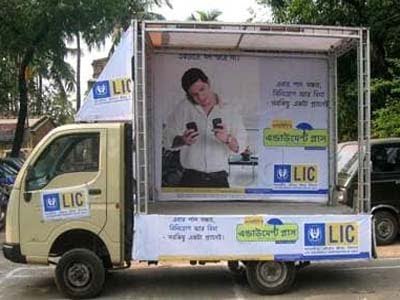
A mobile van for advertising travels through rural areas, creating awareness of the company.

marketing mix of life insurance corporation of india -2

Life Insurance Corporation (LIC) has its own website and where all the detailed information on any possible queries is provided to the consumer. The majority of advertising is directed towards insurance that can be purchased by the common man in order to increase the reach of the company and, at the same time, the sale of the product. Thus, the introduction of products and the retention of products in the minds of customers are the main objectives of the Life Insurance Corporation promotions.

marketing mix of life insurance corporation of india -1


If you Want to read more articles on Marketing Mix – Click Here

If you like This Article on Business Model of LinkedIn Please Like our Facebook Page PROJECTS4MBA

Marketing Mix of Life Insurance Corporation of India (LIC) Read More »

Business Model of LinkedIn – How Does LinkedIn Make Money?

This article is on Business Model of LinkedIn – How Does Linked Make Money? 

When there is a conversation about businesses that are able to deliver some of the best services to customers in the best way possible, we can assume that LinkedIn is one of the channels that comes to people’s minds. The Business Model of LinkedIn is based on four pillars of talent solutions, marketing solutions, learning and development solutions, and premium subscriptions.

To be honest, the platform is known to ensure that professionals from all over the world are able to connect in the best way possible. Without a doubt, this can be said that LinkedIn Company has definitely positioned itself as one of the best professional and business communities.

LinkedIn was founded in 2002 and is one of its kind of business and employment-oriented services that channel its functions through websites and mobile apps. The Business Model of LinkedIn focuses on technical networking services.

business model of linkedin - 3

There are about 500 million people on the LinkedIn platform, and the amazing platform is being adopted in about 200 countries.

LinkedIn is a Popular business and jobs-oriented digital service that runs on websites and smartphone devices. LinkedIn has started its services on 5 May 2003. LinkedIn is a professional network for employers and job seekers to build professional relationships. LinkedIn generates revenue from the sale of its members’ access to information to employers. LinkedIn was acquired by Microsoft in December 2016. LinkedIn has more than 690 million users in 150 countries.

LinkedIn enables participants (both employees and employers) to build profiles and “contacts” with each other in an online social network that can reflect real-world professional relationships. Members can invite others to join LinkedIn.

business model of linkedin

The Business Model of LinkedIn has managed, with the aid of the experts out there, to deliver the best of the services to the users. In this post, we will understand the Business Model of LinkedIn and how it is possible to make some money.

Introducing the LinkedIn Platform in Business Model of LinkedIn

The LinkedIn platform is essentially a forum where people can do much of their professional work. The LinkedIn Business Model can be said to be a technical culture for sure.

LinkedIn Business Model’s main partners are colleges, businesses, influencers, content providers, marketing, and sales application partners. With the help of its partners, LinkedIn Business Model canalizes various activities such as platform development, marketing and sales, advertising, and administrative activities.

business model of linkedin - 4

LinkedIn is definitely a freemium business model. This means that the services will be given to the customer in a free manner.

Nevertheless, with each of the premium functionality, the company charges a fixed sum of money from consumers who wish to enjoy the premium benefits. So, there are some other great features that can be used and that people need to pay the price for sure. With the support of the services given to the people and the rates they pay for the services, the business can make money without any trouble.

The Business Model of LinkedIn would also be an aid to people who want to learn the right things.

The key activities channeled by LinkedIn Business Model include the creation of apps, the recruitment, and retention of employees, the protection of valuable user data and the establishment of a strong relationship with universities and companies.

Value Propositions Or Value Offerings Of The Linkedin Business Model

The effectiveness of the LinkedIn Business Model actually depends on its value proposals, some of which are as follows:

For Recruiters/Businesses

  • Resumes with References
  • Powerful Tool
  • Easy to Use
  • Running ads
  • Identifying the Right Talent
  • Creating Business Pages for productive branding

For Users

  • Using it for self-branding
  • Building new contacts
  • SlideShare
  • Free of charge

For third Part Developers

  • Supporting Customers
  • Providing Software Tools and Apps by using LinkedIn APIs

The platform of LinkedIn is basically just like Facebook; the only difference being is that it is going to be helpful to the professionals in the best way.

business model of linkedin - 2

The people who are the users of LinkedIn are the ones who will be able to send some requests to the people as well as the companies too.

There will be some business profiles which are made by the people and these are the ones that will be able to have some access to other business profiles in the best way.

But before learning all about the Business Model of LinkedIn, it is important to know about the company. To be honest, the LinkedIn Company is something that was founded to provide some professionals with the chance to make their business shine in the best way.

Hence, this can be said without a doubt that the company is able to provide all the important services to the people for sure. The main motive of the company is to provide a proper community to the people who want the professionals to connect without any trouble for sure.

There are about 630 million users that are provided on the platform of LinkedIn. The number of users is constantly increasing for LinkedIn because of its effectiveness in adeptly channelizing B2B activities to help professionals, businesses and advertisers.

Key Aspects of the LinkedIn Business Model

When it comes to understanding the Business Model of LinkedIn, there are some important things that people need to know about it. This will be able to provide an idea of the fact that the company is able to make the money instead of being a platform that is free.

With the help of LinkedIn, users will not only be able to connect in the best way with the professionals but will also be able to make sure that they are able to get some proper connections with the recruiters and the companies as well.

The company of LinkedIn has managed to position itself on the top with the help of the awesome services which are provided to the people. Professional networking is one of the most common reasons why people from all over the world want to use the platform of LinkedIn in the best way.

So, it can be said that the Business Model of LinkedIn is something that will be considered as pretty reliable and dependable as well.

business model of linkedin - 1

Professional networking of the LinkedIn Business Model enables employers to post jobs while job seekers can post their CVS. They both can easily connect over the platform and let me tell you here that connections at LinkedIn turn out quite productive in the time of need.

From December 2016, LinkedIn is an absolutely Microsoft owned subsidiary.

Here we are going to talk about the different methods with which the company of LinkedIn is able to make the money without any troubles.

How Exactly Is LinkedIn Able To Make Money?

The services that are provided by the Business Model of LinkedIn are clearly free but there are some companies and people who are willing to put their money into the amazing creation of services that go far and beyond the normal help that the platform is able to provide the people.

The immense accumulation of user database makes LinkedIn highly powerful in widening the reach of different types of businesses that are using this platform for optimizing their reach in their target audiences. So, like other basic social media networking site, LinkedIn also makes the money with the help of some amazing advertising facilities on the platform.

There are so many ads that are created on the platform of LinkedIn and with the help of these amazing advertisement options, the people are able to provide some of the business opportunities to those who are in the need for it.

Revenue Model – How Does LinkedIn Earn Money?

business model of linkedin - 5

In much simpler fashion, revenue streams of the Business Model of LinkedIn can be understood in three different categories and they are-

1) Talent Solutions

Hiring Talent Solution of LinkedIn enables businesses in finding the right candidates. These solutions include job posting, referrals, career pages, recruitment media, etc.

For these benefits, businesses pay a fixed amount to LinkedIn. Lynda.com is another Talent Solution of LinkedIn that lets users learn about different things important for their careers. This is a subscription model and hence, it enables LinkedIn to earn good money.

2) Marketing Solutions

As discussed above, LinkedIn lets businesses and advertisers run ads on the platform to generate leads and boost conversions. LinkedIn lets its users run sponsored content, sponsored InMails, Text Ads, Ads API, etc for the exchange of some money.

3) Premium Subscriptions

Premium users of LinkedIn enjoy some special features and for those facilities, they need to pay some money to LinkedIn. With the help of the services right here, the people will be able to make sure that most companies see them.

Hence they need to provide a certain fee to the company of LinkedIn and that is exactly how the Business Model of LinkedIn is able to generate the revenue and make some money as well. Some of the key features that LinkedIn users get in its premium version are-

  • Who have Viewed Your Profile
  • Direct messaging to Recruiter
  • How You Rank
  • Online video courses
  • InMail messages
  • Sales Navigator that enables sales professionals in finding and qualifying prospects
  • Profinder – hire freelancer service
  • Salary insight

Conclusion

Also, the platform is really famous for providing some of the best talent solutions, business solutions, career solutions in the Business Model of LinkedIn.

Hence, the company is able to make some profits with the help of these services because people are more than willing to pay for these amazing services.

What are your thoughts about a professional business model like LinkedIn? Have you used it and do you find it productive in offering the betterment in the lives of professionals? Share your views with us in the comments below.

If you like This Article on Business Model of LinkedIn Please Like our Facebook Page PROJECTS4MBA

Business Model of LinkedIn – How Does LinkedIn Make Money? Read More »

Business Model of Trivago – How Does Trivago Make Money?

Founded in 2005, Trivago offers online services like hotel accommodation and Ticketing for the train, air, and buses.  Trivago is a Leading Travel Booking System. The business model of Trivago revolves around the travel, information technology, hotel, and marketing industries.
business model of trivago -1

In this post, we will interpret the business model of Trivago and understand how it has become one of the most popular hotel search engines in the world. We ‘re also going through various sources of income from the business that help Trivago make good money. Let us begin the journey with the Business model of Trivago from its introduction.

Introduction to the Business Model of Trivago

Founded by Rolf Schrömgens, Stephan Stubner, Peter Vinnemeier, Malte Siewert, Trivago is the first German hotel search engine company. It specializes in hotels and accommodation-related products and services on the Internet.

It’s a price comparison platform where hotels and brands advertise and list their offerings. Trivago charges these based on the Cost-Per-Click (CPC) model.

It also offers free and paid versions to brands to promote their offerings on the Trivago platform.

Trivago offers products and features such as hotel search, Trivago app, Trivago hotel manager, pro hotel manager, and connect rates. Trivago also has a number of indexes and rankings, such as the Trivago Rating Index (tRI), Travel Advice Calendars, and the Trivago Hotel Price Index .

Trivago brands itself as ‘trivago’ in the lowercase format.

The various products and features of the Business Model of Trivago are:

1) SEARCH HOTEL

Trivago’s Hotel Search Page is distributed over more than 50 countries around the world. As the biggest online hotel search platform, it lists more than 1 million hotels and 250 booking sites around the world.

2) TRIVAGO APP

The Trivago hotel search product is also available in the form of applications for Android and iOS devices.


3) TRIVAGO HOTEL MANAGER

It is the Trivago B2B platform that enables hoteliers to market their features and facilities on the Trivago platform.

4) HOTEL MANAGER PRO

It is a fee-based version of Trivago’s Hotel Manager platform that allows hoteliers to configure and monitor their own listings, plus access to competitor rate analytics.

5) RATE CONNECT

By using this feature of Trivago, hotels can update their availability and current rates using the Trivago Hotel Manager Tool.

Now, having been aware of the introduction to the Trivago business model, let us take a brief look at the history of Trivago.

History of Business Model of Trivago

Rolf Schrömgens co-founded a shopping website known as Ciao, but after some time he realized that it was costly and inefficient to keep the content of a brand online.

So, he worked with three other college friends to create a platform that would allow brands to manage their content themselves in a more cost-effective manner. This is how Trivago has come into being.

Today, Trivago has more than 1,600 employees and is one of the fastest-growing company.


Trivago ‘s key subsidiaries are Base7booking, Rheinfabrik, and TripHappy.

Working in Trivago’s business model is very simple, well structured, hassle-free, and tailored according to the inclinations of its customer market. On the next segment, let ‘s look at how Trivago ‘s research proceeds-

Business Model of Trivago – How Does Trivago Works?

To grasp Trivago’s business model, we’ll look at Trivago’s business model canvas. There are different elements whose expert conglomeration allows Trivago to work in a profit-driven manner.

Let’s look at the elements here and now.
business model of trivago -3

Core elements on which Trivago Business Model relies.

THE BUSINESS MODEL OF TRIVAGO COVERS FOR KEY PROPOSITIONS:

1) Quality

Trivago shows flexibility by being open to clients and enabling them to contribute to the content of their website. We can incorporate content related to missing brands, unfinished profiles, brand representations, etc. We may also claim consistency by changing patterns.

2) Accommodation

Trivago helps consumers to make a decision on the costs of the company. Things can also be filtered using the criteria available on the website.

3) Customization

Trivago provides flexibility by allowing brands to customize their profiles. This helps brands to attract relevant customers and customers to quickly find what they want.

4) Brand / Status:

Trivago has created a strong brand for itself because of all that it has to deliver. It offers information from more than 250 destinations, 55 countries, 33 dialects and 100 hotel networks. Multi-million hotel surveys and photographs have been given to its clients.

Now, the next thing that plays a major role in the Trivago Business model is the Trivago consumer group, so let’s look at that as well.

Trivago Business Model Customer Segment?

Trivago ‘s business model has two consumer divisions. The first segment includes brands and hotels that offer advances to customers, while the second segment includes customers who deviate from costs and offerings and ask what they need. Customer segment can also be divided into two other forms:

1) Partners:

It includes hotels, newspapers, and online travel agencies.

2) Visitors are welcome

It includes travelers who prefer online booking, business travelers, and others who choose to get the best online booking deals by comparisons.

Channels Used in the Business Model of Trivago

  • Trivago markets itself through its own website. It advances what it has to offer through its social media pages. It also uses TV and web-based marketing to show itself.
  • The mobile app is also very relevant for channeling the Trivago business model.
business model of trivago -4

Customer Relationships Using Trivago Business Model

Trivago maintains its relationship with its customers through its website. This constantly responds to the requests made on-site by the customers. Although it offers limited interaction with the representatives, it adds the required individual element whenever necessary.

For expert channeling of Customer Interaction, Trivago opts for the following customer relationship options:

  • Internet media
  • Customer Support

business model of trivago -6

Reviews, Feedback, and Ratings

1) Main activities

Trivago serves as a platform for brands/hotels to showcase their services and for clients to find what they want. It uses its website and its application as a point. Furthermore, its behaviors can be classified as:

  • Production and management of goods
  • Control networks of visitors
  • Distribution and marketing programs
  • Handle hotel networking

2) Main Collaborators

Trivago’s business model involves two main partners-

1) PARTNERS SUBSIDIARY:

Trivago partners with third parties who present their deals on Trivago ‘s website.

2) PARTNERS:

Trivago allows customers to act as analyzers in order to assess the quality of their services. These clients audit services such as luxuries, administrations, etc. by providing a survey. Customers will receive rewards for completing such surveys.

It serves as a catalyst for consumers and helps Trivago to get more reviews to improve the customer’s experience.

More broadly, the partners of Trivago Business Model can be understood as:

  • Hotels;
  • Guests are welcome
  • Companies in the media and advertising.
  • Online travel services.
  • Investors and shareholders of concern.
  • Processors of payment.

Key Resources For Channelization of Trivago

Trivago ‘s website and application are the company’s core assets. These assets act as phases that serve millions of clients. Client support staff is another important resource that helps manage and operate the website and the application.

In a simpler way, you can consider the tools of Trivago as:

  • Trained workers.
  • The Development Network.
  • Database of information.
  • Trivago Business Model Cost Structure.

The most expensive driver for Trivago is the advertising cost. Other costs include, but are not limited to, exchange costs, client bolstering and operating costs. Trivago uses automation to reduce costs.

Factors of Trivago Cost Structure

  • Wages for workers.
  • Technological set-up and running costs.
  • Marketing and marketing plans and their execution.

Now, after you know all this about Trivago’s business model, the next thing you need to know is how Trivago makes money. Let us understand this, too:

Revenue Model – How Does Trivago Make Money?

Trivago business model produces revenue using three separate revenue streams:

Listing fee: It is the charge charged by hotels and brands to have their services listed on the Trivago Network.
business model of trivago -5

Subscription fee: Trivago enables hotels and brands to change their profiles and incorporate specific details about their offerings. This helps them to better target their customers. Trivago pays the monthly fee for these programs.

Referral sales: this is the largest revenue source in the Trivago business model. This revenue comes from private hotels, hotel chains and online travel agencies ( OTAs). The customer is directed to the advertiser’s website when the user clicks on the offers provided in the search results. For every referral, Trivago charges money. The software is known as the Cost-Per-Click (CPC) software.

So, Cost per Click or Cost per Purchase is also an important means of making money through Trivago. In addition, the use of the Trivago Network for ads and media by hotels and companies also allows Trivago to make good money.

It was all about the revenue-generating means of the Trivago business model. Finally, in the last part, we will reveal the secret layers of Trivago ‘s marketing strategy that will help the company extend its scope and grow its customer base-

Business Model of Trivago Approach for Brand Awareness

Trivago’s business model focuses on brand awareness, public relations, display ads, and Search Engine Marketing ( SEM). It also uses interactive Facebook ads for advertising purposes. Two of the main marketing approaches used by Trivago are-

1) The Man Trivago

This is Trivago’s most successful marketing strategy. The Trivago Guy has become an internet sensation due to its odd appearance.

business model of trivago -6

Trivago hires actual, approachable, and sincere actors to act as the Guy of Trivago. Due to its initial success, Trivago also invited people to give the Trivago Guy a makeover. This has given rise to fan fiction, parodies, and a massive gay follow-up.

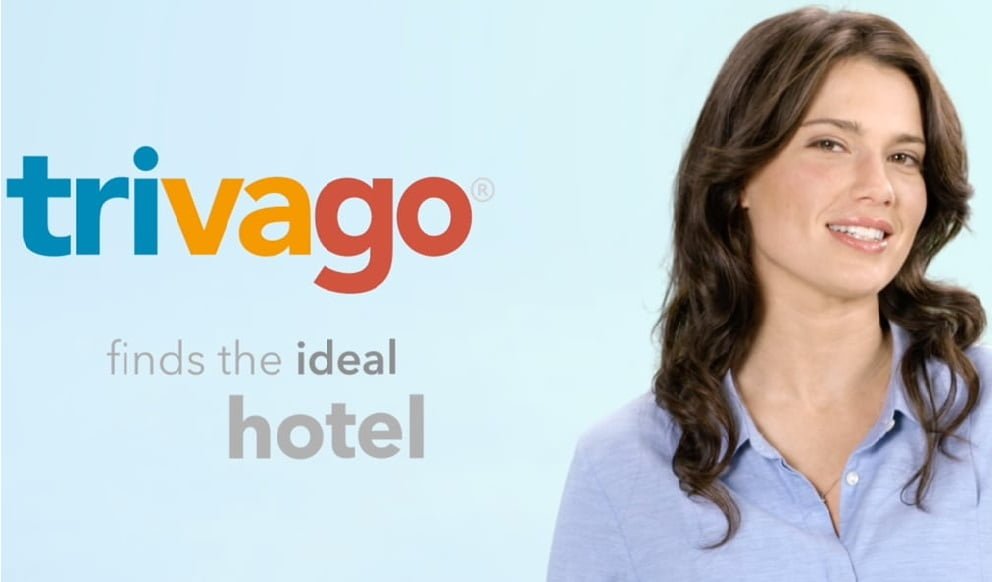
2) The Trivago Girl

After the success of Trivago Guy, Trivago also began to use Trivago Girl to advertise its services.
business model of trivago -2

Conclusions

With more than 120 million visitors per month, 190 million hotel ratings, 250 booking sites, 14 million photos, rate comparisons in more than 1 million hotels and websites in more than 50 countries, Trivago is one of the largest search engines for hotels.

It is fast-moving forward to becoming the most important and ideal source of knowledge for finding hotels at the lowest rates.

Trivago ‘s business model is highly effective at reaching market bases in order to maximize its scope and provide the most loyal customer base. What are your views on the business style of Trivago?

Do you find Trivago’s business model inspiring? In the comments, share your thoughts with us.

If you like this article and want to read more About Marketing Mix – Click Here

If you Like this Article Please Hit the Like Button and Follow Us on our Facebook Page: PROJECTS4MBA
If you like this article and want to read more About Marketing Mix – Click Here

If you Like this Article Please Hit the Like Button and Follow Us on our Facebook Page: PROJECTS4MBA
Business Model of Trivago – How Does Trivago Make Money? Read More »

Business Model Of MakeMyTrip – How MakeMyTrip Make Money?

This Article is on the Business Model of Makemytrip.com and the Revenue Model of Makemytrip.com. MakeMyTrip.com is an online travel and hotel reservation service founded by Deep Kalra in 2000 providing online airline tickets, rail tickets, bus tickets, hotel reservations to their customers. They sell over 12,000 flight tickets, 1,000 hotel room nights, and more than 100-holiday packages every day. They come under the B2C business model in which they provide their customers with online ticket bookings as their goods and a wide range of services around the clock with a single click of the mouse. They also provide their customers with a range of holiday packages that save people’s time planning their vacations. MakeMyTrip is expected to represent 23 percent of India’s total travel market by 2010. MakeMyTrip has also opened offline retail outlets to advertise their holiday packages and to create a brand picture of them. MakeMyTrip is currently launching a US-based service, IndiaAhoy, a B2B platform that sells packages to India tours through travel agents and tour operators.


Values

MakeMyTrip is a combination of a variety of values such as:-

  • Customer-Centric Approach: they focus on their customers both internally and externally.
  • Integrity: MakeMyTrip ensures continuity between words and behavior. They ‘re still maintaining.
  • Innovation: MakeMyTrip combines innovation in both business and technology to deliver the best products and services to its customers.
  • Teamwork: MakeMyTrip believes in teamwork to achieve the goals of providing the best service to its customers.
  • Transparency: MakeMyTrip feels the duty and transparency that it owes to its consumers and stakeholders.
  • Passion for Winning: MakeMyTrip believes in a “do” attitude and believes that nothing is impossible.


Revenue Model – How Does MakeMyTrip Make Money?

The turnover of MakeMyTrip for the fiscal year 2010 was Rs 1000 crore, which increased to Rs 1500 crore in 2009. 66% of MakeMyTrip busiess were airborne and 34% non-airborne. One of the sources of revenue for MakeMyTrip is the fee charge they pay for online bookings. MakeMyTrip provides the cheapest airline tickets available. Corporation purchases tickets from private airlines on a wide scale, thereby reducing the cost and selling these tickets to its customers at an extra commission fee. The amount of profit is the highest in the case of airline tickets, while it is very small in the case of train tickets because of only one manufacturer. MakeMyTrip has about 5 to 10,000 in hotels, and about 1,000 busses.

business model of makemytripbusiness model of makemytrip - 1

A major portion of their revenue comes from marketing of various companies such as Kingfisher, Tata, Spicejet on MakeMyTrip website by displaying e-banners of various deals, items, etc which these companies sell.

Many hotels in India have teamed up with my trip to advertise their holiday packages on the MakeMyTrip website. Some revenue is also earned in this area. Yet online hotel booking is not a major market in India, as Indians tend to call the hotel directly for booking rather than MMT bookings, which would charge a 10-15% fee. 15-20 percent of their revenues also come from out-of-line retail outlets across India.

Customer Offerings in Business Model of MakemyTrip.com

MakeMyTrip’s main Offerings to the consumer is ideally suited to customer comfort. MakeMyTrip is a reliable, productive company that uses the latest technology for its business. MakeMyTrip believes that it is not cheaper air tickets that will bring customers to them. MakeMyTrip believes in building a consumer experience. The advantage that the customer gets when visiting MakeMyTrip.com is that it lists all the options available in a glance, saving precious time.

Booking is also very flexible through MakeMyTrip, which allows customers to make changes and cancel at any time. MakeMyTrip also provides various payment facilities, ranging from net banking, debit cards, and credit cards to almost every bank. In the event of any refund money, it is automatically transferred back to the same account in e-transaction.

In addition to all these advantages, MakeMyTrip also offers many value-added services to customers, such as various discounts and different booking offers.

MarketPlace

MakeMyTrip began its business from the US-India travel sector in 2000. Following its success in the US, MakeMyTrip started operating in India in 2005 and, within five years, accounting for nearly 50 percent of all online travel industry revenues in India. While MakeMyTrip initially operates exclusively on the Internet, in 2008 they decided to open their offline retail stores in India in order to promote their holiday packages and build brand awareness. There are officially 20 offline stores in major cities in India. Business Model of Makemytrip.com makes it a no.1 online travel booking company in India.

business model of makemytrip -2

Major Competitors

Yatra.com

The biggest competitor of MakeMyTrip is yatra.com, which launched in 2006 in India. Their marketing strategy was to target the market through television and online. Yatra.com has more than 1 million registered users selling more than 1,100 Crores. Yatra.com has 10 offline offices in 10 major Indian cities. Yatra.com was declared the “Best Online Travel Agency” of the year 2008 at the Galileo Express Travel Awards and was also awarded the “Top 100 start-ups in Asia” award by Red Herring. Yatra.com has a market share of 30%.

Cleartrip.com

Another big competitor of MakeMyTrip is cleartrip.com, which began with Hrush Bhatt in 2006. It has a unique feature in both air and train travel, i.e. the air and train calendar, which shows fares between destinations up to 3-6 months ahead.


Competitive Advantage in the Business Model of MakeMyTrip.com

MakeMyTrip’s key competitive advantage is to think beyond customer service and create an unforgettable user experience. MakeMyTrip has customer testimonials that provide very strong feedback on their customer service managers. All other online travel agencies offer simple booking services, but the customer’s experience gives MakeMyTrip a favorable environment.

Another innovative advantage that MakeMyTrip possesses is the technology that they incorporate in their products. They are making constant improvements to their customer experience in their systems. Advanced technology gives them an extra advantage over other rivals in the online travel agency industry.

MakeMyTrip focuses not only on building value for its clients but also on its suppliers. MakeMyTrip focuses on providing its suppliers with the best and most suitable venue to showcase their goods.

Business Model of MakeMyTrip.com

The business model of MakeMyTrip.com focuses on providing a customer-centric approach and helps its customers to Book Tickets and plan their journey. With an annual growth rate of 40%, India is a fast-growing online travel agency. MakeMyTrip marketing strategy focuses on making MakeMyTrip an elite brand rather than a product. To achieve this goal, they focus on all four marketing P’s, i.e. Name, Price, Location, Promotion.

Their commodity, i.e. online tickets, is widely embraced by customers and their value-added services provide customer satisfaction. As far as Price is concerned, they are offering their customers online tickets at an affordable price. MakeMyTrip uses e-market as a place of business that is open to customers from anywhere. While internet penetration in India is only 7%, MakeMyTrip takes it as a challenge or opportunity for their company. As far as promotion is concerned, MakeMyTrip communicates and informs people about their products and services through electronic banners on websites, television commercials, and also through their offline retail stores. Online advertisements are meant to drive transactions while offline transactions, i.e. through television, help MakeMyTrip to emerge as a brand. MakeMyTrip ‘s justification for offline marketing is that creating a brand online is very difficult. A person, while online, is busy browsing information and checking emails. Consumers sometimes turn a blind eye to web advertising.

Organizational Structure

MakeMyTrip is a service organization with more than 700 employees from the travel, tourism, technical, and hospitality industries. MakeMyTrip believes in the policy of empowerment. This means that they give their workers the ability and freedom to think and behave in ways that will encourage them to do their job and still be consistent with their services.

The information of senior management shall be as follows:

  • Deep Kalra (Founder & Chief Executive Officer)
  • Keyur Joshi (Founder and Chief Operating Officer)
  • Mohit Gupta (Chief Marketing Officer)
  • Rajesh Magow (Co-Founder and Chief Financial Officer)
  • Amit Somani (Chief Product Officer)
  • Mukesh Singh (Senior Vice-President, Technology Development)

Investors of MakeMyTrip are :

  • Ravi Adusumalli and Vibhor Mehra, SAIF Partner
  • Sanjeev Aggarwal (Managing Director), Helion Venture Partners.
  • Tim Guleri (Managing Director of Sierra Ventures)

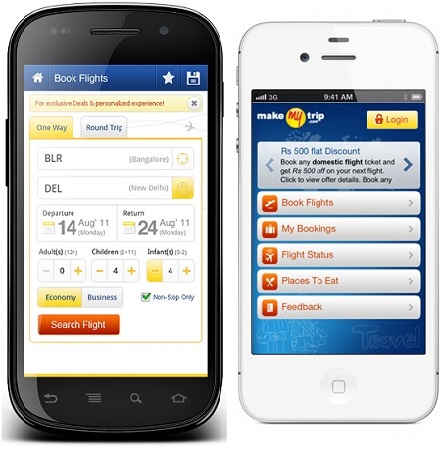
MakeMyTrip APP in Business Model of MakeMyTrip.com

MakeMyTrip app is available on Google play store with 4.5 stars.

MakeMyTrip Facilities:

  • Hotel booking
  • Flight booking
  • Holiday booking
  • IRCTC Authorized Rail booking
  • Bus booking
  • PNR status
  • Outstation Cabs
  • Fast, safe, secure
  • Manage trip
  • Exclusive Deals
  • Flight status

Future Outlook in the Business Model MakeMyTrip.com

MakeMyTrip focuses on domestic travel tickets, with a growth rate of over 100 percent over the last three years. MakeMyTrip expects higher growth in the outbound travel market on a broader scale. Many more Indians are seeking to go overseas for holidays and vacations. MakeMyTrip is thinking of converting domestic travelers into international holidaymakers by offering them holiday packages at an affordable price. MakeMyTrip is reportedly expected to raise up to $ 100 million in an initial public offering on the US stock exchange Nasdaq. MakeMyTrip plans to expand its operations by selling its share and by investing in strategic assets.

Conclusion

Makemytrip.com is a perfect example of a B2C Online Business model. This is a great example of how to sell a service online and offline. The online travel industry has a growth rate of 40% in India and with many players entering the market, MakeMyTrip’s market share shows that its marketing strategy is efficient and effective. They concentrate on creating user experience than on offering a product at a lower price. Thus we can say that the Business Model of MakeMyTrip.com is good and the company is generating good revenue from this Business Model.

If you like this article and want to read more About Marketing Mix – Click Here

If you Like this Article Please Hit the Like Button and Follow Us on our Facebook Page: PROJECTS4MBA

Business Model Of MakeMyTrip – How MakeMyTrip Make Money? Read More »

Business Model Of OYO Rooms – How Does OYO Make Money?

This article is on the Business Model of OYO Rooms. We will discuss in OYO Rooms Business Model in this article and how it can offer so many benefits to people who need it.

First of all, it is important to determine that accommodation is one of the most important things people continue to talk about these days.

So, this is where OYO Rooms seem to be a great help for sure.business model of oyo rooms

Well, these OYO Rooms are the ones that people tend to use most of the time to make their stay bookings and so much more.


Let us now look at the introduction to the OYO Rooms Business Model –

Introduction to the Business Model of OYO Rooms

Established in the year 2013, Oyo Rooms is one of the third largest hospitality chains. The Business Model of OYO Rooms revolves around leased and franchise hotels, living spaces, and houses.

business model of oyo rooms - 1

The full form of OYO Rooms is Your Own Rooms. The company was founded by Ritesh Agarwal and at the beginning; it consisted only of budget hotels, but now, in the next six years, the company enjoys a global expansion with multiple holiday homes, hotels, and rooms in different cities in countries such as-

  • India’s
  • Malaysia’s
  • UAE
  • Nepal
  • Philippine Islands
  • China’s
  • UK
  • Indonesia’s
  • Japan’s
  • Arabia of Saudi Arabia
  • Vietnam, Vietnam
  • The United States, and so on

Know More About OYO Rooms

When we speak about the branded networks that are currently offering services to people, there is no question that Oyo Rooms is one of the names that comes to mind for sure.

business model of oyo rooms - 2

There are more than 450000 listings in OYO App.

The site and also the company’s branches are located in a total of 5000 cities. It can be said, therefore, that the organization has been delivering much of the services to the people who need it, and so much more.

During the past, the organization was responsible for coordinating some of the people with the hotels and even providing certain rooms for those who made the bookings. However, for sure, the brand was their own.

The process remains the same at present, but the Business Model of OYO Rooms has changed a little. That’s why we’re going to have a little chat about it in the best way.

This article will definitely help you understand the Business Model of OYO Rooms and how it provides the same quality of services to people.

You’ll also get to learn how the company can make the money while preserving the reputation of the brand that it has among the people. There are partners in the company who are helping to provide some services, and we’re going to know a lot about them, too.

Oyo Business Model ‘s customers are business travelers, family travelers, leisure travelers as well as adventure travelers.

Let us now look at the products and services of the OYO Rooms Business Model- 

OYO Rooms Business Model

business model of oyo rooms - 3

1) Townhouse of OYO:

This is advanced as a neighborhood hotel in the mid-scale segment that is used to target millennial travelers looking for premium economy accommodation.

2) Home OYO:

This is understood as India’s first home management system that provides OYO-managed private homes and is available in a wide variety of locations.

3) OYO Holiday Homes:

It is considered to be the 3rd largest holiday home brand, which is very close to the world’s top holiday rental management companies.

4) Silvery:

This one is useful in meeting the specific requirements of corporate travelers on business trips of a specific duration.

5) OYO capital:

This one deals with luxury hotels, which are also located in prime locations. Such hotels offer OYO quality-assured experience at the most reasonable prices.

6) Palette:

This one belongs to the category of top-of-the-line leisure resorts and is best suited to those who are looking for an intuitive experience at the right prices.

7) Collection O:

If business travelers are looking for accommodation tailored to their needs, this section of the Oyo Business Model is designed to cater to their needs.

8) OYO LIFE:

It is designed to target millennials and young professionals looking for well-managed homes at affordable long-term rental rates.

business model of oyo rooms - 4

Working of the Business Model of OYO Rooms

Before you have any idea about the Business Model of OYO Rooms, it is important to know what it is in the first place. Here we’re going to talk a little bit about that, so you can appreciate it.

We need to know whether it’s a franchise or an aggregator, too. That’s why we’re having a gentle talk about it in the best way possible.

It can be said that the Business Model of OYO Rooms is something that can be considered a proper hotel aggregator.

The identification of some of the investors, as well as hotels, is not really the primary focus of the business as a whole. There is absolutely no chance, therefore, that the Business Model of OYO Rooms is fundamentally a little different from the rest.

Customers are in a position to buy the facilities they have and they will definitely be the ones that contribute to the OYO Rooms Business Model.

So, when it comes to understanding the Business Model of OYO Rooms, it can be said that the concept is essentially a franchise model, along with the aggregator model.

The brand value of the company here at OYO Rooms is something that is developed with the franchise option and hence it can be said that the Business Model of OYO Rooms is a blend of both business models.

It is one of the most important things people really need to bear in mind so that they can get a clearer understanding of it.

A mix of Aggregator and Franchise Business Model of OYO Rooms

To describe the Business Model of OYO Rooms, we’re going to talk a little bit about it, so you can have an idea for sure. This is something that can be called an aggregator model as well as a franchise model. There are certain approaches that are definitely included in the business model.

Their people will be able to lease some of the inventory provided to the users by the hotel. There are also several organizations that would be able to deliver coordinating services to people in the best way to be sure of that. There are also other partner hotels where people can stay during their vacation.

When it comes to making bookings, they are essentially made with the official application or the website of the OYO Rooms, which is an important information to remember for the people.

Channels used for channeling OYO Rooms Business Model are both a company platform and a web application.

Partnership Model for OYO Rooms

As far as the relationship model of the OYO Rooms is concerned, it can be said that certain hotels and other franchises are included in the OYO Rooms lists. There are several hotel rooms that people can quickly book so they can live there.

The business is able to make some money with the aid of the booking fees that people choose to pay when they stay in the OYO Rooms hotel listings.

This is one of the most important aspects of the OYO Rooms Business Model that people need to learn about. Some discounts and other offers are also given to the customers. With the support of a range of other facilities, such as OYO House stays, OYO Flagships, OYO Wizard and more, the company is in a position to earn revenue.

Let us now understand How does OYO Make Money?

How Does OYO Make Money?

The key revenue generation of OYO Rooms is based on the 22 percent commission it receives from its hotel partners.

In addition to the commission, the OYO Rooms are making money from-

1) Fee for Reservation  of Rooms:

Users pay the reservation fee to OYO Rooms, from which a fixed percentage of the total fee is paid to OYO Rooms as a commission to help them make good money.

2) Fees Membership:

OYO wizard subscribers are paying a fixed amount of money for premium services that also act as a revenue line for OYO Rooms.

3) Advertising:

The advertising fee is charged to OYO rooms for running ads from different companies and businesses on their platform.

4) Sponsors And Partnerships:

In order to support its sponsors and partners, OYO charges a fixed amount of money that plays a key role in generating revenue.

5) Consulting services: 

Specific clients of OYO rooms, such as companies, clubs, hotels, etc., take advantage of the business consulting and data analysis services of OYO rooms and pay OYO rooms in exchange.

Conclusion

So, these are some important information that you need to know about the OYO Rooms Business Model. We hope this article has been helpful to you.

OYO Rooms Business Model has certainly reformed the hotel industry in India by offering highly personalized, fast, mesh-free, affordable, and well-organized services to allow travelers to enjoy their stay away from home.

So, how successful are you finding the OYO Rooms Business Model? Have we skipped some main feature of the OYO Rooms Business Model? Share with us in your email.

Oyo Rooms are Well Santaized and cleaned to make it Virus Free and People can have safe stay with OYO Rooms. The business Models of OYO Rooms are ready to work best after the COVID Period.

oyo rooms business model


If you like this article and want to read more About Marketing Mix – Click Here

If you Like this Article Please Hit the Like Button and Follow Us on our Facebook Page: PROJECTS4MBA

Business Model Of OYO Rooms – How Does OYO Make Money? Read More »