Examples of SWOT Analysis – SWOT Analysis Examples

Examples of SWOT Analysis – SWOT Analysis Examples focus on methods of doing SWOT Analysis.

A SWOT analysis is a very good method and helps the company and managers to build their business plans. SWOT Analysis helps businesses whether it is a start-up or an existing company to formulate their strategies and future plans.

SWOT (Strengths, Weaknesses, Opportunities, and Threats). SWOT Analysis Internal Factors are Strengths and Weaknesses and External Factors are Opportunities and Threats.

SWOT Analysis is a proven management tool that helps organizations to assess the market of the company’s products and its success against rival companies.

Since Strengths and weaknesses are internal factors a company can effectively manage them. Examples include your staff, intellectual property, patents, and venue.

Opportunities and challenges are external factors. The company can defend these factors by proper planning and analyzing risks, rivals, cost, and government regulations.

SWOT Analysis focuses on (S) Strengths, (W) Weakness, (O) Opportunities, and (T) Threats of a company/Organization/Individual. SWOT analysis is described in two by two grid.

When you spend the effort to do a SWOT analysis, you’ll have a solid plan to prioritize the things you need to do to develop your business.

You may think you already know everything you need to do to succeed, but a SWOT analysis will encourage us to look at the business in new ways and new aspects. You’ll look at your strengths and weaknesses, and how you can exploit those to take advantage of your market’s opportunities and challenges.

examples of swot analysis

Who would evaluate SWOT?

For a successful SWOT study, business owners and managers must be deeply involved. It’s not a task to assign to others.

Yet business leadership shouldn’t do the job alone either. For better results, gather a group of people with different viewpoints on the business. Choose people who represent various facets of your business, from sales and customer service to marketing and product creation.

Innovative firms even look outside their own internal ranks when performing a SWOT analysis and receiving consumer feedback to add their unique voice to the mix.

When you start or run your own company, you can always do a SWOT analysis. Enlist additional views from friends who know your business, your accountant, or even vendors and suppliers. The key is different viewpoints.

Existing businesses can use a SWOT analysis to evaluate their existing situation and determine a strategy for progress. But remember, trends are currently changing because you want to reassess your strategy, starting with a new SWOT analysis every six to twelve months.

To companies, a SWOT analysis is part of a business strategy. It will help codify a strategy to start on the right foot and know the way you want to go.

How to do Proper SWOT Analysis?

As I described above, you want a group of professionals to focus on a SWOT analysis. You don’t need an all-day break, though. One or two hours more than enough.

Gather people from various parts of the business and ensure you have members from both sides. You will find that different groups within your company will have completely different perspectives to make your SWOT analysis successful.

SWOT analysis is close to brainstorming sessions, and there are ways to develop them. I suggest giving everyone a pad of sticky-notes and quietly generating ideas to start things off. This avoids group-thinking and guarantees hearing all voices.

After 5-10 minutes of private brainstorming, put all the sticky-notes on the wall and bring together similar ideas. If anyone else’s idea triggers a new thought, let someone add additional notes at this stage.

When all the ideas are grouped, rate the ideas. I like using a voting system where everyone gets five or ten “votes” to disperse in whatever way they want. Sticky dots are suitable for this component of the exercise.

Depending on voting, you will have a prioritized list of ideas. The list is now for discussion and debate, of course, and everyone in the room will be able to make the final decision on priority. It is normally the CEO, but someone else in charge of corporate planning may be assigned.

You’ll want to pursue this method of generating ideas for each of your SWOT analyses’ four quadrants: strengths, weaknesses, opportunities, and risks.

Questions that inspire you’re thinking about SWOT Analysis?

Below are a few questions you can ask while developing your SWOT analysis. It can help illustrate every segment and inspire innovative thinking.

Strengths:

Strengths are internal, optimistic qualities. There are items beyond your power.

  • Which business processes succeed?
  • What assets does your team have, such as experience, network, expertise, skills, and reputation? What assets do you have, including equipment, customers, technology, cash, and patents?
  • Which are your strategic advantages over your competition?

Weaknesses:

Weaknesses are contributing factors to your strengths. There are things you will need to change to be successful.

  • Will your company need to be competitive?
  • Which company processes need improvement?
  • Does your business need tangible assets, such as capital or equipment?
  • There are holes in your team?
  • Is your place perfect for success?

Opportunities:

Opportunities are external factors that are likely to lead to your performance.

  • Is your market growing consistently, and are there trends encouraging people to buy more of what you’re selling?
  • Are there upcoming events your company should take advantage of to develop the business?
  • Are there potential regulatory changes that could positively affect your company?
  • When your company is up and running, do consumers think about you?

Threats:

Threats are external factors uncontrolled by you. You may want to consider putting in place contingency plans if they occur.

  • Would you have potential competitors in your market?
  • Can suppliers supply the raw materials you need at the rates you need?
  • Could future technology developments change how you do business?
  • Does consumer behavior shift in a way that could affect your business?
  • Are there industry developments that could threaten?

How to develop a successful strategy

Using SWOT Analysis to determine the current situation before deciding on any new approach.

Find out what’s going well, and what’s not. Ask yourself where you want to go, how to get there, and what could get in your way. These are major issues, and you’ll need a powerful but simple technique to help: SWOT Analysis.

This article, video, and infographic will help you discover what SWOT Analysis is, how to do one, and how to apply its benefits to the maximum.

How to SWOT Analysis

After you’ve explored all four elements of SWOT, you’ll undoubtedly face a long list of potential actions to take. You would want to build on your strengths, strengthen your vulnerable areas, escape challenges, and leverage any opportunity.

But, before you take action, look for possible relations between your matrix quadrants. Can you, for example, leverage your strengths to open up more opportunities? And, will more possibilities come by removing any of the weaknesses?

Now it’s time to prune and prioritize your proposals ruthlessly, so you can concentrate on the most important ones. Refine every argument for better comparisons. For example, accept only specific, verifiable statements such as “Cost advantage of $10 / ton in raw material x” rather than “Better value for money.”

Carry through the options you create later in the strategy formulation cycle and implement them at the right level – for example, at the level of a product or product line, rather than at the much vaguer level of the entire business.

Then use the SWOT Analysis with other planning methods ( e.g. USP Analysis then Core Competencies Analysis) to provide a detailed picture of the situation you ‘re dealing with.

SWOT Analysis Examples – Examples of SWOT Analysis

Imagine this scenario: Laura is the CEO of a small start-up consultancy and wants a clear picture of its current situation, deciding on a future growth strategy. She gathers her team and conducts the SWOT Analysis.

SWOT Analysis
Based on team research, Laura concludes that the key assets of the firm are its versatility, strategic competence, and low overheads. They offer excellent customer service to a fairly low client base.

The company’s weaknesses also contribute to its scale. Laura would need to invest in enriching skills of her staff by providing trainings. Additionally, she’ll need to concentrate on retention, so she won’t lose key team members.
Laura sees Opportunities to provide quick-response, good-value services to local businesses and local government organizations. The organization may be first to launch new goods and services, as its rivals are early adopters.

Threats need consultancy to keep up-to-date with technological shifts. It must also keep a close eye on its biggest rivals, despite its susceptibility to large-scale market shifts. To combat this, the company needs to target its ads on selected industry websites to get the full market exposure on a limited advertisement budget.

Live Examples of SWOT Analysis

Conclusion

SWOT Analysis is easy but useful to assess the strengths, weaknesses, opportunities, and threats of your organization.

It lets you build on what you’re doing well, fix what you’re missing, mitigate risks, and take full chances of success.

It can be used to formulate plans informally or more sophisticatedly as a serious strategy tool. You can also use it to consider your rivals, which will give you the knowledge you need to build a consistent and effective competitive position.

Consider the research practical and comprehensive. Apply it at the right level and, where necessary, add other option-generation resources.

If you like This Article Please Like our Facebook Page <a href=”https://www.facebook.com/projects4mba”>PROJECTS4MBA</a>
<h2>Cite This Work</h2>
Referencing Style to cite this article:
[citationic]

Examples of SWOT Analysis – SWOT Analysis Examples Read More »
SWOT Analysis of Patanjali Ayurved [Explained]

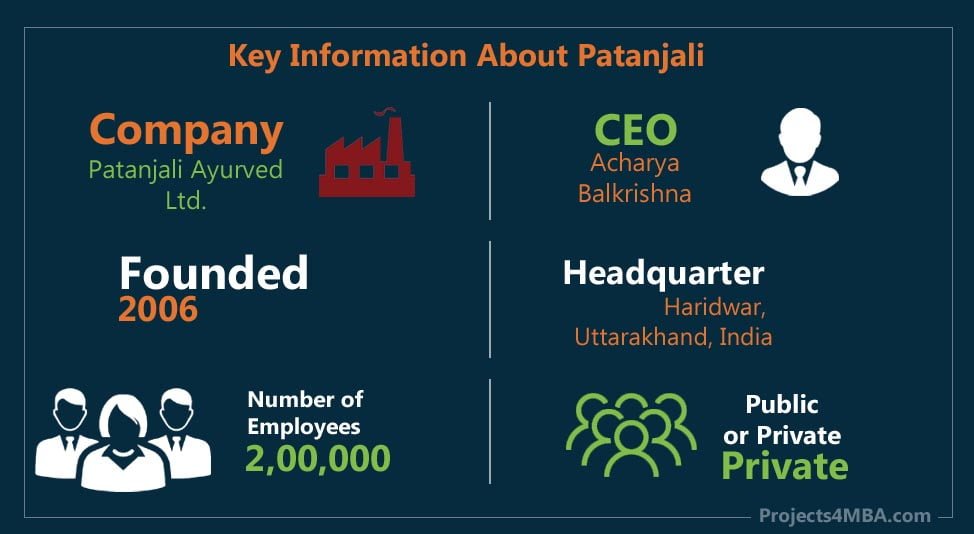
SWOT Analysis of Patanjali Ayurved focuses on strengths, limitations, opportunities, and Threats. Patanjali Ayurved is one of the largest medicine and vaccine producing companies. The strengths and weaknesses of Patanjali Ayurved Swot are internal factors, while opportunities and risks are external factors.

SWOT Analysis is a validated management tool that enables a company like Patanjali Ayurved to measure its business and performance with competitors and the industry. Patanjali is one of the leading Ayurvedic products and Food products brands for many years.

Patanjali Ayurved was founded by Baba Ramdev and Acharya Balkrishna. Acharya Balkrishna. Unbelievably, Patanjali become popular in a few years, because of Baba Ramdev’s large-scale followers. Patanjali has captured a massive share in the Indian Ayurveda and Food market. Patanjali has total revenue of Rs.9500 Crores. Net Income of Patanjali is Rs. 590 Crores and Total Assets are Rs. 4345 Crores. Patanjali manufactures products in Food and Personal Care categories. The company produces over 2,500 products comprising 45 types of cosmetics and 30 kinds of food products.

swot analysis of patanjali

Strengths in the SWOT Analysis of Patanjali Ayurved – Patanjali Ayurved SWOT Analysis

  • The fame of Baba Ramdev: Baba Ramdev and his fame can be credited with Patanjali’s exponential growth. It would have been unlikely for a newly established FMCG in India to demonstrate the kind of growth Patanjali has seen in such a short span of time. Yet Baba Ramdev’s fan base and goodwill ensured that Patanjali would rise steadily and become a regular name in the households of the Indians.
  • Clear patriotism: Patanjali took advantage of India’s card and has also promoted it as a brand designed for Indians in India. Many of India’s labels are foreign signs. Patanjali deliberately tells the Indians to purchase goods produced in India to support the country’s economy. Besides this, Patanjali’s excellent growth has improved the consistency of the goods.
  • Ayurveda and herbal: The products sold by Patanjali are made from natural ingredients of Ayurveda and Herbal. The Swadeshi goods have also played a major role in Patanjali’s growth. India has never been poor in plants or trees and in our thick forests, we get a lot of naturally produced medicines. As a result, India is one of Ayurveda’s founders.
  • Penetration Pricing: Patanjali goods are typically sold at 20-30% cheaper than competing brands, making it difficult for rival brands to compete on-demand with Patanjali. The organization explicitly buys the goods from the producers and thus falls on middlemen. Thus, they can manufacture at lower prices.
  • Wide channels of distribution: Patanjali goods are distributed by medical centers like Patanjali Chikitsalayas and Patanjali Arogya Kendras, non-medical centers like Swadeshi Kendras, etc. Patanjali now has 15,000 branch offices throughout India. Patanjali was traditionally criticized for its marketing approach, but it has now been strengthened by selling it through general retail outlets and has recently joined up for delivery through Modern retail with the Future company. Now, they have turned their weaknesses into a weapon.
  • E-commerce advantage: Patanjali markets really well across the e-commerce companies and has a number of food bundles that it offers online.
  • Word-of-Mouth Promotion: A large proportion of the spending goes into advertising and promotions for a new product in the consumer goods sector. Patanjali originally adopted a word-of-mouth marketing approach, yet invested little in publicity yet advertisement. Patanjali relied on its consumer’s brand loyalty.
  • Continuing with the trends: owned by Babas and Swamis, Patanjali was meant to be a traditional Indian firm, but it shocked everybody by bringing in numerous changes required to suit their contemporary products. If it is an advertisement that employs celebrities as Brand ambassadors, joining new retail, or using e-commerce as a forum. Patanjali has also realized the promise of and is also investing in, new technology and social media channels.
  • A marketing strategy is good if a company is generating a good profit and has a good brand image.
  • The company is taking advantage of online marketing and marketing its products through Google Ads, Instagram, Facebook, and other social media and online platforms. Thus we can say that the advertising & marketing plan of the company is good.
  • Analysis marketing strategy depends on the market situation. The company is always using market analytics to formulate a marketing strategy. The marketing and strategic management practices of the company are good.
  • The company’s branding strategy is good and using an aggressive promotional strategy to promote its products and services on Television and Radio Ads.
swot analysis of patanjali 1

Weaknesses in the SWOT Analysis of Patanjali Ayurved – Patanjali Ayurved SWOT Analysis

  • Over-dependence on Ramdev: Patanjali remains synonymous with Baba Ramdev for many of its customers and hence any Baba Ramdev acts would have consequences for the company itself.
  • The failure of the political affiliations of Baba Ramdev can be a major risk to Baba Ramdev’s Patanjali Ayurveda.
  • A limited number of production units: for the fiscal year 2020-21 Patanjali set itself an ambitious target of INR 15,000 crores. To do that, Patanjali will need to build manufacturing units in different parts of the world that would entail heavy investment. It will also need to switch from word-of-mouth to national advertising efforts.
  • Penetration pricing isn’t long-term: if Patanjali decides to extend and then it’s a huge obstacle for Patanjali, it would have to compromise on its pricing strategy. It can not sell on a very long-term basis at such low prices. Any corporation wants profits to generate more revenue, and therefore gain more money. This is a cycle. So if Patanjali doesn’t earn a lot then he can’t invest a lot and can’t grow.
  • Dependence on the product: Patanjali has many products but the portion of its major sales is because of toothpaste and shampoo. To achieve its optimistic target, they need to move the other goods further.
  • The low margin for distributors: Patanjali offers distributors and retailers much lower margins compared to other consumer goods companies, as it plays a game of volume and not margins. That is why it is a demand run business.
  • Lack of experienced management graduates: Patanjali doesn’t have a wide pool of management graduates and thinks tanks that can be a concern if they are aiming for growth around the country or internationally.

Opportunity in the SWOT Analysis of Patanjali Ayurved – Patanjali Ayurved SWOT Analysis

  • Growing organic sector: Patanjali succeeded in raising awareness of the benefits of using herbal and natural goods that built a demand for themselves. The knowledge has grown, and demand is continuously rising. • Extend Rural: With Patanjali’s range of goods, it has tremendous potential in the rural sector, and will try to expand its operations in India’s large rural market.
  • Going Global: Patanjali has a great opportunity to expand globally and can initially look to the Middle East and African nation. Numerous other businesses like Dabur have also expanded internationally and flourished. • Tie ups: Patanjali has been effectively connected to the Future community and will continue to communicate with new retail chains and boost its sales in e-commerce.
  • Diversify Product Range: Patanjali can diversify its product range based on the need of customers.

Threats in the SWOT Analysis of Patanjali Ayurved – Patanjali Ayurved SWOT Analysis

  • Increasing Competition: FMCG giants like Marico, HUL, etc., and new entrants like Sri Ayurveda are now joining the organic market despite Patanjali’s recognition that raises competition in the sector.
  • Negative Word-of-Mouth: Any negative word-of-mouth that is generated on social media platforms can influence its market place.
  • Poor reaping can affect business: Patanjali depends heavily on natural ingredients and products and therefore poor agricultural reaping can affect sales.
  • Price war: A price war is good for customers but bad for companies. The longer the price battle, the more impact it would have on the company. Companies such as HUL, Colgate, and others have long been at the peak. They have deep pockets and will react to Patanjali naturally. Such a price war would have a dramatic impact on the competitiveness of Patanjali, especially because the company already sells at very low margins.

Conclusion

Conclusion Patanjali’s SWOT analysis reveals the business is well on its way to further growth. Simply, the organization must control its correspondence and abstain from something that impacts Baba Ramdev directly. This wants to place more faith in itself in targeting the worldwide markets and engaging with more customers who will be involved in its name and products.

If you Like this Article Please Follow Us on our Facebook Page: PROJECTS4MBA

Cite This Work

Referencing Style to cite this article:
[citationic]

SWOT Analysis of Patanjali Ayurved [Explained] Read More »

SWOT Analysis of Lupin Limited [Step by Step Guide of SWOT]

SWOT Analysis of Lupin Limited focuses on (S) Strengths, (W) Weakness, (O) Opportunities, and (T) Threats. Internal Factors Strengths and Weaknesses and External Factors Opportunities and Threats are discussed in this article.

SWOT Analysis is a proven management tool that helps organizations such as Lupin Limited to assess the market of Lupin and its success against rival companies. Lupin Limited has been one of the leading pharmaceutical companies in India.

Lupin Limited is a multi-national Mumbai based pharmaceutical firm. Desh Bandhu Gupta ‘s firm, founded in 1968, was a family-owned business during the days of its inception. The organization that gets its name from the Lupin flower was founded with the aim to tackle infectious and deadly diseases.

Today, by market capitalization, Lupin has risen to become the seventh-largest company and is ranked number 10 in terms of prescription drug sales. The company has a steadily rising footprint in the USA and is ranked fourth in the country’s list of generic pharmaceutical products.

Since finding tuberculosis medicines, Lupin Limited started to gain prominence in the pharmaceutical industry and gradually became the global pioneer in tuberculosis medicines. The firm now has products in hypertension, coronary disorders, arthritis, geriatrics, pediatrics, NSAID, and anti-infection medications.

swot analysis of lupin

Strengths in the SWOT Analysis of Lupin Limited – Lupin Limited SWOT Analysis

  • Strengths are described as what each company does best in its field of operations and can give its competitors an upper hand. Those are Lupin Limited ‘s strengths:
  • Market success in various types of medicines: The organization is a world leader in anti-tuberculosis and cephalosporin products. In Central Nervous System ( CNS), Oncology, Cardiovascular, Diabetes, Asthma, Pediatrics, Geriatrics, NSAID, and Anti-Infectives, the organization also has a major presence.
  • Market supremacy in different markets: The company ranks number 2 in India’s pharmaceutical industry. With a market share of 5.3 percent and the 6th largest pharmacy company distributing generic products in Japan, it is the 4th largest company in the USA in terms of prescriptions.
  • Strategy focus: Lupin Limited was set up with the goal of making medicines available to all and that the world will be safe from diseases. The organization remains focused on its mission and will pump out a supply of safe medicines that is open to all.
  • Series of successful acquisitions: Lupin acquired a series of long-listed drugs in the Central Nervous System ( CNS), Cardiovascular, Oncology, and Anti-Infective System (CNS), the most significant of which was the Shionogi branded product portfolio in Japan. Some recent acquisitions are Medquimica, Gavis, and Temmler, which have all helped the company broaden its drug pipeline.
  • World leader in drugs such as Cephalosporin and Anti-TB.
  • Sales are boosting by a considerable market presence for drugs against asthma, diabetes, pediatrics, and CNS.
  • It is the biggest generic player in the US and Japanese markets.
  • I’rom pharma acquisition has helped to increase its drug portfolio and, in addition, its revenue.
  • Wide global footprint, as present in more than 70 countries.

swot analysis of lupin - 1

Weaknesses in the SWOT Analysis of Lupin Limited – Lupin Limited SWOT Analysis

  • Higher reliance on international markets: Lupin Limited looks up to the US for nearly 84 percent of its sales and there is a sharp drop in generic medicines that is the main component in Lupins’ portfolio in the country itself.
  • Regulatory adherence: The Company is in a sector that is subject to a very strict regulatory framework, resulting in adherence to this being a costly and challenging business. There is also an added chance of tackling banned compositions.
  • Labor overheads: The pharmaceutical industry is a research-oriented environment, and therefore labor-consuming. The central team includes a group of highly trained practitioners which is not an easy job to handle.
  • Excessive importance to low growth segments: Lupin’s most drugs are found in low-growth areas such as Central Nervous System ( CNS), Cardiovascular, and Anti-Infective. The company was also involved in TB research where the market slowed down due to the fact that many countries almost eradicated the disease through mass vaccination drives.

Opportunities in the SWOT Analysis of Lupin Limited – Lupin Limited SWOT Analysis

  • Opportunities apply to all environmental opportunities that accompany the company on which it can focus to raise its returns. Some possibilities include:
  • Policy reform: Donald Trump has reviewed the Patient Protection and Affordable Care Act (ACA Act) and experts believe the new package of reforms will favor pharmaceutical companies dealing with generic drugs. If this hypothesis is accurate, it might open up an entirely new set of avenues for Lupin whose primary market is the United States.
  • Growing demand for biosimilars: Biosimilars will have a growth spurt that will catapult the focus from smaller molecules to biosimilars. This is an opportunity that can be used for the benefit of the company if adequate research is carried out.
  • Patient-driven healthcare: developments in technologies suggest that medical treatment will continue to be more patient-centered as demand for smart biometric devices and telemedicine grows. That will provide the patients with the right knowledge and increase their commitment level as well as their position in the treatment process recommended by the doctor.

Threats in the SWOT Analysis of Lupin Limited – Lupin Limited SWOT Analysis

  • Threats are those environmental factors that can be detrimental to business growth. Certain threats include:
  • Pressure: The pharmaceutical industry is rising by leaps and bounds with decreased entry barriers and the firm is facing strong competition on the Indian market from Ranbaxy and Cipla.
  • Changing in federal policy: The legal system and regulations shift with a new administration, resulting in pharmaceutical firms needing to re-adjust their testing practices as well as product formulations. That creates numerous monetary challenges.

If you like This Article Please Like our Facebook Page PROJECTS4MBA

Cite This Work

Referencing Style to cite this article:
[citationic]

SWOT Analysis of Lupin Limited [Step by Step Guide of SWOT] Read More »

SWOT Analysis of Titan [step by step SWOT]

SWOT Analysis of Titan focuses on (S) Strengths, (W) Weakness, (O) Opportunities, and (T) Threats. Internal Factors Strengths and Weaknesses and External Factors Opportunities and Threats in the SWOT Analysis

SWOT Analysis is a proven management tool that helps organizations such as Titan to assess the market of Titan Watches and its success against rival companies. Titan has been one of the leading Watch brands for many years.

Titan Company Limited is a consumer goods company manufacturing fashion products such as watches, eyewear, and jewelry. Titan is a subsidiary of the Tata Group. Titan is located at Bangalore. Titan Company Limited was established in the year 1984.

swot analysis of titan

Strengths in the SWOT analysis of Titan – Titan SWOT Analysis

  • Distribution: Very Good Distribution Network.  Titan is giving Attractive margin to distributors and dealers.
  • Good Design: Titan is known for its good designs and good quality. Titan Watches is preferred by every segment of people.
  • Value Offering of Titan is very good. Customers are satisfied with their build quality, performance, and brand image.
  • Positioning: Titan has positioned itself in the Watch Market. Due to the brand image of Tata Titan is a leading brand.
  • Quality: Quality of Titan Watches are as good as international watches.
  • Visual Merchandising activities of Titan is its main strength. Visual Merchandising materials used in Titan showrooms are attractive.
  • Titan has a good retail chain “World of Titan”
  • Titan is providing good customer services. Titan watches usually don’t need repairs and if they need the company will replace the product in the warranty period.
  • Titan has tie-ups with international brands Tommy Hilfiger and Hugo Boss.
  • Titan Watches are used as a Fashion Statement.
  • Titan has designed worlds slimmest watch sold under the brand name Titan Edge.
  • Titan Watches, Fasttrack and Titan Eye+ are very popular brands.

swot analysis of titan - 1

Weaknesses in the SWOT analysis of Titan – TItan SWOT Analysis

  • Titan Watches is not fully waterproof.
  • Rural India is not targeted by Titan.
  • Less preference to watch as customers are shifting towards mobile phones.
  • Titan is less in Smart Watches which is the demand for the future.

Opportunities in the SWOT analysis of Titan – TItan SWOT Analysis

  • Titan Must promote its watches as a symbol of Gift. Gifting watches are in trend and promotions of watches for gifting can be a great opportunity. Indian Watch market is Underpenetrated only 35% of the population possesses watches.
  • Watches put in the form of fashion wear, rather than simply functional items.
  • Consumers tend to own several watches for various times and activities with increasing customer perceptions.
  • Huge exchange-rate market.
  • Build waterproof watches.
  • The market in rural areas may be tapped.

Threats in the SWOT analysis of Titan – TItan SWOT Analysis

  • Titan is facing tough competition from Citizen, Swiss-Omega, Rolex, Tag Heuer, Tissot, Rado, etc.
  • Titan is also facing threats from Chinese watch companies that are selling their products at a much cheaper price.
  • Titan watches are simple in design that means imitation is possible.
  • Unorganized/grey market sector.
  • Mobiles are replacing watches.

If you like This Article Please Like our Facebook Page PROJECTS4MBA

Cite This Work

Referencing Style to cite this article:
[citationic]

SWOT Analysis of Titan [step by step SWOT] Read More »

SWOT Analysis of Tissot [Step by Step Guide of SWOT]

SWOT Analysis of TISSOT focuses on (S) Strengths, (W) Weakness, (O) Opportunities, and (T) Threats. Internal Factors Strengths and Weaknesses and External Factors Opportunities and Threats are discussed in this article.

SWOT Analysis is a proven management tool that helps organizations such as TISSOT to assess the market of TISSOT Watches and its success against rival companies. TISSOT has been one of the leading Watch brands for many years.

Tissot is a popular watchmaking company that was founded in 1853 and has its headquarters in Switzerland. It is a Swiss Swatch Group company, which is the world’s largest watch manufacturer and distributor. Tissot ‘s logo includes a plus sign symbolizing the Swiss consistency and reliability that has been in its store since its establishment.

Tissot watches are sold in around 160 countries and their designs are realistic, accessible, and made from special materials, designs with advanced features, and meticulous design. The brand stands by its signature and traditionally are innovators. The strong quality of the brand has been repeatedly acknowledged.

It is an Official Timekeeper and partner in many disciplines including cycling with the UCI World and Tour de France, CBA, NBA, and MotoGP motorsports, FIBA basketball, and many more. The company combines attractive designs with watchmaking technology and has changed how people look at watches.

swot analysis of tissot

Strengths in the SWOT Analysis of Tissot – Tissot SWOT Analysis

  • Notable inventions – First Pocket Watch was invented by Tissot and the first watch with two different time zones in the year 1853. The firm has also been the first to manufacture acrylic, stone, pearl, and wood watches. It also introduced its first tactile watch that, during 1999, had T-Touch technology. This technology has touch-sensitive crystals of sapphire that control many functions such as barometer, compass, thermometer, and altimeter. The latest Tissot models in the T-Touch series such as the T-Touch Solar Expert and the T-Touch Lady Solar have 25 functions.
  • Tissot Collection – Tissot has a huge array of male and female watch collections. Many like the classic design and functionality of the brand’s watches. The quality of Tissot ‘s watches is truly impressive in attracting bigger customers.
  • Considered as Fashion Statement – Tissot is considered as a class symbol and is treated as the wearers’ ultimate fashion statement.
  • Brand Ambassadors – Celebrities, cricketers, basketball players, MotoGP players are Tissot brand ambassadors. The brand has good visibility and reach.
  • Customer Care-The company is still at the care of its customers. In case of any concerns, the customers can easily find a service center to service the watch.
  • Global Presence – The brand Tissot is part of the Swatch Group and is present in some 160 countries.
  • New Technology – Tissot uses new technology to manufacture its watches.
  • Time Keeping – Tissot is the official timekeeper for different sports events.
  • Huge Market Segment – Tissot covers a huge segment of the market that covers segments like youth, women, kids, sportsmen, big spenders, and people who are budget conscious.
  • Partnership with Europe’s railway station – Tissot has partnership with Europe’s highest-altitude railway station, about 3454 meters above sea level.

swot analysis of tissot - 1

Weakness in the SWOT Analysis of Tissot – Tissot SWOT Analysis

  • Environmental Rating – The World Wide Fund for Nature (WWF) listed Tissot as taking a few actions during the year 2018 to address the impact of its manufacturing activities on climate change and the environment.
  • Simple design − Tissot has a simple design and can be replicated easily.
  • Limited market growth – due to high competition there is a limited growth of Tissot.

Opportunities in the SWOT Analysis of Tissot – Tissot SWOT Analysis

  • Class Expansion – Tissot business extends into specific markets better suited to Tissot watches. This offers various corporate gift categories.
  • Developing Economy – The trend of high spending by people in the emerging economy can be easily identified. This will provide the company with a new opportunity to get more and more business and improve its financial condition.
  • Increase in Advertising – It would help to increase brand awareness once the company focuses on more advertising.
  • Massive Selling of Watches – Nearly 34 million watches are expected to be sold all over the world, this means a big opportunity for the Tissot brand to be manufactured and sold.

Threats in the SWOT Analysis of Tissot – Tissot SWOT Analysis

  • Huge Competitors – in the watch business, Tissot faces stiff competition. Competitors can have a wide range of products that exist across several categories and designs.
  • Tissot ‘s fake product brands – Fake imitations and various Tissot branded watch duplication tend to affect the marketplace. Over that it appears to lose its prestige.
  • Different government regulations – Different government regulations occurring quite often on imported and luxury items tend to affect the business. This poses a significant challenge to the company.
  • Using Mobile Phones for Watches – Mobile phones and other digital devices act as a watch substitute. Indeed this is a serious challenge to the company.


If you like This Article Please Like our Facebook Page PROJECTS4MBA

Cite This Work

Referencing Style to cite this article:
[citationic]

SWOT Analysis of Tissot [Step by Step Guide of SWOT] Read More »

SWOT Analysis of RADO – RADO SWOT Analysis

SWOT Analysis of RADO focuses on (S) Strengths, (W) Weakness, (O) Opportunities, and (T) Threats. Internal Factors Strengths and Weaknesses and External Factors Opportunities and Threats are discussed in this article.

SWOT Analysis is a proven management tool that helps organizations such as RADO to assess the market of RADO Watches and its success against rival companies. RADO has been one of the leading Watch brands for many years.

Rado is a Swiss watchmaking company based in Switzerland and it was founded in 1917. Rado watches are of Premium Range.  In 1962, it launched its first scratchproof watch. Today, about half a million watches are made annually with a staff of 470 employees.

Rado is a globally established brand that is known to manufacture elegant, rugged watches because of its creative nature and groundbreaking materials. The Rado watches use components such as Carbide, Ceramics, and Crystal Sapphire. Rado watches have a high-tech ceramic design and have been an important part of the watchmaking process over the last many years.

Core items of design and craftsmanship are high-tech ceramic watches. The finish is sleek and graceful and can be translucent or transparent, created in many colors. Rado watches have a soft glamor style. They are light, hypoallergenic, and very easy to use. Rado company has won several coveted international fashion awards and partners with top designers to produce innovative watches.

It also hosts worldwide competitions for young designers to compete with the Rado Star Prize. Rado’s many bottom-breaking timers are designed from scratch.

Let’s discuss the SWOT Analysis of RADO

swot analysis of rado - 1
Source: RADO is a Registered Trademark of their Respective Owner.

Strengths in the SWOT Analysis of RADO – RADO SWOT Analysis

  • Guinness Book of World Records – Due to the use of high-Quality diamonds, Rado has marked its presence in Guinness Book of World Records. This has improved its market image by making use of its products technologically revolutionary.
  • Awards winner – Rado brand has received numerous prestigious international design awards and is also working together to create new pieces for leading designers. Nearly 30 international awards have been presented to the brand.
  • Usage of advanced materials – Rado’s key focus is the use of creative, very wide-ranging materials that are not regulated through their own unique appearance.
  • Sports Events Association – Rado brand has been connected to various sporting events, particularly tennis. Rado ‘s presence was assisted by this association.
  • Brand Ambassadors – The brand Rado has many films and sports brand ambassadors.
  • Good Marketing Strategy – Rado has an excellent marketing and branding approach in online advertising, print media, television and sponsored events.
  • Increasing profits – The brand is mainly strengthened by increasing its profits year after year and increasing its turnover each year.
  • Performance – The price of the Rado brand is established. It uses advanced technology and mechanisms.
  • Rado Star Prize – With its Rado Star Prize contests, Rado is dedicated to its watch design worldwide. These awards aim to help budding designers by offering experts an opportunity to demonstrate their design and creativity.
  • Community and number of employees: a member of Swatch Company, which hires 28,000 workers in 50 countries

swot analysis of rado

Weakness in the SWOT Analysis of RADO – RADO SWOT Analysis

  • Similar Fake Products – There have been many cases of Rado ‘s fake products on the market. This has hit Rado’s brand identity and therefore is a big market flaw.
  • Less Market Share – In the category of luxury watches, the Rado brand sees a lot of competition, as its market share is small.


Opportunities in the SWOT Analysis of RADO – RADO SWOT Analysis

  • Expanding the product range – Because Rado has no particular look at its concept and is versatile for a variety of choices, it can extend the product selection without compromising the placement of the brand.
  • New Competition – The organization should take advantage of a fresh, growing luxury industry with a huge range of prospective buyers and pursue more growth prospects.
  • The company will hook up to another luxury brand in order to improve the demand for its products. It can also be linked to many celebrities and events to boost its market appeal.
  • Product improvement-A further increase in the number of products can help to produce more innovative products that gain greater market visibility.
  • Joint Venture – Rado Brand can work with other observation companies to expand their businesses.


Threats in the SWOT Analysis of RADO – RADO SWOT Analysis

  • High competitors – the Rado brand in the premium clock market has strong competitors.
  • Economy change – people tend to spend less on luxury goods in a fluctuating economy. This also represents a serious threat to the company and its income.
  • Cheap Rado Imitation – Cheap imitation of the same product made by Rado Company is produced. Customers prefer to buy Rado but do not necessarily think it is. In fact, this is a threat to the brand, which also degrades its brand.

If you like This Article Please Like our Facebook Page PROJECTS4MBA

Cite This Work

Referencing Style to cite this article:
[citationic]

SWOT Analysis of RADO – RADO SWOT Analysis Read More »

SWOT Analysis of Timex [Step by Step SWOT]

SWOT Analysis of Timex focuses on (S) Strengths, (W) Weakness, (O) Opportunities, and (T) Threats. Internal Factors Strengths and Weaknesses and External Factors Opportunities and Threats are discussed in this article.

SWOT Analysis is a proven management tool that helps organizations such as Timex to assess the market of Timex Watches and its success against rival companies. Timex has been one of the leading Watch brands for many years.

Timex is an American multinational company that has been established in 1854 and it has its headquarters in Connecticut, USA. It operates in places such as Europe, America, and the USA. Timex has a large range of designs that offers a unique fashion watch that suits the outfit to women and men.

Timex is a popular watch company that is closely associated with craftsmanship and lots of thoughtful designs. The company has created numerous outstanding people’s timepieces. Timex has made its name synonymous with numerous classic watch designs over the years of its watchmaking period.

At present, Timex using their own hands to build the traditional way of watchmaking. Timex collection represents a unique expression of Timex’s watchmaking vision. Timex Watches are carefully built and made, and can be worn with confidence.

Timex is keen to produce its own designs for the watches by carefully sourcing each and every item that is then designed using its designs. Timex ‘s diverse brands include Ferragamo, GC,  Nautica, Guess,  Timex, Versace, and Versus.

The Timex watches are of high quality and offer great value and are durable.

let ‘s discuss SWOT Analysis of Timex

swot analysis of timex

Strengths in the SWOT Analysis of Timex – Timex SWOT Analysis

  • High Brand Awareness – Timex has strong brand awareness, mainly in the Asian region. Timex is much admired and is used by many customers because of its popularity within the brand.
  • High-quality products – Timex products are of high quality and are made from the material of great quality. These products are likewise highly reliable and durable.
  • Wide Range – Timex has a wide range of Watches that fits everyone’s pocket and needs.

swot analysis of timex -1

  • High reputed brand – Timex brand has a high recall and is popular around the world because of brand recall value.
  • Global Presence – The company employs more than 5000 people and also has distribution in around 20 countries. It is available in around 100 countries around the world.
  • Market Segment – Times watches target a diverse segment of users such as women, men, kids, youngsters, budget-conscious, and large spenders.
  • Largest Selling Brand – Timex is regarded as one of the watch industry’s biggest selling brands.
    Timex watches are sold at a reasonable rate and their watches are offered at a wider range. Strong Technology – Timex seems to have strong technology to handle perpetual calendar collection, water-resistant, data link, and much more.
  • High market reputation – The Timex brand has a solid market position and performs well across the years. This has a large network of approximately 3000 dealers.
  • Customized Services – Timex offers tailoring where customers can build and customize their look. The firm produces the customers’ concept and then delivers it to them within two weeks.
  • Brand Recall – Excellent brand recall and god advertising via TVCs and print advertisements.

Weaknesses in the SWOT Analysis of Timex – Timex SWOT Analysis

  • Many Products – Timex has a number of goods in this brand portfolio which can contribute to a decrease in brand equity.
  • Fake Imitation – Many fake Timex product imitations can affect their reputation. Sales and market image can also be affected.
  • Tough Competition – The Timex brand has failed to combat tough competition from different watch brands.
  • Lack of Registered Patents and Technology – Timex finds it difficult to compete with other top brand players due to a lack of technology and patent registered.
  • Poor supply chain – having a bad supply chain can have a major effect on companies. It can delay the customer’s products.
  • Mobile Phone Replacement for Time Checking – Since all mobile phones have the timer inside, many people tend to use mobile phones or any other equivalent devices for time checking, making wristwatches and clocks less important. That said, people might not be interested in updating their watches when and when new watches come into the market.

Opportunities in the SWOT Analysis of Timex – Timex SWOT Analysis

  • Watch Segment expansion – The watch industry is developing and because of this Timex sees an enormous opportunity in the rapidly expanding environment, mostly in Asian markets.
  • New Technology – Like new technology in the watch segment foresees further prospects for the Timex brand. More innovative technology has the potential to help the brand produce more unique products.
  • Market sales – Nearly 34 million watches are sold on the market, which is why it sees a large potential for growth because there is a massive demand for the brand Timex.

Threats in the SWOT Analysis of Timex – Timex SWOT Analysis

  • Stiff competition – the company of Timex is facing tough competition from its rivals. Many other Premium labels are present
  • Price Level – Setting the watch prices is very critical because the customers are going to be very sensitive to the product.
  • Fake goods – Several fake products that look like the Timex watches are a serious threat to their business. These fake products have the same brand name as the original Timex watches and are priced at a low rate.
  • Changing government regulations – Changing laws and regulations and timely economic slowdown, varied taxation, heavy customs duties are a major threat to the Timex company.


If you like This Article Please Like our Facebook Page <a href=”https://www.facebook.com/projects4mba” target=”_blank” rel=”noopener noreferrer”>PROJECTS4MBA</a>
<h4><span id=”Cite_This_Work” class=”ez-toc-section”></span>Cite This Work</h4>
Referencing Style to cite this article:
[citationic]

SWOT Analysis of Timex [Step by Step SWOT] Read More »

SWOT Analysis of Dominos [Step by Step Guide to SWOT]

SWOT Analysis of Dominos focuses on (S) Strengths, (W) Weakness, (O) Opportunities, and (T) Threats. Internal Factors Strengths and Weaknesses and External Factors Opportunities and Threats are discussed in this article.

SWOT Analysis is a proven management tool that helps organizations such as Dominos to assess the market of Dominos and its success against rivals and industry. Dominos has been one of the leading Pizza brands for many years.

Dominos is one of the world’s leading pizza chains. Dominos has close competition with Pizza Hut. But Dominos has a good market as compared to Pizza. But Domino’s also has a long way to go compared with indirect rivals like McDonald’s and KFC. Here is the Dominos SWOT Analysis.

swot analysis of dominos

Strengths in the SWOT Analysis of Dominos – Dominos SWOT Analysis

  • Brand Recall: High brand recall because of its regular tagline advertising such as ’30 minutes Nahi to free’ This aggressive marketing has built visibility & a business opportunity for the company.
  • Fantastic distribution network: Dominos has a vast network spanning across more than 60 countries with its 9000 franchise & company-owned outlets.
  • Fast service & deep menu: Faster than expected service delights customers and helps distinguish the business from others. In India, Domino’s is seeking to draw people of the upper and lower middle class who are interested in spending their money on pizza but at a low price. Such people are willing to go to any festival for an outing and want the cheapest and safest family restaurant. It would be preferable to the Dominos.
  • A low-cost alternative: they don’t need high-class Ambiance or fun in the shop so the establishment costs are low for the dealers and the pizza price is very fair for the clients.
  • Better alternatives: To combat customer perception of health, Dominos is trying to improve their dough by getting better fats, which is achieved by adding more whole wheat into their crusts. Also, the pizza toppings are getting healthier and some pizzerias introduce salads into their menus.
  • Effective supply chain: Dominos has made possible quicker delivery because of its robust supply chain and consumers don’t have to wait long. Dominos’ choice is that the customer should get home delivery within 30 minutes. It takes 15 minutes to make a quick breakfast at home.

Weaknesses in the SWOT Analysis of Dominos – Dominos SWOT Analysis

  • Operations: A large number of franchised outlets lead to operational handling difficulties. Quality management is becoming difficult too. Because of this, some Dominos outlets have been closed impacting the brand’s reputation.
  • Decreasing sales in mature markets: There is a decrease in revenue affecting the business as a whole due to an increase in the health-conscious population.
  • Low retention of staff: High attrition due to lack of adequate training & development is a major challenge for Dominos. Plus the manpower working is often unskilled and they change jobs easily when they are unable to adjust to the hectic climate.
  • Less number of eateries: Dominos has more delivery outlets then eating joints, which is a problem particularly in places such as malls and other places where customers obviously want a seat.

Opportunities in the SWOT Analysis of Dominos – Dominos SWOT Analysis

  • Market expansion: As established markets grow, spreading to the emerging markets would be advantageous for the Pizza industry. The company’s future strategy should be to target the developing economies.
  • Penetration: Strengthening its distributor network by expanding deeper into the existing market would help Dominos boost revenues.
  • Health-conscious eatables: The launch of a health-conscious menu with new low-fat flavor ingredients would result in higher future revenues.
  • Restaurants: By introducing exclusive Dominos restaurants in cream areas, the brand will be helped with more brand recognition, as well as helping to get customers who like eating outdoors in plush restaurants.

Threats in the SWOT Analysis of Dominos – Dominos SWOT Analysis

  • Strong and Indirect Rivalry: Intense competition from local and national players such as “Pizza hut,” pizza from the USA, and more. Indirect competition is actually more from McDonald’s and KFC likes where customers prefer burgers over pizza.
  • Changing Consumer Eating habits: With government & NGOs concentrating more on health consciousness, consumers are becoming more aware of what to eat and what to avoid that affects Domino’s business.
  • Cost: As the cost of vegetables and raw materials increases, so does the cost of keeping the pizza chain going up. Plus, the rivalry has an effect on the company’s bottom line. Therefore it is impossible to control the cash flow.

If you like This Article Please Like our Facebook Page <a href=”https://www.facebook.com/projects4mba” target=”_blank” rel=”noopener noreferrer”>PROJECTS4MBA</a>
<h4><span id=”Cite_This_Work” class=”ez-toc-section”></span>Cite This Work</h4>
Referencing Style to cite this article:
[citationic]

SWOT Analysis of Dominos [Step by Step Guide to SWOT] Read More »

SWOT Analysis of TNT – TNT SWOT Analysis

SWOT Analysis of TNT – TNT SWOT Analysis focuses on Strength, Weakness, Opportunity, and Threats. TNT is a company based in Hoofddorp, Netherlands which was founded in 2011. TNT services are express delivery services and freight services. TNT operates fully in about 61 countries and supplies parcels, documents, and freight materials to the company. This offers programs to a wide range of nations. The organization has reported revenue of approximately €6,91 billion during the year.

swot analysis of tnt

The organization is committed to linking people and industries around the world on a regular basis. Through special care and consideration, TNT delivers parcels and consignments. In various regions such as America, Asia-Pacific, the Near East, and Africa, the organization offers services in road and air transport. In the courier business, TNT is known for its creative strength.

Let’s look at SWOT Analysis of TNT

Strength in the SWOT Analysis of TNT – TNT SWOT Analysis

  • TNT Network – Through its fast and extensive road network across Europe, TNT provides a wide array of delivery services. TNT offers its services to satisfy and extend the scope of consumers’ commitments. Of nearly 55,000 road tours a week, the organization links Europe. TNT also operates a door-to-door regional network in 200 countries.
  • TNT for networked users – At TNT the major areas are individuals and enterprises that are central to every service. The organization goes a long way to bind individuals and companies worldwide. TNT offers professional services and consumers are well notified during the transport of the parcel.
  • Service quality – TNT guarantees that customer connections are maintained and that the reliability of the products is equally important. The organization is known for its partnership with its clients, which offers tremendous strength for brand awareness.
  • Prizes and accreditation – many other companies appreciate TNT ‘s outstanding reliability of operation. TNT has won many awards and accredited awards, most of them on a national basis, thanks to their excellence.
  • Excellent services – TNT delivers the parcel anywhere and anytime quickly. It also allows the consumer worldwide to monitor the products.
  • Technology-oriented – TNT has created a shipping tool, myTNT2, to fit your routine to help make the courier service easy. This device is user-friendly and entirely available. It is designed to facilitate shipment for any business quickly and easily.
  • Tracking and monitoring – TNT have a dedicated customer support department that can take care of all package tracking requests.
  • Strong workforce – TNT employs approximately 75,000 people in around 200 countries.
  • Recognized as a driver of creativity in the express market.
  • Includes more than 2,300 depots & some fifty flights and more than twenty-six thousand vehicles.

swot analysis of tnt-1

Weakness in the SWOT Analysis of TNT – TNT SWOT Analysis

  • Small improvements of operation – TNT delivers the same operation over the years and the style of service offered appears to be less changed. This may be a major limitation because new developments in the courier business are to be introduced by the organization.
  • Low market growth – Courier is an important and competitive industry. Low market growth. With TNT the rise in market share is smaller. That may be a major limitation when it reaches the business.
  • Effects of the NotPetya cyber-attack – The NotPetya cyber-attack seriously affected the business, because few of its activities were carried out in Ukraine which led to the cyber-attack. During this period TNT had to operate by creating large backups using a manual process for some time. Few of its records are lost, which in its history is a big black sign.

Opportunities in the SWOT Analysis of TNT – TNT SWOT Analysis

  • Huge products and services – TNT provides a wide variety of products and services that provide the client with a tremendous market chance.
  • New regions – TNT is expected to extend its scope to new areas. This gives the company an immense advantage and strengthens its market image.
  • Malaysia Expansion – The organization will extend its market in Malaysia, where the Malaysian economy has a bright future. This offers an immense incentive to expand its activities.
  • Growing business – Courier is a rising industry and the company is evolving a lot.

Threats in the SWOT Analysis of TNT – TNT SWOT Analysis

  • Improved rivals – Most regional postal businesses deliver low-cost options. That really poses a big challenge to the corporation, because it seems in several respects to lose its profits.
  • Economic downturn – The company’s results will slip marginally if there is a contraction in the economy.
  • Customers in demand – The complex demands of the consumer may present an immense challenge. Since the Organization has a predefined series of transactions, each condition specific to the Client must be handled to satisfy them differently.

If you like This Article Please Like our Facebook Page PROJECTS4MBA

Cite This Work

Referencing Style to cite this article:
[citationic]

SWOT Analysis of TNT – TNT SWOT Analysis Read More »

SWOT Analysis of Colgate [Step By Step Guide of SWOT]

SWOT Analysis of Colgate focuses on strengths, weaknesses, opportunities, and threats. The internal factors are weaknesses & strength and external factors are opportunities & threats in the SWOT Analysis.

SWOT Analysis / SWOT Matrix is a validated management tool that helps a brand like Colgate to compare its business & results compared to its rivals and industry.

Let’s Discuss SWOT Analysis of Colgate.

swot analysis of colgate

Strength in the SWOT Analysis of Colgate – Colgate SWOT Analysis

  • Colgate is a well known and most preferred toothpaste brand. The brand allowed the organization to compete with other companies, making it one of the best brands in the FMCG industry, with outstanding advertising and brand recognition for products that have high customer loyalty.
  • Product line: Colgate sells different types of products including oral care, personal care, surface area, fabric care, and pet food with a wide variety of products. In FMCG, the more the product line is comprehensive, the greater the chances of success as logistics costs are further decreased.
  • Good Distribution and Well Managed Supply Chain: Colgate guarantees that it serves a wide consumer base through a robust distribution network on rural and industrial markets, thus delivering the product.
  • Financial position: The Colgate’s solid financial base has been built by being a 2 centuries-old organization with operations in 200 countries.
  • Market share: Colgate has achieved with strong market presence and market position in certain markets through other products/company extended products.
  • Automation of the processes added price stability to Colgate goods and allowed the business to scale up and down on the basis of the requirements of the industry.
  • Successful track record in innovative product growth – creativity in products.
  • The high degree of customer loyalty – The company has been able to offer high customer service among existing customers and strong brand value with prospective customers through its dedicated customer relations team.
  • Go To Market approaches for the goods have been highly successful.
  • Reputable suppliers – It provides a clear foundation for a reputable raw material manufacturer that helps the company to solve any bottlenecks in the supply chain.
  • Successful track record of the company by mergers and acquisitions of open businesses. Over the last several years, it has effectively merged many companies to streamline their processes and create a stable supply chain.
  • Colgate has large free cash flows that provide resources to expand into new projects in the company’s hands.
  • Superb success in emerging markets-Colgate has established experience in reaching and winning international markets. The growth helped the organization develop new business sources in its existing markets and diversify the economic cycle risk.

Weakness in the SWOT Analysis of Colgate – Colgate SWOT Analysis

  • Business crowded: The industry has exploded and there is no room for expansion with many local & national players competing for personal & oral treatment, as everyone is taking market share.
  • Commoditized brand name: Coalgate ‘s brand of toothpaste was so popular and now its name is used by several product categories by Colgate. The identification of other products of the same name has been hindered.
  • Cost control: Most of its properties are on a rental basis, with high operating costs and reduced profits. Colgate ‘s goods are also higher priced than the rivals due to high production costs.
  • Specific brands within various consumer groups & segments: Colgate has small brands in a specific product group and, as opposed to rivals such as P&G, HUL, etc.
  • High turnover in the workforce-Colgate seems to have a higher attrition rate compared to other companies in the sector and will spend a lot more on training and growth of its employees than its competitors.
  • Required more New Technology Spending. As the organization plans to grow into the scope of globalization and various geographies, Colgate has to invest more resources into the technologies and incorporate operations around the board. The investments in infrastructure actually do not suit the company’s dream.
  • Predictions of commodity demand that contribute to a higher missed chances relative to its rivals are not healthy. One of the reasons why the day stocks compare to its rivals is that Colgate is not really demand-friendly and therefore holds higher stocks in-house as well as on the network.
  • There are gaps in the product line sold in the market by Colgate. A new rival will get a foothold in the industry from this mistake.
  • The company was unable to meet the challenges of the new entrants in the segment and lost a small market share in the categories of niche. To address these challenges, Colgate must develop an internal feedback mechanism directly by the sales team on site.
  • Also for the present operating model is the corporate arrangement consistent, preventing the growth of neighboring commodity segments.

Opportunities in the SWOT Analysis of Colgate – Colgate SWOT Analysis

  • Expanding their product range: They will boost their sales and build deals and demand for various markets by adopting product line stretching & product line filling strategies.
  • Rural market taping in emerging economies: one of the major challenges faced today by the rising FMCG group. Rural markets are the only chance of making a profit for the business, with urban markets near to exhaustion.
  • Growing the company by merger & acquisition: this is one of the intelligent approaches to survive and grow on the international market pursued by multinational firms. Nonetheless, Colgate will employ these tactics to leverage the market.
  • Usage rate: The optimal consumption rate of such goods will be reported to the public so that the commodity is consumed by the consumer as expected by the firm. This can only be done with publicity/word/prescription of mouth/doctor. Industries often estimate incorrectly as they expect a higher rate of retail demand.
  • The modern product gives the chance to use competitive price approaches in the new market. It will enable the company to provide great service to its loyal customers and attract new customers with other value-oriented proposals.
  • Opening new opportunities by the policy deal – Colgate has been granted the ability to enter the global consumer economy by embracing the new development framework and a negotiated free trade arrangement.
  • Stable free cash flow provides acquisition incentives in complementary commodity markets. The business will invest more cash in the bank both in emerging technologies and in consumer goods. In other product categories, Colgate should open a window of opportunity.
  • In the same area of other goods, the core competences of the company will be efficient. GE healthcare research has contributed to the development of improved oil boilers as a comparable example.
  • Higher rate of inflation – The low rate of inflation offers more financial flexibility, including lending to Colgate ‘s consumers at reduced interest rates.
  • Colgate is given the chance to attract potential consumers and boost its market share after years of stagnation and sluggish growth in the sector.
  • The growth of the industry would dilute the benefit of the competition of Colgate relative to other rivals.
  • New environmental policies – new opportunities will provide all players in the industry with a level playing field. This gives the Colgate a fantastic chance to capture market share in the emerging product segment and to take advantage of new technologies.

Threats in the SWOT Analysis of Colgate – Colgate SWOT Analysis

  • Market competition is becoming very difficult for enterprises to differentiate from others, with more and more local and national players. False goods often seek to kill their brand value on the market.
  • Small Margins: With the pressure growing, businesses have to offer more and more incentives in order to remain in the same market.
  • Raw commodity costs: a rise in raw material prices would lead to a greater rise in the Colgate price. For a crowded economy, it would be impossible over a period of time to explain the high costs due to demand. Further price increases will lead to a reduction in consumer sales & branding.
  • Ethical questions: Once advised that its readers should not purchase Colgate because of the use of animal testing, the “Legal Market Research Association.” Information such as this impacts the Colgate brand in the modern age.
  • Frequent brand switches: With a wide range of brands offering all kinds of advantages, it is very hard to hold to a single brand which thus results in a brand switch where customers have the power to pick a brand based on a variety of factors such as quality, group guidance, choice & interest.
  • Colgate’s reputation is also challenged, particularly in emerging markets and low-income countries, by imitating the counterfeit and poor quality products.
  • Higher pay rates, in particular moves such as 15 USD an hour and higher costs, will create significant pressure on Colgate’s productivity.
  • In certain markets, local distribution can be a threat, as the competition gives local distributors higher margins.
  • The company may face legal proceedings on different markets, different legislation, and continuous product standards fluctuations in these markets.
  • The shortage of creativity in many global markets presents a challenge to Colgate’s gradual rise in earnings in certain countries.
  • A growing tendency towards isolationism in the US economy will lead to similar reactions to foreign trade by others.
  • A challenge to some existing commodity groups may be new environmental requirements under the Paris Agreement (2016).
  • Liability rules vary in different countries and, in the face of changes in legislation on those markets, Colgate could be subject to multiple liability lawsuits.

If you like This Article Please Like our Facebook Page PROJECTS4MBA

Cite This Work

Referencing Style to cite this article:
[citationic]

SWOT Analysis of Colgate [Step By Step Guide of SWOT] Read More »