SWOT Analysis of Hindustan Times [Explained]

SWOT Analysis of Hindustan Times focuses on the Strength, Weakness, Opportunities and Threats. Strength and Weakness are the internal factors and Opportunities and Threats are external factors.

SWOT Analysis is a tool to analyze Hindustan Times Market Position. SWOT Analysis is very helpful for the companies to formulate their present and future strategies.

Hindustan Times is closely connected with India’s fight for independence. The Hindustan Times, which was first launched, played an instrumental role in the period of pre-freedom. With a huge historical history to endorse it, with the largest circulation of 993,645 copies, the Hindustan Times is the industry leader in India even today.

The newspaper was started by fans of Congress and, thus, it has always been friendly to the Indian National Congress since its establishment and therefore entangled in numerous controversies. The paper was one of the first English newspapers of its day and was affiliated with great figures such as Madan Mohan Malaviya, K.M.Panikkar, Rubi Waston,C.F Andrews, etc.

Hindustan Times is reportedly owned by the Birla Group. In addition to the journal, a children’s magazine, Hindi publications, a website and a radio station are all operated by the company. In the northern areas of India, the paper has more circulation and is very popular there.

swot analysis of hindustan times

Strengths in the SWOT Analysis of Hindustan Times

In its variety of activities, strengths are described as what each organisation does best, which can give it an upper hand over its rivals. The attributes of Hindustan Times are as follows:

  • Paper history: The paper dating back to 1924 has a long history of fantastic individuals who have written papers about it. The paper’s rich history has made it a forerunner in India ‘s publishing room and made it closely connected to Indian sentiments.
  • Presence across channels: through its social media website desimartini.com, career portal shine.com and radio Fever 104 FM, Hindustan Times has a presence on most media channels. This meant that the HT brand was constantly noticeable to the buyer, which in turn strengthened the recall of the brand.
  • Reach: Among the old and young, the Hindustan Times is a famous newspaper. In North India, the newspaper is famous and has distribution in New Delhi , Mumbai , Kolkata, Lucknow, Patna, Ranchi, Chandigarh Bhopal, and Jaipur. This means that in these sections it has full reach and access to the viewer within.
  • Media Support: Because of the history it is synonymous with, the paper has a wide coverage and scope and is trustworthy. In addition, it enjoys large readership among all age groups and all of this has made it highly successful among advertisers, serving as its greatest strength.
  • Trained labor force: Hindustan Times has invested heavily in its workforce training, which has resulted in it hiring a significant number of professional and motivated workers.
  • Has a diverse workforce, with people of many ethnic , racial, cultural and educational backgrounds who help the organization bring in various ideas and methodologies to do things.
  • Social Media: Hindustan Times has a strong social media presence with over millions of followers on the three most prominent social networking platforms : Facebook , Twitter and Instagram. It has a high degree of customer engagement with low customer response time on those channels.
  • Website: Hindustan Times has a well-functioning and engaging website that attracts a huge amount of traffic and sales on the internet.
  • Hindustan Times has a well-established IT system which ensures its internal and external operations are successful.

Weaknesses in the SWOT Analysis of Hindustan Times

  • Weaknesses are used to refer to places where change is needed by the organisation or the brand. Any of Hindustan Times’ main vulnerabilities are:
  • South India’s lack of leadership: While the Hindustan Times is a popular newspaper in the North, South India can not be said to be the same. This keeps it from becoming the country’s main news publication.
  • Pro-Congress strategy: Right from the outset, the newspaper that was launched by the Akalis to reach out to non-Punjabi readers had a clear Congress orientation. This has made it part of numerous scandals among other party supporters and dimmed its popularity.
  • Many ads in rival newspapers: for every publication, the sprint to the finish line is for how many ads it will garner. In this respect, the Hindustan Times lost the race to its nearest competitor, the Times of India.
  • Content compromise: Newspapers are actively trying to expand their readership and are thus in direct communication with what readers want. They also attempt to sensationalise incidents in a effort to remain in the race, and this, in fact, greatly affects the accuracy of the coverage. This consistency balance in the fight for quantities also has a dramatic effect on the newspaper.

Opportunities in the SWOT Analysis of Hindustan Times

  • Opportunities apply to all avenues that accompany the enterprise in the world on which it can focus to improve its returns. Many of the benefits include:
  • Sensationalization of events: The media now is robust and the press is at its height. Any news can be sensationalised regardless of whether it is minor or huge, and this provides tabloid fodder and provides a distribution boom for every fresh piece of juicy material.
  • More features, more revenue: Newspapers do their hardest to innovate to the highest possible degree. Part of this means introducing additional items, such as websites, entertainment news, comics, sports, etc., and each addition will mean more sources of revenue.
  • Long-term relationship building: Newspapers also thrive on brand loyalty for which they need to create a reader connexion. It is hard for the connexion to break once the bond is constructed. Hindustan Times has been able to establish a strong connexion with its readers over its history.

Threats in the SWOT Analysis of Hindustan Times

Threats are those environmental factors that may be harmful to business development. Any of the menaces include:

  • Digital: In the eyes of the millennial generation, all on the Digital, including social media , television portals, blogs, and shopping, has almost replaced the newspaper. As compared to advertisements in newspapers, marketers now tend to go online and all this is expected to impact the industry at large.
  • Government Regulations for Newspapers can directly effect the company.
  • Emerging Competitors are also a major threat.

If you like This Article Please Like our Facebook Page PROJECTS4MBA

Cite This Work

Referencing Style to cite this article:
[citationic]

SWOT Analysis of Hindustan Times [Explained] Read More »

SWOT Analysis of Unilever – Unilever SWOT Analysis [Explained]

SWOT Analysis of Unilever focuses on the Strength, Weakness, Opportunities and Threats. Strength and Weakness are the internal factors and Opportunities and Threats are external factors.

SWOT Analysis is a tool to analyze UNILEVER market position. SWOT Analysis is very helpful for the companies to formulate their present and future strategies.

Unilever is a multinational consumer goods company with its Dutch-British offices in Rotterdam, the Netherlands, and London, the United Kingdom. Food, cleaning agents, drinks, and personal care products are among its products. It is one of the leading consumer products firms in the world. It is the seventh most valuable business in Europe. Unilever is one of the oldest global companies; in about 190 countries, its goods are available. Here is Unilever ‘s SWOT Report. In India Subsidiary of Unilever is Hindustan Unilever Limited.

swot analysis of unilever

Strengths in the SWOT Analysis of Unilever – Unilever SWOT Analysis

  • Geographic reach of activities in more than 190 countries-Unilever has a global presence in more than 190 countries, benefiting from a fully multinational brand name.
  • Top of the customer mind brand recall Over the years, the company has been able to put the brand name as one of the tops in the minds of consumers, which is a tremendous strength for them as Unilever goods were the first customer choice.
  • Diversified commodity range’s deep brand portfolio-Unilever offers enough for everybody. For the business, this sort of product portfolio has always been a strength where they aim to ensure that a consumer does not go back empty-handed.
  • Heavily financed innovation and development initiatives-Unilever is constantly on the way to developing and manufacturing new creative goods according to evolving customer needs , making it one of the most successful consumer firms in the world.
  • Distribution channel expertise-Unilever was able to build its distribution networks such that every corner of the geographically served is protected, which is a tremendous strength for them.
  • Responsive pricing: such a broad portfolio of goods allows them to gamble with their pricing plans from time to time in compliance with the ability of consumers to pay. This makes sure that they are never on the wrong side of market share.
  • Industry leader-Unilever is an industry leader in consumer goods, which allows them an added advantage to set market trends over rivals. Any of the trend-setter goods come from Unilever ‘s wallets, making them a market leader in the field.
  • Unilever has become renowned for its Glocally thinking of tactics-the perfect combination of multinational and local tactics. They study well for each served market and aim to combine the commodity values with local people’s culture. This makes them a favourite local brand in every region where they run.
  • Excellent CSR operations-The brand’s timely and well-thought-out CSR programmes have improved its role all over the world.
  • Strong population-A population strength of more than 170,000 from all parts of the world gives it the strength to be a genuinely multinational business competing in the same enterprise with diversified cultures.
  • Efficient promotion and advertisement-the need for accurate advertisement for the right audiences is acknowledged. This has always been a power for Unilever to come up with innovative ways of marketing and effectively coming up with their products in the target regions.
  • Economies of scale-The scope of market with which they interact with each commodity is immense, allowing them the added advantage of economies of scale to efficiently minimise costs and push performance to the next level.
  • Dealer Community: UNILEVER has a good partnership with its dealers which not only supplies them but also focuses on promoting the products and training of the company.
  • Return on Capital Expenditure: In the past, UNILEVER was able to effectively produce positive returns on the capital expenditure it spent on different ventures.
  • Automation: has enabled more effective resource utilization and cost reduction from various stages of production. It also enables its goods to be consistent in quality, and offers the flexibility to scale up and scale down production as per market demand.
  • Trained labor force: UNILEVER has invested heavily in its workforce training, which has resulted in it hiring a significant number of professional and motivated workers.
  • Has a diverse workforce, with people of many ethnic , racial, cultural and educational backgrounds who help the organization bring in various ideas and methodologies to do things.
  • Entering new markets: Creative teams from UNILEVER have helped it to come up with new products and reach new markets. In the past it was successful, in most of the initiatives it took in new markets.
  • Social Media: UNILEVER has a strong social media presence with over millions of followers on the three most prominent social networking platforms : Facebook , Twitter and Instagram. It has a high degree of customer engagement with low customer response time on those channels.
  • UNILEVER ‘s geography and location give it a cost advantage in servicing its customers as compared with the competition.
  • UNILEVER has a well-established IT system which ensures its internal and external operations are successful.
  • UNILEVER has many intellectual property rights including trademarks and patents. This require exclusivity of their products and rivals are unable to copy or reverse engineer it.
  • UNILEVER is a company that has been on the market for years and that people recognise. That makes it highly aware of its brand.
  • Over the years, its goods have retained consistency and are still respected by consumers, who regard it as good value for the price they spend.
  • Relationships: UNILEVER develops strategic partnerships with its manufacturers , distributors, retailers and other interested parties. This helps it to use them in the future if need be.

Weaknesses in the SWOT Analysis of Unilever – Unilever SWOT Analysis

  • Imitable goods-All consumer products are readily imitable and Unilever often has common challenges in coping with these concerns, as most major corporations.
  • Limited market diversification-Due to limited diversification of companies outside the consumer products sector, Unilever is poor considering its large product mix.
  • Big dependency on retailers- Since customers are directly influenced by the actions of retailers in this sector, there is a weakness of having a direct impact on customers.
  • Replacement flexibility and low switching costs-There is virtually zero switching cost for an end-user to select other available substitute items. And these replacement goods are available in abundance, which is one of the drawbacks that makes this argument significant.

Opportunities in the SWOT Analysis of Unilever – Unilever SWOT Analysis

  • The rise of emerging countries increases the living conditions of people all over, and is a perfect incentive for Unilever to put the best goods in the right areas. 1) Rising economies need more.
  • 2) Growing demand for health-conscious goods-More and more individuals are shifting towards healthier products that are once again an environment for Unilever to pursue.
  • 3) Millennial generation and their lifestyle desires-The millennial generation is an extremely significant part of the Unilever group’s consumer market and Unilever will find stronger growth and higher income by reflecting on their desires and catering to them.
  • 4) Using social media for advertising-a huge audience is now impacted by social media and it would be more successful at a reduced cost for them if Unilever would divert from TV commercials to social media.

Threats in the SWOT Analysis of Unilever – Unilever SWOT Analysis

  • The prevalence of private label brands-Major retail stores come up with their own private label brands and this is a huge challenge because Unilever ‘s company relies heavily on retailers.
  • Rivals are no fewer, making it more difficult for rivals such as Nestle, P&G to maintain in the market. With dynamic prices, the constant introduction of new goods is what it takes to combat this hazard.
  • Product Imitation-For firms like Unilever, product imitation is still a challenge when it takes millions of expenditures to come up with something new and as soon as someone tries to copy it, it slips into the risk zone.
  • Ayurveda products’ increasing popularity-The recent rise in the use of Ayurveda products is a real significant challenge to these commercial firms. With the introduction of the Ayush lever, Unilever has always begun to battle the threat, but it’s still a long way to go.

If you like This Article Please Like our Facebook Page PROJECTS4MBA

Cite This Work

Referencing Style to cite this article:
[citationic]

SWOT Analysis of Unilever – Unilever SWOT Analysis [Explained] Read More »

SWOT Analysis of Hindustan Unilever Limited (HUL) [Detailed]

SWOT Analysis of Hindustan Unilever Limited focuses on the Strength, Weakness, Opportunities and Threats. Strength and Weakness are the internal factors and Opportunities and Threats are external factors.

SWOT Analysis is a tool to analyze HUL Market Position. SWOT Analysis is very helpful for the companies to formulate their present and future strategies.

HUL or Hindustan Unilever Limited is a market leader in FMCG Segment. HUL has its headquarter in Mumbai. Unilever is the parent organization of HUL. HLL was renamed to HUL in the year 2007. HUL has the largest market share among the FMCG Companies in India.

swot analysis of hindustan unilever limited
HUL Logo

Strengths in the SWOT Analysis of Hindustan Unilever Limited (HUL)

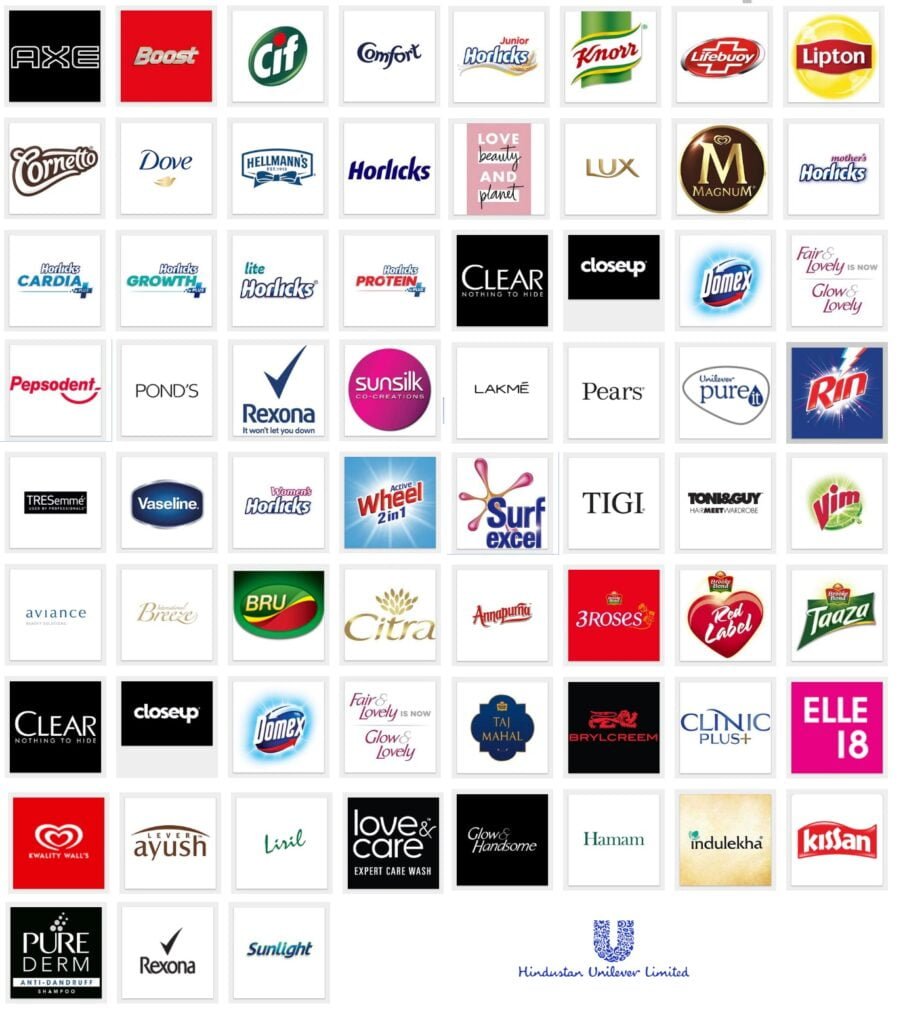
  • High Demand and Preferred Brand : HUL forms the lives of 1.3 billion people every day, from soap & detergents to mineral water. Being on the market for consumer goods with its 20+ consumer segments such as soap, detergents, tea,  shampoo etc. & each with wide assortments, HUL helped to dominate the wide shelf space of grocery / department stores, which explains the acceptance / demand of their items on the market itself.
  • Market Leader in FMCG Market: Two out of three Indian customers use HUL products, according to Nielsen. To emerge as a market leader in the Indian market, HUL has used a targeting approach.
  • Creative FMCG Company: Hindustan Unilever Research Center (HURC), was established in Bangalore. Employees in this facility constantly work and improve products and manufacturing processes technologies that allow HUL to set it as the front-runner in the market for consumer goods.
  • Comprehensive and automated delivery chain: HUL products are now a household name that can only be used because of the four-tier distribution system.
    • Direct coverage within a town with a population of fewer than 50,000 residents by a popular stockist.
    • Indirect coverage: The targets were villages closer to broader commercial markets.
    • Streamline: take advantage of the rural wholesale market to enter markets which are inaccessible by road.
    • Shakti project: Shakti project targets pre-existing SHG (self-help groups) for women in small villages. Based on their accessibility & business opportunities, markets have been segmented.
  • High brand awareness: HUL generated positive word of mouth over the years by signing famous celebrities for the ads of their brands, which allowed them to socially embrace their brands that were intelligently tailored and intended for various income classes.
  • Product line: It includes product categories with wide range of product categories, including oral care , personal care, household surface, fabric care, and pet feed, etc.
  • Financial position: HUL holds a strong financial position. HUL has over 80 years of experience in the FMCG industry & sponsored by Unilever, which holds a 67 percent majority stake in HUL.
  • Market share: HUL has continued to maintain its market share in various product segments by high market penetration.
  • Wallet Share: It would go to the pockets of HUL if one buys surf / wheel / Rin detergent. HUL ‘s approach to sell diverse goods (selective targeting) for different income levels was effective in getting a consumer’s share of the wallet.
  • Brand Extensions: HUL is using brand extension to give identity to its new products. Like Dove Soap, Dove Shampoo, Dove Moisturizer etc.
  • Dealer Community: HUL has a good partnership with its dealers which not only supplies them but also focuses on promoting the products and training of the company.
  • Return on Capital Expenditure: In the past, HUL was able to effectively produce positive returns on the capital expenditure it spent on different ventures.
  • Automation: has enabled more effective resource utilization and cost reduction from various stages of production. It also enables its goods to be consistent in quality, and offers the flexibility to scale up and scale down production as per market demand.
  • Trained labor force: HUL has invested heavily in its workforce training, which has resulted in it hiring a significant number of professional and motivated workers.
  • Has a diverse workforce, with people of many ethnic , racial, cultural and educational backgrounds who help the organization bring in various ideas and methodologies to do things.
  • Entering new markets: Creative teams from HUL have helped it to come up with new products and reach new markets. In the past it was successful, in most of the initiatives it took in new markets.
  • Social Media: HUL has a strong social media presence with over millions of followers on the three most prominent social networking platforms : Facebook , Twitter and Instagram. It has a high degree of customer engagement with low customer response time on those channels.
  • HUL ‘s geography and location give it a cost advantage in servicing its customers as compared with the competition.
  • HUL has a well-established IT system which ensures its internal and external operations are successful.
  • HUL has many intellectual property rights including trademarks and patents. This require exclusivity of their products and rivals are unable to copy or reverse engineer it.
  • HUL is a company that has been on the market for years and that people recognize. That makes it highly aware of its brand.
  • Over the years, its goods have retained consistency and are still respected by consumers, who regard it as good value for the price they spend.
  • Relationships: HUL develops strategic partnerships with its manufacturers , distributors, retailers and other interested parties. This helps it to use them in the future if need be.
swot analysis of hindustan unilever limited-1

Weaknesses in the SWOT Analysis of Hindustan Unilever Limited (HUL)

  • Declining market share: rivals concentrating on a single product & eating up HUL ‘s share, eating up HUL ‘s wheel detergent market share, such as Ghadi & Nirma detergent.
  • Large range of brands in various categories of products: Often having a big portfolio of brands will lead to mistaken positioning. Price placement in some segments makes for low price rivalry, such as Kwality’s market share gained by Amul.
  • No Ayurvedic Products is marketed by Hindustan Unilever Limited.

Opportunities in the SWOT Analysis of Hindustan Unilever Limited (HUL)

  • Market expansion: Through entering more rural markets through the Shakti initiative and by transforming from an unorganized sector to an organised one, the consumer goods market would further grow.
  • Consumer goods use price awareness: Through ads / word of mouth / doctor recommendation, people becoming more conscious and aware of the use. This may result in a rise in the usage of products.
  • Growing income levels: Because of a stable political situation, increased literacy rate and regulated inflation, people’s discretionary income rises, resulting in demand increases and their lifestyle changes.
  • Ayurvedic Products: Can Start Manufacturing or Marketing Ayurvedic Products under the brand name of HUL

Threats in the SWOT Analysis of Hindustan Unilever Limited (HUL)

  • Market competition: With the rising number of local and national competitors, it is becoming increasingly difficult for businesses to separate themselves from others. There is also a concern that counterfeit goods will kill the market’s brand name.
  • Price of raw material: The rise in the price of raw material will lead to a further increase in the price of commodities.
  • Buyer control: Consumer goods companies are increasing at a rapid pace. They are offering various offers and discounts to the consumers. Thus it is very difficult for customers to stick to a single brand and hence results in brand switching. Customers have the option to choose a brand depending on many factors, such as availability, the suggestion of comparison group, choice & price.
  • Changing Norms and Regulations by the Government can also directly affect company policies and practices.

If you like This Article Please Like our Facebook Page PROJECTS4MBA

Cite This Work

Referencing Style to cite this article:
[citationic]

SWOT Analysis of Hindustan Unilever Limited (HUL) [Detailed] Read More »

SWOT analysis of Aquaguard [Detailed]

SWOT Analysis of Aquaguard focuses on Strength, Weakness, Opportunities, and Threats. Strength and weakness are internal factors and Opportunities and Threats are external factors. Aquaguard SWOT Analysis helps the company to analyze its market potential and help company to formulate strategies.

First thing which comes in our mind when we talk about Water Purfier is Aquaguard. Hence we can say Aquagaurd is the other name of Water Purifier. Eureka Forbes is the company that manufactures and markets the water purifiers under the brand name Aquaguard. Eureka Forbes is a joint venture between India’s Shapoorji pallanji group and Sweden’s Electrolux.

Eureka Forbes is a corporation known for its promotional practises that are aggressive. They became the first company to introduce the sale of vacuum cleaners from door to door marketing. Direct Marketing Strategy of Eureka Forbes has created a different brand image of the company. You will have a home demo ordered from Eureka Forbes for their vacuum cleaners. Nevertheless, under the brand name of Aquaguard- Water purifiers lets dive in to SWOT Analysis of Aquaguard.

swot analysis of aquaguard

Strengths in the SWOT analysis of Aquaguard – Aquaguard SWOT Analysis

  • Good brand Image: In the water purifier industry, Aquaguard has almost become a popular brand name. The brand name is powerful because the first mass-level company in India to expand its wings was Aquaguard. Products offered by Aquaguard were also high quality and so the equity of the business grew to staggering heights. People still have faith and rely on Aquaguard for its purity and brand name.
  • Aquaguard was one of the first company to market water purifiers in bulk. It then has the benefit of the first movers. Other businesses, including Kent, quickly followed. Yet the benefit of the first mover does not disappear too quickly.
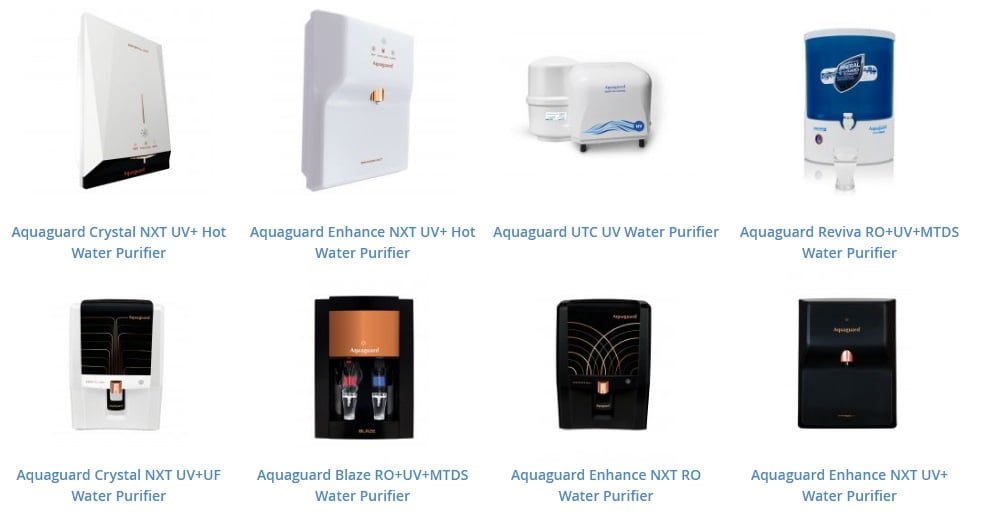
  • Aquaguard’s product range includes a broad portfolio of Gravity water purifiers, UV water purifiers, RO water purifiers, and UV + RO water purifiers. Commercial water purifiers as well as industrial water coolers are now renowned.
  • Market share-Because it has a great brand name, a strong product selection, and the first advantage for movers, it already has a large market share. Aquaguard’s market share is currently equal to 44 percent, while Kent has a market share of 32 percent.
  • One of Aquaguard’s most impressive stuff is its tagline, Paani ka doctor. It’s a lovely tagline that says a lot in 3 words. And this was the tagline behind which Aquaguard was focused on full marketing communications. It quickly developed trust in them when they used the term “Doctor” in the tagline. This slogan is one of the strongest to date.
  • Focus-Aquaguard ‘s benefit as a corporation is that only purification is their full focus. With water being poor in certain areas, the external climate helps them.
  • Return on Capital Expenditure: In the past, Aquaguard was able to effectively produce positive returns on the capital expenditure it spent on different ventures.
  • Automation: has enabled more effective resource utilization and cost reduction from various stages of production. It also enables its goods to be consistent in quality, and offers the flexibility to scale up and scale down production as per market demand.
  • Trained labor force: Aquaguard has invested heavily in its workforce training, which has resulted in it hiring a significant number of professional and motivated workers.
  • Has a diverse workforce, with people of many ethnic , racial, cultural and educational backgrounds who help the organization bring in various ideas and methodologies to do things.
  • Entering new markets: Creative teams from Aquaguard have helped it to come up with new products and reach new markets. In the past it was successful, in most of the initiatives it took in new markets.
  • Social Media: Aquaguard has a strong social media presence with over millions of followers on the three most prominent social networking platforms : Facebook , Twitter and Instagram. It has a high degree of customer engagement with low customer response time on those channels.
  • Website: Aquaguard has a well-functioning and engaging website that attracts a huge amount of traffic and sales on the internet.
  • Product Portfolio: Aquaguard has a broad selection of products where it sells products in a wide variety of categories. It has a range of exclusive product deals which competitors don’t have.
  • Aquaguard has a well-established IT system which ensures its internal and external operations are successful.
swot analysis of aquaguard - 1

Weaknesses in the SWOT analysis of Aquaguard – Aquaguard SWOT Analysis

  • Service: Managing services for its large number of purifiers sold worldwide is one of the big problems that have recently emerged for Aquaguard. Servicing demands that spares be handled and people arrive on schedule at Aquaguard, which does not happen and thus impacts the company hard.
  • Local competition-Due to the low cost of manufacturing purifiers and because spare parts are difficult to obtain from larger firms, many regional competitors are emerging in local markets. As the profits of these local purifiers are high and as the cost is low, manufacturers have also begun to promote locally made purifiers.
  • Imitation: There are many Aquaguard imitators that create business issues. Also bogus and unauthorised replacement parts are being sold, undermining the water purifier ‘s credibility. In fact, due to this replication of the main brand , brand equity is being eroded. To monitor this, Aquaguard needs to assign a squad.

Opportunities in the SWOT analysis of Aquaguard – Aquaguard SWOT Analysis

  • While this is not ideal for us, water will not get better, but it is a truth that water quality will deteriorate more over the years and will not improve. And thus, for Aquaguard, the market is still open.
  • Gravity purifiers-The demand for gravity purifiers is growing with HUL joining the market for gravity purifiers. There is a very high understanding of gravity purifiers and the cost of such purifiers is minimal. So people can start keeping it in gravity purifiers instead of keeping the water in pitchers or jars.
  • Support and spare parts-Water purifiers have a wide demand for facilities and spare parts. The value of water purifiers is growing, be it in India or in foreign markets. But the spare parts like candles and filters have a staggering demand, more than water purifiers.
  • Channel expansion- For any channel player, this is a never-ending game and channel expansion is still used. The better the platform, the more revenue there will be.
  • Pick on local rivals, with Aquaguard now having superior goods than local rivals. However, by improving its service and communicating the differences between Aquaguards and others, the brand can take on local competitors directly and further increase its market share.

Threats in the SWOT analysis of Aquaguard – Aquaguard SWOT Analysis

  • Kent-Kent came a few years ago into the scene and is backed by powerful buyers. Where Aquaguard was based on UV purifiers, Kent opened up the RO water purifier market and took Aquaguard off the market. For Aquaguard, beating KENT in the RO business is going to be very difficult. With the funding it has, Kent and Aquaguard are going to be the water purification market’s Coke and pepsi.
  • Cost of spare parts & services-Aquaguard ‘s market image is falling with the many recent concerns about the cost of spare parts and services. In comparison, even local distributors are mentioning Aquaguard’s local brands and poor mouthing. This brings damage to the key brand, inevitably.
  • Penetration of filtered water: The more bottled water is sold, the fewer water purifiers are sold. Bisleri and Aquafina are brands that are quickly expanding through the industry. The need for water purifier decreases, of course, with the dispensers sold by these brands, along with the 20 litre water container.

If you like This Article Please Like our Facebook Page PROJECTS4MBA

Cite This Work

Referencing Style to cite this article:
[citationic]

SWOT analysis of Aquaguard [Detailed] Read More »

SWOT Analysis of Reckitt Benckiser [Step by Step SWOT]

SWOT Analysis of Reckitt Benckiser focuses on Strength, Weakness, Opportunities, and Threats. Strength and weakness are internal factors and Opportunities and Threats are external factors. SWOT Analysis of Reckitt Benckiser helps the company to analyze its market potential and help bank to formulate strategies.

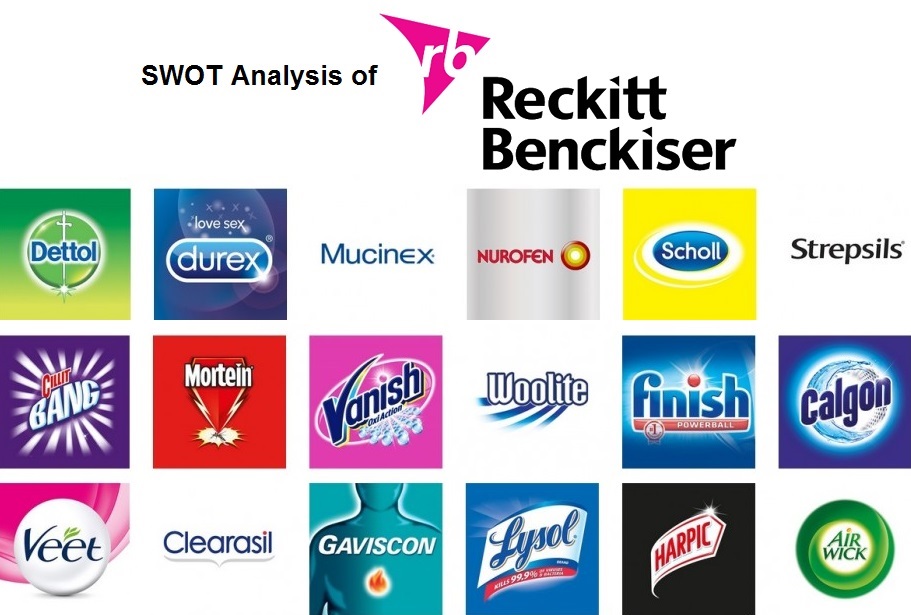
Reckitt Benckiser originated from United Kingdom. Reckitt Benckiser manufactures wellness, hygiene and personal care products. Reckitt Benckiser has several top-selling brands such as Dettol. Reckitt Benckiser has a total workforce of 30,000 individuals. Harpic, Strepsils, Vanish, Durex, and Lysol. Reckitt & Benckiser plans to create commodities that enhance human wellbeing through a wide range of items in the lifestyle category, making the environment a safer and better place to live.

The company has activities in a wide range of fields and has best sellers in each of the product segments in which it works. However, the brand has gained a great deal of reputation for its home cleaning products such as Lysol and Harpic, and is currently one of the market leaders in this field.

Reckitt & Benckiser was founded in the year 1999 with the merger of Reckitt & Colman plc and  Benckiser NV.

swot analysis of reckitt benckiser
[Note : Logo Published Here is the registered Trademark of its Respective Owners. Here it is used for Educational Purpose]

Strengths in the SWOT analysis of Reckitt Benckiser

  • Popular brands: Reckitt & Benckiser has a popular range of products in its respective divisions, several of which are best selling labels. Harpic, Strepsils, Dettol, Lysol, Clearasil, Mortein, Vanish and Durex are among some of these. Such brands are all household names and have provided a very high degree of brand value to the company.
  • Strategy: In all their divisions, Reckitt & Benckiser has aggressively sought to climb higher than the market average to create a leadership role in fast growth portfolios by maintaining a strong cash flow in all their items. This is what made them create brands that are popular.
  • Market competition in various categories: Reckitt & benkinser in several categories includes the world’s biggest labels. Harpic in the category of bathroom washing, Dettol in antiseptics, Woolite in the category of detergent, Lysol in the category of domestic washing and Durex in condoms are some of them.
  • Acquisition focus: several very clever acquisitions have been made by Reckitt & Benckiser, focused mainly on East Asian markets such as Japan and China, where the firm has yet to achieve critical mass. In regions where they have no footprint or leading goods, they also work on purchasing small but profitable enterprises.
  • Focused on market penetration: Reckitt & Benckiser focused on deepening penetration in developed markets rather than diversifying into new types of goods. The company has 18 power brands and they are looking at leveraging the influence of the existing accomplishment to duplicate it in markets where the company has very to no exposure instead of focusing at making more effective brands.
  • Distribution and Reach: In almost every state, Reckitt & Benckiser has a large number of dealers, backed by a strong distribution network that ensures that its goods are readily accessible to a large number of consumers in a timely way.
  • Cost structure: The low-cost structure of Reckitt & Benckiser allows it to manufacture at a low cost and to sell its goods at a low price, making it affordable to its clients.
  • Dealer Community: Reckitt & Benckiser has a good partnership with its dealers which not only supplies them but also focuses on promoting the products and training of the company.
  • Financial position: Reckitt & Benckiser has a solid financial position with consecutive earnings over the last 5 years, along with accumulated income reserves that can be used to fund potential capital spending.
  • Has a broad asset base offering greater solvency.
  • Return on Capital Expenditure: In the past, Reckitt & Benckiser was able to effectively produce positive returns on the capital expenditure it spent on different ventures.
  • Automation: has enabled more effective resource utilization and cost reduction from various stages of production. It also enables its goods to be consistent in quality, and offers the flexibility to scale up and scale down production as per market demand.
  • Trained labor force: Reckitt & Benckiser has invested heavily in its workforce training, which has resulted in its hiring a significant number of professional and motivated workers.
  • Has a diverse workforce, with people of many ethnic, racial, cultural, and educational backgrounds who help the organization bring in various ideas and methodologies to do things.
  • Has trained and certified competent team workers.
  • Entering new markets: Creative teams from Reckitt & Benckiser have helped it to come up with new products and reach new markets. In the past, it was successful, in most of the initiatives it took in new markets.
  • Social Media: Reckitt & Benckiser has a strong social media presence with millions of followers on the three most prominent social networking platforms: Facebook, Twitter, and Instagram. It has a high degree of customer engagement with low customer response time on those channels.
  • Website: Reckitt & Benckiser has a well-functioning and engaging website that attracts a huge amount of traffic and sales on the internet.
  • Product Portfolio: Reckitt & Benckiser has a broad selection of products where it sells products in a wide variety of categories. It has a range of exclusive product deals which competitors don’t have.
  • Reckitt & Benckiser’s geography and location give it a cost advantage in servicing its customers as compared with the competition.
  • Reckitt & Benckiser has a well-established IT system that ensures its internal and external operations are successful.
  • Reckitt & Benckiser has many intellectual property rights including trademarks and patents. This requires exclusivity of their products and rivals are unable to copy or reverse engineer it.
  • Reckitt & Benckiser is a company that has been on the market for years and that people recognize. That makes it highly aware of its brand.
  • Over the years, its goods have retained consistency and are still respected by consumers, who regard it as good value for the price they spend.
  • Relationships: Reckitt & Benckiser develops strategic partnerships with its manufacturers, distributors, retailers, and other interested parties. This helps it to use them in the future if need be.

Weaknesses in the SWOT analysis of Reckitt Benckiser

  • Weaknesses are used to refer to places where change is needed by the organization or the brand. Two of Reckitt & Benckiser’s main shortcomings are:
  • Leadership issues: In September 2017, four of the top management of Reckitt & Benkiser quit the firm, suggesting that the organization could face a serious leadership crisis in the following year. At the same time, the departure of the heads of IT, employees, marketing, and emerging markets has impacted the company’s credibility and generated negative speculation among the stakeholders.
  • Over-dependence on star products: Reckitt & Benckiser heavily rely on its 18 consumer brands and has invested more than 40% of their revenue to these products, all of which have been introduced in the last 3 years. This impacts the company’s product philosophy, which, opposed to more creative rivals such as Unilever, would work against it.
  • Mead Johnson’s takeover: Reckitt & Benckiser paid a whopping 18 million pounds to take on Mead Johnson, a corporation that works in the area of child feeding. As the organization has no experience in the field of child feeding, which is itself a highly competitive market, this change turned out to be a failure.

Opportunities in the SWOT analysis of Reckitt Benckiser

  • Development in new markets: Reckitt & Benckiser has expanded their emphasis on developing markets such as the BRIC and East Asian countries. In these markets, the business has gained prominence and shows a lot of potential in the future, particularly in the field of home care.

Threats in the SWOT analysis of Reckitt Benckiser

  • Brexit: Due to Brexit, businesses based in the UK have experienced significant financial difficulties and the increasingly unstable costs of goods have also boosted the cost of most items. There have been vital threats to the organization.
  • Competition: SmithKline Beecham, Unilever, and Procter & Gamble also face competition from the group.
  • Suppliers: The suppliers ‘ bargaining power has risen over the years with the number of suppliers declining. This means that input costs for Reckitt Benckiser will grow.
  • New entrants: various competitors have joined the market and gain market share by purchasing a market share from established companies. Reckitt Benckiser is affected by this because it may lose its customers to these new entrants.
  • Growing competition: Rising rivalry within the industry has placed downward pressure on prices. This could result in lower sales for Reckitt Benckiser if it responds to shifts in costs, or loss of market share if not.
  • Exchange rate: the exchange rate tends to fluctuate and this affects a globally exporting business like Reckitt Benckiser because its suppliers are local.
  • Political instability in the country proves to be an obstacle in business, at times hindering efficiency and creating unnecessary costs for the company.
  • The country’s fluctuating interest rates will not offer a healthy financial and economic climate.
  • Customer tastes are evolving, and this puts pressure on businesses to continually adapt their goods to satisfy these consumers ‘ needs.
  • International trade laws continue to evolve and this means that businesses comply if they are to operate internationally.
  • Also, alternative goods available are growing, which is a systemic challenge to the entire industry as current product demand is decreasing.
  • The rise in fuel prices has increased Reckitt Benckiser’s production costs. Such costs have also risen as other companies supplying materials for this business have also suffered from higher fuel prices, thereby paying more.
  • Reckitt Benckiser was challenged by increased promotions by rivals. There’s more spam than ever on most sites and consumers are bombarded with numerous messages. This limits the efficacy of Reckitt Benckiser advertising messages.
  • Constant technological advances require training of the workforce, because the inability to keep up with these changes will lead to business loss for Reckitt Benckiser.

If you like This Article Please Like our Facebook Page PROJECTS4MBA

Cite This Work

Referencing Style to cite this article:
[citationic]

SWOT Analysis of Reckitt Benckiser [Step by Step SWOT] Read More »

SWOT Analysis of HDFC Bank [Step by Step Detailed SWOT]

SWOT Analysis of HDFC Bank focuses on Strength, Weakness, Opportunities, and Threats. Strength and weakness are internal factors and Opportunities and Threats are external factors. HDFC SWOT Analysis helps the bank to analyze its market potential and help bank to formulate strategies.

Established in Mumbai, Maharashtra, HDFC Bank Limited is an Indian banking and financial services organization.

swot analysis of hdfc bank
[Note: Logo is the Registered Trademark of its respective owner. Here it is published for Educational Purpose]

Strengths in the SWOT analysis of HDFC Bank – HDFC Bank SWOT Analysis

  • HDFC bank has 5326 branches and 14996 ATMs and is the second largest private bank in India.
  • HDFC bank operates in 2825 Indian cities and has more than 800 telephone banking locations to service customers.
  • The bank’s ATM is available in Plus/cirus, Visa Electron/ Maestro, Visa/Master, and American Express domestic and international cards. That’s also another reason why the most famous card for shopping and online purchases is HDFC cards.
  • In contrast to other private banks, HDFC Bank has a high degree of customer loyalty.
  • HDFC has a low turnover rate and is one of the best places to work in the private banking industry.
  • HDFC has many recognition and awards by various financial ranking institutions such as Dun and Bradstreet, Financial Express, Euromoney awards for innovation, Finance Asia country awards, etc., it has won ‘Best Bank’ awards.
  • HDFC has large number financial advisors guiding customers for good investment options.
  • Financial position: HDFC Bank has a solid financial position with consecutive earnings over the last 5 years, along with accumulated income reserves that can be used to fund potential capital spending.
  • Has a broad asset base offering greater solvency.
  • Return on Capital Expenditure: In the past, HDFC Bank was able to effectively produce positive returns on the capital expenditure it spent on different ventures.
  • Trained Workforce: HDFC has a employee base of 104154 permanent full time employees. HDFC Bank has invested heavily in its workforce training, which has resulted in it hiring a significant number of professional and motivated workers.
  • Has a diverse workforce, with people of many ethnic, racial, cultural and educational backgrounds who help the organization bring in various ideas and methodologies to do things.
  • Revenue of HDFC Bank is 21 US billion Dollars.
  • Has trained and certified competent teamworkers.
  • Entering new markets: Creative teams from HDFC Bank have helped it to come up with new products and reach new markets. In the past it was successful, in most of the initiatives it took in new markets.
  • Social Media: HDFC Bank has a strong social media presence with over millions of followers on the three most prominent social networking platforms : Facebook , Twitter and Instagram. It has a high degree of customer engagement with low customer response time on those channels.
  • Website: HDFC Bank has a well-functioning and engaging website that attracts a huge amount of traffic and sales on the internet.
  • Product Portfolio: HDFC Bank has a broad selection of products and services.
  • HDFC Bank’s geography and location give it a cost advantage in serving its customers as compared with the competition. HDFC Bank products and services including retail banking, wholesale banking, auto loans, treasury, personal loans, two-wheeler loans, loans against property, lifestyle loan, consumer durable loan, pand credit cards.Payzapp and SmartBUY are HDFC Bank digital products.

Weaknesses in the SWOT analysis of HDFC Bank – HDFC Bank SWOT Analysis

  • HDFC bank has no good presence in rural markets, where its direct competitor is expanding in the rural market as ICICI bank.
  • In rural areas, HDFC does not enjoy first-mover privileges. With respect to banking institutions, rural residents are hard-core loyalists.
  • HDFC lacks methods for effective marketing, such as ICICI.
  • The bank mainly works on high end consumers.
  • Any of the commodity groups in the bank lack performance and have very little market presence.
  • HDFC’s share prices frequently fluctuate, causing investors to feel confused.

Opportunities in the SWOT analysis of HDFC Bank – HDFC Bank SWOT Analysis

  • HDFC banks have stronger criteria of asset quality than government banks, so it is possible that earnings growth will accelerate.
  • Big enterprises and SMEs are rising at a very rapid rate. In terms of managing corporate salary accounts, HDFC has a strong record.
  • HDFC Bank has increased its portfolio of bad debts and, relative to government banks, the recovery of bad debts is high.
  • HDFC has really good overseas opportunities.
  • Greater scope due to a good financial role for investments and strategic partnerships.

Threats in the SWOT analysis of HDFC Bank – HDFC Bank SWOT Analysis

  • The non-performing assets (NPA) of HDFC rose from 0.18% to 0.20%. While it is a small improvement, it is not a positive indication for the bank’s financial health.
  • Non-banking financial firms and banks of the modern era are rising in India.
  • The HDFC is unlikely to increase its market share when a significant challenge is levied by ICICI.
  • In order to deal with private banks , government banks are seeking to restructure.
  • RBI has opened up to 74% to invest in the Indian market for overseas banks.

If you like This Article Please Like our Facebook Page PROJECTS4MBA

Cite This Work

Referencing Style to cite this article:
[citationic]

SWOT Analysis of HDFC Bank [Step by Step Detailed SWOT] Read More »

Comparison of Reliance Mart, Best price, D-Mart and Big Bazaar

In this article we will compare Reliance Mart, Best Price, D-Mart and Big Bazaar.

ComparisonReliance MartBest PriceD-MartBig Bazaar
PricingComparatively OK but when people have choice they prefer D-Mart More as compared to Reliance Mart  LessVery Less in some food and Grocery Items Like Brooke Bond Red label Tea is Sold in 269 which attract customersMostly Items are sold on MRP Offers are not more on Groceries
Oil PricingOkOKLess as compared to Reliance, Best Price and Big BazaarEqual to MRP
PromotionsPricing Are Not Clearly Informed on the ShelfsPricing are Well informedPricing are Well Informed on ShelfsPricing are Informed
Executives to EscortReliance has executives but they just tell What customer is asking and does not give options to the customers and tell them about the offers. Reliance Must Train their employeesNot LargeNo Executives are Appointed to Escort Customers but People have to ask The Counter Person toA Large Number of Executives are appointed by Big Bazaar
Visual Merchandising ActivitiesVisual Merchandising is not good, Proper Arrangement of Items is not their Sections are not according to the basic needsProper Arrangement is thereVisual Merchandising is good different sections according to basic needsDifferent Sections for different items
EntryEntry is not Well Maintained Shelf’s related to basic needs must be in the first orderProper Arrangement is there according to the spaceEntry is good items are arranged in proper formatItems are arranged in proper sections
Professional ApproachEmployees at the Billing Counters don’t have professional ApproachApproach is good willing to help customersPricing is less Professional Approach is there i.e. they convince customers regarding the products and other offersVery professional Person at the billing counter is showing great interest in and attracting customers to buy their loyalty card. i.e. buy for 5000 you will get 6000 but the customers are unaware that they are paying purchasing items on MRP. At some occasions they are giving discount to customers who are having loyalty cards
Quality of ItemsGoodGoodGoodGood
ReplacementGoodGoodGoodGood
ProductsCompany can reduce pricing by buying products from local vendors. And Promoting them heavily through Visual MerchandisingProducts are good but purchasing in bulkD-Mart is promoting its own home brandsBig Bazaar is also promoting products of various vendors
Reducing Price on buy 1 get 1 ItemsTaking Half Price if only 1 item is needed in some cases. No Discount on buy 1 get 1like in Besan Reliance has not reduced the price and giving 1 kg in actual rate and saying buy 500 gm and get 500 gm free. Customer is not So Fool. Customers can get attracted but this type of offers harms the image of the store.No Such offersTaking Half Price if only 1 item is needed 

Comparison of Reliance Mart, Best price, D-Mart and Big Bazaar Read More »

Marketing Mix of Birla Sun Life Insurance [Explained]

Marketing Mix of Birla Sun Life Insurance focuses on 4Ps Product, Price, Place and Promotion. Aditya Birla Sun Life Insurance is one of the largest insurance companies. It was founded in the year 2000 and was a joint venture between Sun Life Financial Inc and Aditya Birla Group, two trusted global brands.

marketing Mix of Birla Sun Life Insurance -1

Aditya Birla Sun Life Insurance is reportedly one of India’s top 10 private insurers and is known for creating innovative and benchmarks in this field. By incorporating its core values such as dedication, honesty, zeal, agility and seamlessness, its mission is to become a role model and pioneer in the financial services industry. Some of its notable competitors are as follows:

marketing Mix of Birla Sun Life Insurance
[Birla Sun Life Insurance is the Registered Trademark of its Registered Owner. It is used here for Educational Purpose Only.]

Products in the Marketing Mix of Birla Sun Life Insurance – Birla Sun Life Insurance Marketing Mix

Aditya Birla Sun Life Insurance is the first insurance provider to launch many creative schemes in India, such as Unit Linked Life Insurance Policies, the Free Look Period and the Business Continuity Scheme. Aditya Birla Sun Life Insurance handles the financial affairs of people and enterprises. The following are some of the key products in the product line:

Term Insurance Plans

  • BSLI Protect @ Ease Term Plan
  • BSLI Easy Protect Plan
  • BSLI Protector Plus Plan
  • BSLI Future Guard Plan

Money Back Plan

  • Birla Sun Life Insurance-Vision Money Back Plus Plan

Unit Linked Insurance Plans – ULIPs

  • BSLI Wealth Aspire Plan
  • BSLI Wealth Assure Plan
  • BSLI Fortune Elite Plan
  • BSLI Wealth Max Plan
  • BSLI Wealth Secure Plan

Health Plan

  • Birla Sun Life Insurance-Hospital Plus Plan

Endowment Plans

  • BSLI Guaranteed Future Plan
  • BSLI Vision Regular Return Plan
  • BSLI Vision Endowment Plus Plan
  • BSLI Savings Plan
  • BSLI Income Assured Plan
  • BSLI Vision Endowment Plan
  • BSLI Vision LifeIncome Plan
  • BSLI Vision LifeSecure Plan

Child Insurance Plan

  • Birla Sun Life Insurance-Vision Star Plan

Pension Plans

  • Immediate Annuity Plan
  • Empower Pension Plan
  • Empower Pension SP Plan

Place in the Marketing Mix of Birla Sun Life Insurance – Birla Sun Life Insurance Marketing Mix

The secret to successful performance is each organisation’s service delivery strategy. With its immense expertise and tremendous product range, Aditya Birla Sun Life Insurance supports individuals , groups and organisations by providing personalised insurance solutions.

Only because of the extensive delivery network that has extended over more than five hundred cities is this possible. It has an intricate network of 10,500 consultants, 600 offices and 150 partnership with banks, broker and corporate agent relationships. The organisation also works in countries such as Bermuda, Japan, China, and the UK, and its headquarters are located in Mumbai.

There are different channels for Aditya Birla Sun Life to market its policies. Aditya Birla Sun Life, through its subsidiaries, sells its strategies. Insurance Consultants are also employed by the agency. Bancassurance is also a channel for the products to be sold. In order to sell its products, Aditya Birla Sun Life has branches across the country. To explain the attributes and benefits of Aditya Birla Sun Life Insurance, marketing executives are educated. Aditya Birla Sun Life sells its policies through an online portal as well. Aditya Birla Sun Life provides a clear method of dispute arbitration.

Price in the Marketing Mix of Birla Sun Life Insurance – Birla Sun Life Insurance Marketing Mix

The premium depends on the cover and age of the insurer. As per the IRDA Rules, Aditya Birla Sun Life has competitive prices and advantages. The insurance plans of Aditya Birla Sun Life Insurance offer Annual and Monthly Premium Payment Options.

Promotions in the Marketing Mix of Birla Sun Life Insurance – Birla Sun Life Insurance Marketing Mix

To promote its policies, Aditya Birla Sun Life is taking every possible action. For the marketing of its products and services, Aditya Birla Sun Life Insurance employs new techniques. The company’s web ads using Google Ad Network and other ad networks. For its advertising, the business uses Facebook Marketing, and Whatsapp Marketing. Aditya Birla Sun Life also advertises its tv, print papers, and magazine items. It is now using Hoardings for the regional marketing of its goods. On multiple Social Media Sites, it also sells its goods. This vigorous tactics establish a positive reputation within the company’s clients.

As one of the most trusted brands, Birla Sun Life Insurance has won its prestige and this has been possible because of its employees. The organisation has staff incentive programmes to improve morale and loyalty as part of its advertising strategy.

It was the first business to sell policies through the internet. It provides benefits to draw more customers, including rebates, rewards, e-marketing and direct mail. Its brand ambassador was Cricketer Kapil Dev and cricketers such as Virendra Sehwag, Yuvraj Singh and Suresh Raina were roped in to act in its advertisements.

If you like This Article Please Like our Facebook Page PROJECTS4MBA

Cite This Work

Referencing Style to cite this article:
[citationic]

Marketing Mix of Birla Sun Life Insurance [Explained] Read More »

Marketing Mix of Acko General Insurance

Marketing Mix of Acko General Insurance focuses on 4Ps Product, Price, Place and Promotion. Acko General Insurance is an Indian general insurance company. Established in November 2016 , the company acquired its licence from Insurance regulatory and development Authority of India (IRDAI) on September 2017. Acko follows an online-led model and thus all the company’s operations are offered through the digital platform. Varun Dua, who serves as the Chief Executive Officer, founded Acko General Insurance. As of 2018, Acko has raised 274 crore rupees ($42 million) from Amazon, SAIF Partners, Catamaran Ventures and Accel Partners. Motor insurance, in-trip domestic insurance and smartphone insurance are the retail products sold by Acko General Insurance.

marketing mix of Acko General Insurance

Products in the Marketing Mix of Acko General Insurance

Acko General Insruance has the following Products:

  • Car Insurance
  • Bike Insurance
  • Health Insurance
  • Mobile Repair
  • TV and Appliances Repair

Company has tieups with Ola, Redbus, MakemyTrip, Rapido Passenger, Goibibo, Dunzo Passenger, Zoom Car, Abhibus, Happay, DriveU for travel and trip protection plans.

For Health Plans company has tieup with Practo+ and Niyo.
For Loan Payment Protect Plan company has tieup with AU Bank, HDB, Lendingkart, Zestmoney, MoneyTap and Kreditbee.

Company has also launched plans for COVID-19 Protection for Amazon Sellers, Rapido, Captain, Zomato, Dunzo Rider, etc.

Place in the Marketing Mix of Acko General Insurance

Acko General Insurance has multiple channels for selling its policies. Acko is selling its policies through its branches. Insurance Advisors are also recruited by the company. Marketing Executives are trained to explain the features and benefits of Acko General Insurance. Acko is also selling its policies through Online Channel. Acko General Insurance has a simple claim settlement process.

Price in the Marketing Mix of Acko General Insurance

Premium depends on the Insurance Cover and Age of the Insurer. Acko General Insurance has competitive pricing and benefits as per the IRDA Regulations. Yearly and Monthly Premium Payment Options are available in the insurance policies of Acko General Insurance.

Promotion in the Marketing Mix of Acko General Insurance

Acko General Insurance is taking every possible measure to promote its policies. Acko General Insurance is using modern techniques for promoting its products and services. Online advertisements the company is using Google Ad Network and other Ad Networks. The company is using Facebook Marketing, Whatsapp Marketing, Tiktok Marketing for its promotion. Acko General Insurance is also advertising its products on Television, Print Media, and Magazines. It is also using Hoardings for promoting its products throughout the country. It is also promoting its products on various Social Media Platforms. These aggressive techniques are developing a good image among the customers of the company. Acko is also a Official Insurance Partner of Delhi Capitals

If you like This Article Please Like our Facebook Page PROJECTS4MBA

Cite This Work

Referencing Style to cite this article:
[citationic]

Marketing Mix of Acko General Insurance Read More »

SWOT Analysis of Punjab National Bank – PNB SWOT Analysis

SWOT Analysis of Punjab National Bank – PNB SWOT Analysis focuses on the Strength, Weakness, Opportunities and Threats. Strength and Weakness are the internal factors and Opportunities and Threats are external factors.

PNB or Punjab National Bank is a Public Sector Bank known for its banking and financial services. Headquarter of PNB is in New Delhi. It is a second largest Public Sector Bank and founded in the year 1894.

Strengths in the SWOT Analysis of Punjab National Bank – PNB SWOT Analysis

  • Large  Customer Base : PNB is having one hundred and eighty million customers.
  • Large  Network of Branches and ATM’s : PNB has 10910 branches, and a wide ATM network of 13000+ ATMs.
  • Acquisition: Some of the Popular Bank like United Bank of India and OBC (Oriental Bank of Commerce) was merged in PNB on April 1st 2020.
  • International Presence: PNB has also marked its presence in United Kingdom China, Dubai, Hong Kong, Kabul, Bhutan, Kazakhstan and Kowloon.
  • Financials: Total Revenue of PNB in the year 2020 was 11 Billion US Dollars and Net Income was 47 Million US Dollars.
  • Large Employee Base : PNB has a large employee base of 103000 employees as.
  • Subsidaries: PNB Housing Finance, PNB MetLife Insurance, PNB Investment Services, PNB International Ltd. and PNB Gilts Limited are the subsidaries of Punjab National Bank.
  • Strong IT Infrastructure: Punjab National Bank has a strong IT Infrastructure.
swot analysis of punjab national bank

Weakness in the SWOT Analysis of Punjab National Bank – PNB SWOT Analysis

  • Presence in Rural Areas : PNB has less presence in rural areas.
  • PNB is not giving emphasis on advertising as compared to other public and private sector banks.

Opportunities in the SWOT Analysis of Punjab National Bank – PNB SWOT Analysis

  • PNB can also start E-Wallets which are trending in the country.
  • E-Gateway can be offered to the website owners at a nominal price.
  • Growing demand of Banking in the country creates a good opportunity for the Bank.
  • Bank can give emphasis on business loans to attract more customers.
  • Bank can also launch new schemes for Saving Account Holders to increase its cash deposit ratio.
  • Bank can also promote its products by using social media platforms and advertising platforms like Google Ads and Facebook Ads.

Threats in the SWOT Analysis of Punjab National Bank – PNB SWOT Analysis

  • Fluctuations and Crises in the Economy is the major threat.
  • RBI and Government Regulations is also a threat to the Bank.
  • New and Old Competitor Banks are also a threat.

If you like This Article Please Like our Facebook Page PROJECTS4MBA

Cite This Work

Referencing Style to cite this article:
[citationic]

SWOT Analysis of Punjab National Bank – PNB SWOT Analysis Read More »